Mineral
Natrolite
Na₂Al₂Si₃O₁₀·2H₂ONatrolit
A white zeolite growing as radiating needles in basalt cavities: it can glow orange-yellow under ultraviolet light.
- Popularly: Common stone
_AT_TH_NMNH,_SOFIA,_BULGARIA.jpg)
In short
Natrolite is a zeolite mineral made of sodium, aluminium, silicon, oxygen and water (Na₂Al₂Si₃O₁₀·2H₂O). It usually forms colourless or white, long prismatic and needle-like crystals, often growing in radiating or star-shaped sprays. It develops in the gas cavities of basalt and similar volcanic rocks as one of the last minerals to form. Its name comes from the Greek natron (soda), referring to its sodium content; it was named by Martin Heinrich Klaproth in 1803.
Photos
.jpg)
How does it form?
Natrolite develops in the gas cavities of volcanic rocks such as basalt (amygdaloidal basalts) and in related igneous rocks, as one of the last minerals to form. Natrolite can also fill thin cracks in granite, gneiss and syenite. It occurs with other zeolites, calcite, nepheline, sodalite and quartz.
According to the Handbook of Mineralogy, fine crystals come from many places: the Khibiny and Lovozero massifs on the Kola Peninsula have yielded large crystals, and Thetford and Mont Saint-Hilaire in Canada huge ones. The Höwenegg quarry in the Hegau of Germany, Puy-de-Dôme in France, the Lizard Peninsula in England, the Langesundsfjord in Norway and the basalt quarries of New Jersey in the USA are among its other known localities.
What is it used for?
- Collecting: Its radiating white sprays of crystals and specimens with rare minerals are sought by collectors.
- Companion of benitoite: It forms the white matrix of California’s benitoite crystals.
What determines its value?
Natrolite is valued as a collector's mineral. Collectors look for large, transparent, sharp-tipped crystals and radiating sprays, and specimens with rare minerals, such as those from Mont Saint-Hilaire in Canada or with benitoite from California.
This information is educational, not buying, selling or investment advice. Value varies enormously with quality and treatment.
How to recognise it
- 1
Colourless, white or grey; sometimes bluish, yellowish or pink; vitreous lustre.
- 2
Forms long, striated prisms or needles, often in radiating or star-shaped sprays.
- 3
Light (specific gravity about 2.2), with a hardness of 5–5.5.
- 4
Often glows orange or yellow under ultraviolet light.
- 5
Found in basalt cavities with other zeolites and calcite.
Fakes and imitations
What shops usually don’t tell you:
- Other needle-like zeolites, such as mesolite and scolecite, look very similar to natrolite; telling them apart takes laboratory study.
Myths and misconceptions
MythNatrolite's white needles are made of fine glass or salt.
FactNatrolite is neither glass nor salt but a zeolite mineral made of sodium, aluminium, silicon and water. It does not dissolve in water and has a hardness of 5–5.5.
Did you know?
Its crystals can grow up to 1 metre long.
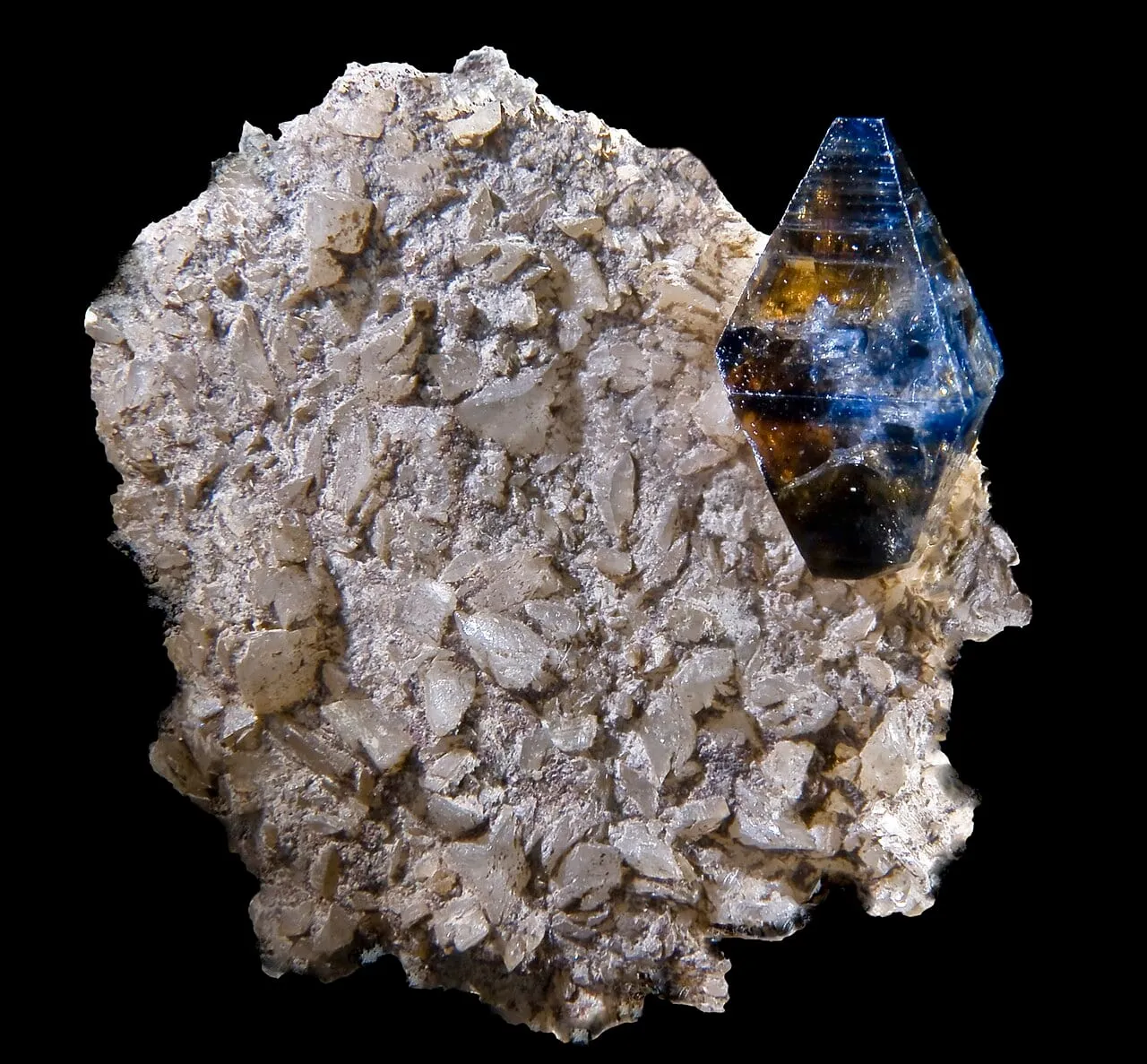
California's famous blue benitoite crystals sit within white natrolite that fills cracks in the rock; blue benitoite on white natrolite is among the specimens collectors seek most.
Natrolite is both piezoelectric and pyroelectric: an electric charge builds up on its surface when it is squeezed or heated.
Where is it found?
Loading map…
- Mont Saint-Hilaire, Quebec, Canada · Major depositHas produced large natrolite crystals together with many rare minerals
- Khibiny massif, Kola Peninsula, Russia · Known localityYields large crystals, according to the Handbook of Mineralogy
- Gem mine, San Benito County, California, USA · Known localityThe white natrolite enclosing blue benitoite crystals comes from here
- Chimney Rock quarry, Bound Brook, New Jersey, USA · Known localityOne of the quarries known for zeolites in basalt cavities
Locations are approximate to protect sites. Red dots mark places in Türkiye. Open in the big map →
Frequently asked questions
What is natrolite?
Natrolite is a zeolite mineral made of sodium, aluminium, silicon, oxygen and water (Na₂Al₂Si₃O₁₀·2H₂O). It usually forms colourless or white, long prismatic and needle-like crystals, often growing in radiating or star-shaped sprays. It develops in the gas cavities of basalt and similar volcanic rocks as one of the last minerals to form. Its name comes from the Greek natron (soda), referring to its sodium content; it was named by Martin Heinrich Klaproth in 1803.
What is a zeolite, and is natrolite one?
Yes. Zeolites are a group of minerals whose frameworks of silicon, aluminium and oxygen hold water and ions such as sodium, potassium and calcium in small cavities. Natrolite is a zeolite named for its sodium, and it usually forms in cavities in volcanic rocks.
What is natrolite used for?
Collecting: Its radiating white sprays of crystals and specimens with rare minerals are sought by collectors. Companion of benitoite: It forms the white matrix of California's benitoite crystals.
How hard is natrolite?
It has a hardness of 5–5.5 on the Mohs scale. A fingernail cannot scratch it, but a steel knife can. Its specific gravity is 2.2–2.26 g/cm³.
Where is natrolite found?
Its best-known localities: Mont Saint-Hilaire, Quebec, Canada; Khibiny massif, Kola Peninsula, Russia; Gem mine, San Benito County, California, USA; Chimney Rock quarry, Bound Brook, New Jersey, USA.
How can you tell if natrolite is real?
Colourless, white or grey; sometimes bluish, yellowish or pink; vitreous lustre. Forms long, striated prisms or needles, often in radiating or star-shaped sprays. Light (specific gravity about 2.2), with a hardness of 5–5.5. Other needle-like zeolites, such as mesolite and scolecite, look very similar to natrolite; telling them apart takes laboratory study.
Is natrolite valuable?
On the “street to diamond” value ladder it sits on step 2 of nine: Raw material by the tonne. Natrolite is valued as a collector's mineral. Collectors look for large, transparent, sharp-tipped crystals and radiating sprays, and specimens with rare minerals, such as those from Mont Saint-Hilaire in Canada or with benitoite from California.
Sources
- Natrolite · Wikipedia
- Handbook of Mineralogy: Natrolite · Mineralogical Society of America
External links
ReviewedLast checked: 4 October 2026
On the same step
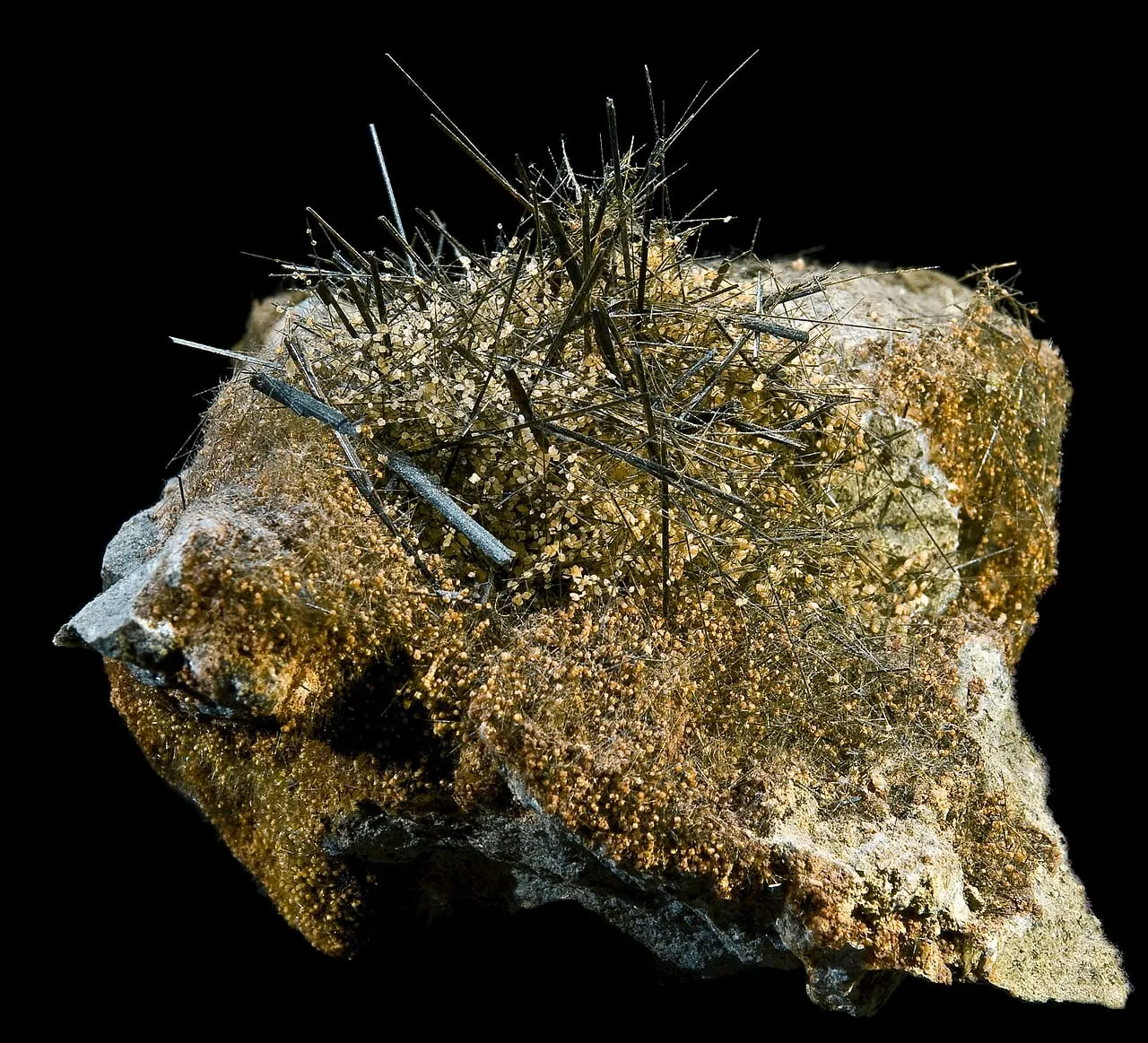
Actinolite
A green amphibole that grows like rays: a raw material of nephrite jade and cat's-eye stones; its fibrous form is asbestos.
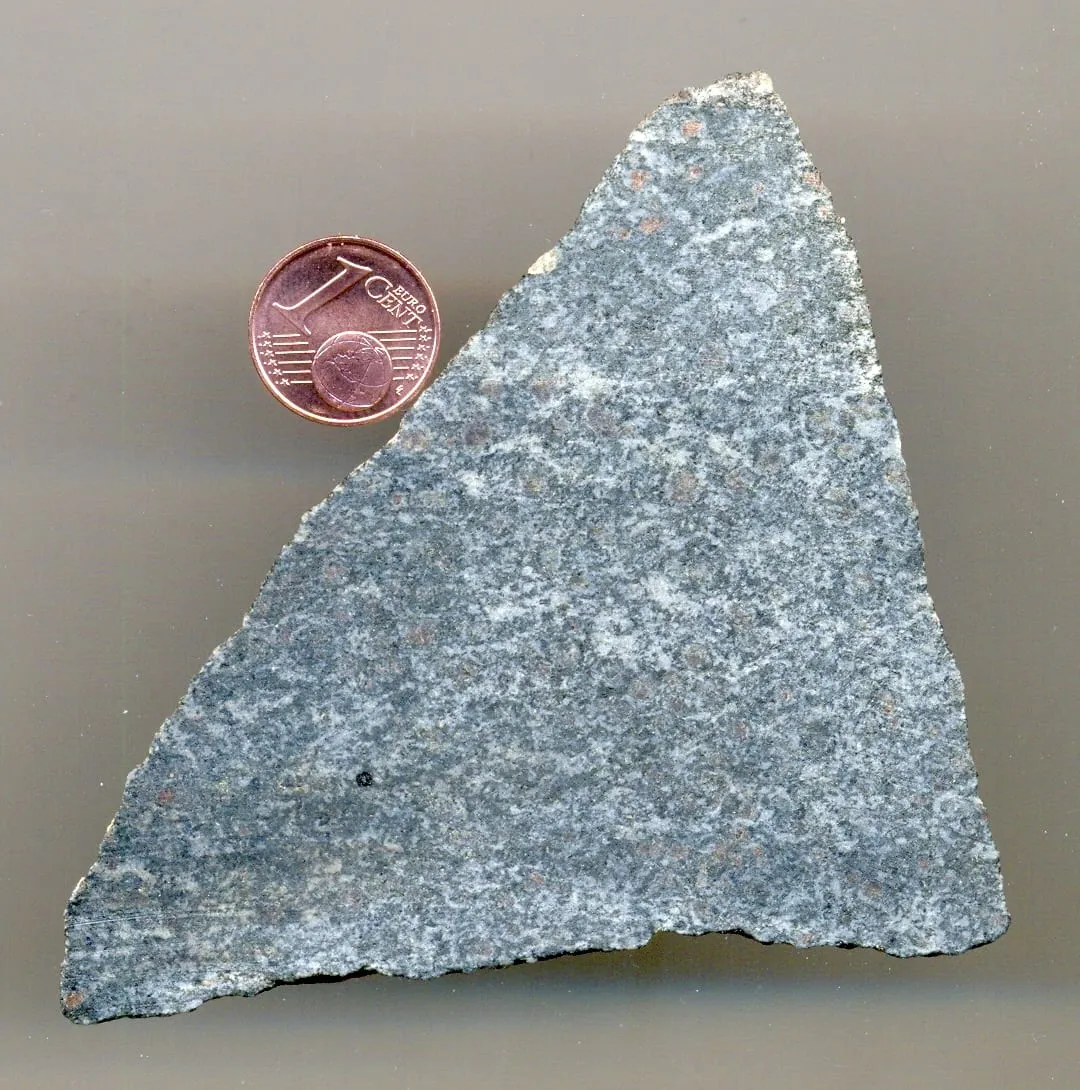
Amphibolite
A dark, heavy, salt-and-pepper metamorphic rock: basalt or gabbro transformed at depth; the stone of Neolithic axes.
Anatase
Rutile's sibling in titanium dioxide: its sharp, stretched double pyramids turn into rutile when heated.