Mineral
Nepheline
(Na,K)AlSiO₄Nefelin
The “cloud” mineral of silica-poor rocks: the main component of nepheline syenite, used in glass and ceramics.
Also known as: Nephelite · Elaeolite (massive, translucent, greasy-lustred variety)
- Popularly: Ore and raw material
- Industrial
- Important in Türkiye
.jpg)
In short
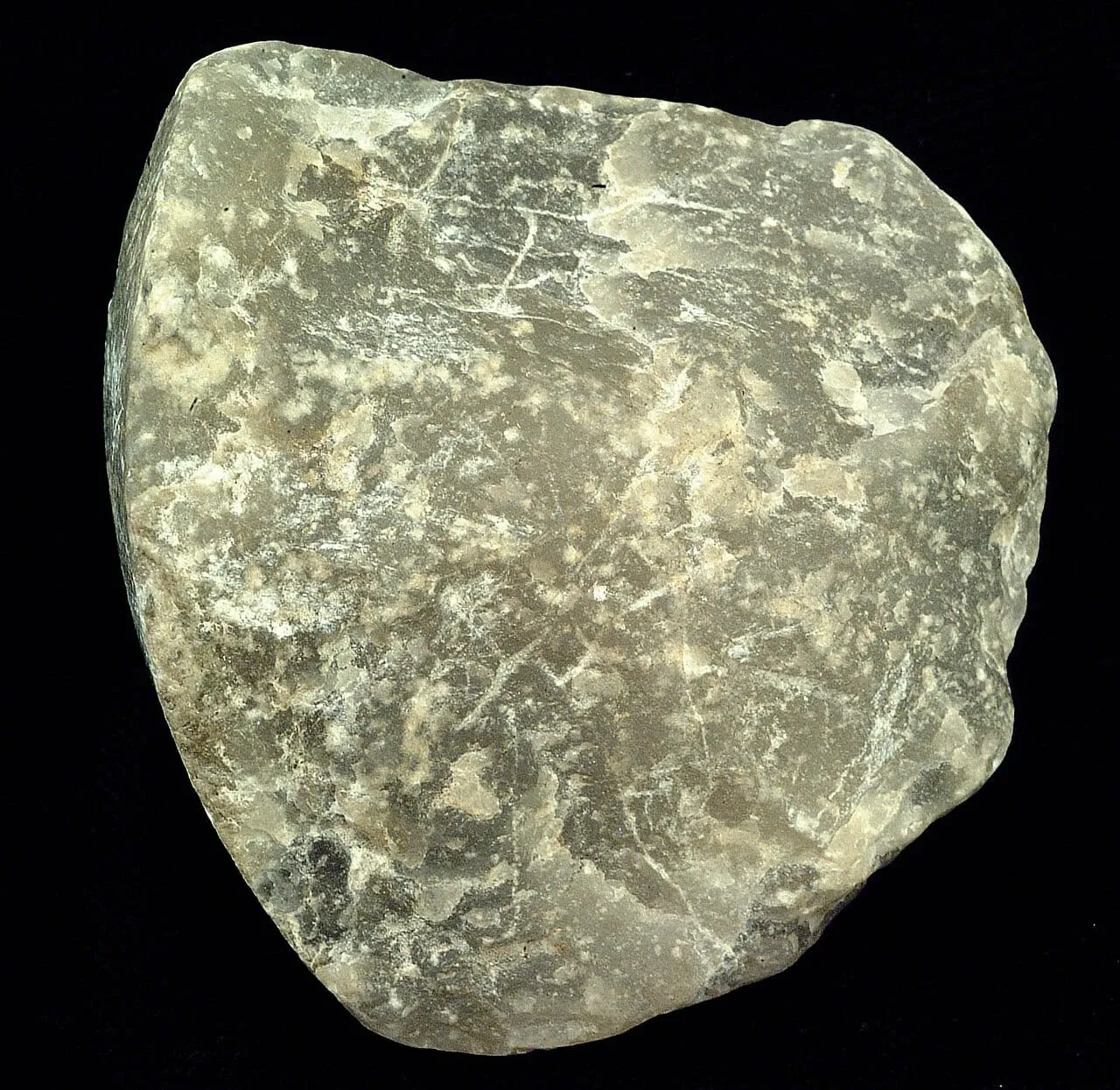
Nepheline is a mineral made of sodium, potassium, aluminium, silicon and oxygen ((Na,K)AlSiO₄). Its composition resembles feldspar but is lower in silica, so it forms only in silica-poor alkaline rocks. Its name comes from the Greek for “cloud”, because it turns cloudy in strong acid. In the rock called nepheline syenite it occurs with feldspar, and it is used in glass and ceramics in place of feldspar.
Photos

How does it form?
Nepheline forms in silica-undersaturated alkaline igneous rocks such as nepheline syenite, phonolite and foidite. In these rocks the magma does not have enough silica to form quartz; the excess alkalis and aluminium go into feldspathoid minerals such as nepheline (feldspar-like minerals that are poorer in silica) instead of feldspar. Nepheline can also form in pegmatites and where sodium-rich fluids soak into rocks (sodium metasomatism). Among the best-known places are alkaline rock areas on the Kola Peninsula, in Norway, South Africa and North America.
What is it used for?
- Glass: Nepheline or nepheline syenite replaces feldspar in glassmaking; it supplies aluminium oxide and alkalis and lowers the melting temperature.
- Ceramics: It is used as a flux in tiles, sanitaryware and porcelain.
- Fillers: It is used as a filler in paints, plastics and foam rubber.
- Trade: According to the USGS, feldspar and nepheline syenite act as fluxes in glass and pottery; in 2021–24 the USA took 99% of its nepheline syenite imports from Canada. According to Wikipedia, the largest producers of nepheline syenite in 1994 were Canada (600,000 tonnes) and Norway (330,000 tonnes).
Where does the name come from?
Nepheline takes its name from the Greek nephelē, “cloud”: a clear nepheline crystal turns cloudy when dropped in acid, because the acid forms gelatinous silica in the mineral. Nepheline is also known for its greasy lustre; its massive, greasy-lustred variety is called elaeolite.
In Türkiye
In Türkiye nepheline is known as nepheline syenite. According to a study published at Pamukkale University, the Buzlukdağ nepheline syenite northwest of Kırşehir is one of the largest and unaltered alkaline intrusive bodies in Central Anatolia. The nepheline content of the rock ranges from 19 to 54% and potassium feldspar from 41 to 69%. The same study notes that, thanks to its low content of iron-bearing opaque minerals and its high nepheline content, the rock looks promising for the ceramic industry: nepheline lowers the firing temperature, reduces viscosity and reacts readily with quartz. A review by the Chamber of Geological Engineers counts Türkiye among the countries with economically important nepheline syenite deposits (together with Russia, Canada, Norway, Brazil and China).
What determines its value?
Nepheline’s value lies not in single crystals but in the quality of the nepheline syenite ore: it should be high in aluminium oxide and alkalis (Na₂O + K₂O) and low in iron, quartz and mica and other colour-spoiling or unwanted minerals. The rock is ground and the dark minerals separated out; the cost of this, the size of the deposit and the distance to glass and ceramic factories all matter too. For collectors, large, well-formed crystals and greasy-lustred elaeolite are sought.
This information is educational, not buying, selling or investment advice. Value varies enormously with quality and treatment.
How to recognise it
- 1
Crystals are stout six- or twelve-sided prisms and are usually poorly formed (up to 10 cm); far more often it occurs as granular or massive lumps.
- 2
It has a lustre between glassy and greasy, and is colourless, white, grey or yellowish. Its hardness is 5.5–6; a steel knife scratches it only with difficulty.
- 3
In the laboratory, strong acid turns it cloudy and releases silica gel, which is why it is called “cloud”. Do not try this at home.
- 4
It occurs in alkaline rocks with minerals such as potassium feldspar, sodium pyroxenes and amphiboles, leucite and olivine; because it forms in silica-undersaturated rocks, it normally does not occur in the same rock as quartz.
Fakes and imitations
What shops usually don’t tell you:
- Nepheline is most often confused with quartz and feldspar. Quartz normally does not occur with nepheline in the same rock (nepheline-bearing rocks are silica-poor); a microscope or chemical test is needed for a certain separation.
Myths and misconceptions
MythGlassy grey grains in a rock are always quartz.
FactNepheline also forms glassy grey grains and looks like quartz. But nepheline forms in silica-poor rocks, which normally contain no quartz, and on shiny surfaces nepheline looks slightly greasy.
MythNepheline syenite is a kind of granite.
FactUnlike granite, nepheline syenite is a silica-poor rock without quartz; its main components are alkali feldspar and nepheline. That is why, ground up, it works as a flux in glass and ceramics much like feldspar.
What is it believed to be good for?
This section reports beliefs; it is not health information. There is no scientific evidence for these claims and no stone replaces medical treatment.
The meanings people give this stone, and who holds them:
- Crystal-therapy websites claim that nepheline calms, helps banish nightmares and sleep problems, and reduces stress.
- The same sites say nepheline strengthens intuition and mental clarity and stimulates the “third-eye” and “crown chakras”.
What science says
No study supports these claims. Nepheline is an ordinary mineral, very common in alkaline rocks and used mostly in the glass and ceramic industry. Any feeling of relief or better sleep should be put down to an evening routine rather than to the stone; lasting sleeplessness calls for a doctor.
Did you know?
Nepheline crystals can reach 10 centimetres; the Handbook of Mineralogy cites especially large crystals from Davis Hill in the Bancroft district of Canada.
The massive, translucent, greasy-lustred variety is called elaeolite.
Nepheline from the deposits of the Kola Peninsula is used in leather, textiles and the oil industry as well as in glass and ceramics.
Nepheline also occurs in volcanoes with alkaline lavas, such as Nyiragongo in the Congo, and at Vesuvius.
Where is it found?
Loading map…
- Mount Vesuvius and Monte Somma, Campania, Italy · Historic sourceThe classic locality named first by the Handbook of Mineralogy; the analysed specimen comes from here
- Katzenbuckel, Odenwald, Baden-Württemberg, Germany · Known localityThe German locality named by the Handbook of Mineralogy
- Langesundsfjord area, Vestfold og Telemark, Norway · Known localityThe Norwegian locality named by the Handbook of Mineralogy
- Stjernøya (Lillebukt), Finnmark, Norway · Major depositA large nepheline syenite mine lies on the south of the island
- Ilímaussaq complex, South Greenland · Known localityThe Handbook of Mineralogy cites nepheline from here
- Lovozero massif, Kola Peninsula, Russia · Known localityA massif named by the Handbook of Mineralogy for the Kola Peninsula
- Mount Nyiragongo, North Kivu, Democratic Republic of the Congo · Known localityThe Handbook of Mineralogy names Nyiragongo as a nepheline locality
- Bancroft district (Davis Hill), Ontario, Canada · Known localityAccording to the Handbook of Mineralogy, especially large crystals from Davis Hill
- Litchfield, Maine, USA · Known localityWikipedia and the Handbook of Mineralogy name Litchfield, Maine, as a nepheline locality
- Magnet Cove, Arkansas, USA · Known localityThe Arkansas locality named by the Handbook of Mineralogy
- Buzlukdağ, Kırşehir, Türkiye · Known localityNepheline syenite forming one of the largest and unaltered alkaline intrusive bodies in Central Anatolia; the point shown is the centre of Kırşehir
Locations are approximate to protect sites. Red dots mark places in Türkiye. Open in the big map →
Frequently asked questions
What is nepheline?
Nepheline is a mineral made of sodium, potassium, aluminium, silicon and oxygen ((Na,K)AlSiO₄). Its composition resembles feldspar but is lower in silica, so it forms only in silica-poor alkaline rocks. Its name comes from the Greek for “cloud”, because it turns cloudy in strong acid. In the rock called nepheline syenite it occurs with feldspar, and it is used in glass and ceramics in place of feldspar.
What is nepheline used for?
Glass: Nepheline or nepheline syenite replaces feldspar in glassmaking; it supplies aluminium oxide and alkalis and lowers the melting temperature. Ceramics: It is used as a flux in tiles, sanitaryware and porcelain. Fillers: It is used as a filler in paints, plastics and foam rubber. Trade: According to the USGS, feldspar and nepheline syenite act as fluxes in glass and pottery; in 2021–24 the USA took 99% of its nepheline syenite imports from Canada. According to Wikipedia, the largest producers of nepheline syenite in 1994 were Canada (600,000 tonnes) and Norway (330,000 tonnes).
How hard is nepheline?
It has a hardness of 5.5–6 on the Mohs scale. It can scratch glass; a steel knife scratches it only with difficulty. Its specific gravity is 2.55–2.66 g/cm³.
Where is nepheline found?
Its best-known localities: Stjernøya (Lillebukt), Finnmark, Norway; Mount Vesuvius and Monte Somma, Campania, Italy; Katzenbuckel, Odenwald, Baden-Württemberg, Germany; Langesundsfjord area, Vestfold og Telemark, Norway; Ilímaussaq complex, South Greenland.
Where is nepheline found in Türkiye?
Known localities in Türkiye: Buzlukdağ, Kırşehir, Türkiye.
How can you tell if nepheline is real?
Crystals are stout six- or twelve-sided prisms and are usually poorly formed (up to 10 cm); far more often it occurs as granular or massive lumps. It has a lustre between glassy and greasy, and is colourless, white, grey or yellowish. Its hardness is 5.5–6; a steel knife scratches it only with difficulty. In the laboratory, strong acid turns it cloudy and releases silica gel, which is why it is called “cloud”. Do not try this at home. Nepheline is most often confused with quartz and feldspar. Quartz normally does not occur with nepheline in the same rock (nepheline-bearing rocks are silica-poor); a microscope or chemical test is needed for a certain separation.
Is nepheline valuable?
On the “street to diamond” value ladder it sits on step 3 of nine: Building and industrial stone. Nepheline’s value lies not in single crystals but in the quality of the nepheline syenite ore: it should be high in aluminium oxide and alkalis (Na₂O + K₂O) and low in iron, quartz and mica and other colour-spoiling or unwanted minerals. The rock is ground and the dark minerals separated out; the cost of this, the size of the deposit and the distance to glass and ceramic factories all matter too. For collectors, large, well-formed crystals and greasy-lustred elaeolite are sought.
What is nepheline good for?
Crystal-therapy websites claim that nepheline calms, helps banish nightmares and sleep problems, and reduces stress. The same sites say nepheline strengthens intuition and mental clarity and stimulates the “third-eye” and “crown chakras”. No study supports these claims. Nepheline is an ordinary mineral, very common in alkaline rocks and used mostly in the glass and ceramic industry. Any feeling of relief or better sleep should be put down to an evening routine rather than to the stone; lasting sleeplessness calls for a doctor. This section reports beliefs; it is not health information. There is no scientific evidence for these claims and no stone replaces medical treatment.
Sources
- Nepheline · Wikipedia
- Handbook of Mineralogy: Nepheline · Mineralogical Society of America
- Nepheline · Webmineral
- Nepheline syenite · Wikipedia
- Mineral Commodity Summaries 2026: Feldspar and Nepheline Syenite · U.S. Geological Survey, 2026
- Nefelin siyenitlerin seramik sanayinde kullanılma potansiyeli: Buzlukdağ örneği (K. Deniz, Y. K. Kadıoğlu), Pamukkale Üniversitesi Mühendislik Bilimleri Dergisi 24(6), 1209–1219 · Pamukkale Üniversitesi, 2018
- Nefelinli siyenit: bir gözden geçirme (S. Haner, M. Demir), Jeoloji Mühendisliği Dergisi 42(1) · TMMOB Jeoloji Mühendisleri Odası, 2018
- Stjernøya · Wikipedia
- Mount Vesuvius · Wikipedia
- Katzenbuckel · Wikipedia
- Langesundsfjorden · Wikipedia
- Ilimaussaq intrusive complex · Wikipedia
- Lovozero Massif · Wikipedia
- Mount Nyiragongo · Wikipedia
- Bancroft, Ontario · Wikipedia
- Litchfield, Maine · Wikipedia
- Magnet Cove, Arkansas · Wikipedia
- Kırşehir · Wikipedia
External links
Draft: awaiting expert reviewReport an error ↗
On the same step
Albite
The white, sodium end of the feldspars: with its deposits at Çine–Milas, a glass and ceramics raw material that makes Türkiye one of the world’s main feldspar producers.
Alunite
The “alum stone” from which alum was made for centuries. Foça, Şaphane in Kütahya and Şebinkarahisar are Türkiye's old alum homelands.
Anhydrite
Gypsum without its water: a calcium sulfate mineral, whose blue-grey Peruvian form is sold as “angelite”.