Mineraloid
Libyan desert glass
Libya çöl camı
Sandstone in the middle of the Sahara that melted into glass 29 million years ago: the yellow beetle on Tutankhamun’s pectoral was carved from it.
Also known as: Great Sand Sea glass · LDG
- Popularly: Semi-precious stone
_1.jpg)
In short
Libyan desert glass is a pale yellow or greenish-yellow natural glass found among the desert sands of south-western Egypt, near the Libyan border. It is made almost entirely of silica. It is thought to have formed about 29 million years ago, when surface sandstone was melted by a meteorite impact or by the heat of a meteor exploding in the air, then cooled quickly. Stone Age people made tools from it, and the ancient Egyptians carved the scarab beetle on Tutankhamun’s pectoral from it.
Photos

How does it form?
Libyan desert glass formed about 29 million years ago, when surface sandstone suddenly melted and then cooled quickly. This almost pure silica glass is called lechatelierite. What caused the melting was debated for a long time:
- Meteorite impact: Recent research links the glass to signs of impact such as broken-down zircon, vaporised quartz and meteoritic metals. Some zircon structures in the glass form only when the mineral reidite melts at very high temperatures and turns back into zircon; reidite has so far been found only at meteorite impact sites.
- Airburst: Some researchers have proposed that the glass was melted by the heat of a large meteor exploding in the air before reaching the ground. The reidite evidence does not fit this explanation, however, because airbursts do not produce this kind of mineral transformation.
What is it used for?
- Stone Age tools: In the Stone Age it was knapped like obsidian to make tools and arrowheads.
- Pharaoh’s jewellery: The scarab beetle on Tutankhamun’s pectoral was carved from this glass.
- Science: The mineral traces inside it help explain what large meteor events leave behind on Earth.
- Collecting and jewellery: Today it is kept in collections and cut and polished for jewellery.
What determines its value?
Libyan desert glass is known from only one area in the world, so it is sought after by collectors. Its value depends on its colour and clarity, its size, its bubbles and inclusions, how attractive the wind marks on its surface are and whether its find site is documented. For cut or carved pieces used in jewellery, the workmanship matters too. Scientifically, specimens with inclusions that shed light on how it formed are valuable.
This information is educational, not buying, selling or investment advice. Value varies enormously with quality and treatment.
How to recognise it
- 1
A transparent or translucent glass whose colours range from pale yellow to honey yellow and from greenish yellow to milky white.
- 2
Its surface is often worn dull and pitted by wind-blown sand, while a broken surface shines like glass.
- 3
Like obsidian, it breaks with a shell-like (conchoidal) fracture and gives sharp edges.
- 4
It is light (density about 2.2 g/cm³) and hard (hardness 6–7).
Fakes and imitations
What shops usually don’t tell you:
- Yellow or green man-made glass can look like Libyan desert glass; be careful with pieces that have no documented find site.
- Tektites (moldavite, for example) are also impact glasses, but they are mostly dark green, brown or black and contain less silica; Libyan desert glass is almost pure silica and pale yellow.
Myths and misconceptions
MythLibyan desert glass is a meteorite that fell from space.
FactIt is not: it is a glass formed when sandstone on the Earth’s surface melted. The melting was caused by a meteorite impact or by the heat of a meteor exploding in the air; the glass holds only small traces of meteoritic material.
MythLibyan desert glass is found in Libya.
FactIts name comes from the Libyan Desert, the eastern part of the Sahara. The find area itself lies mostly in south-western Egypt, near the Libyan border, between the Great Sand Sea and the Gilf Kebir plateau.
Did you know?
That the yellow scarab on Tutankhamun’s pectoral was carved from Libyan desert glass was confirmed in 1998 by the Italian mineralogist Vincenzo de Michele.
The fragments are scattered over about 6,500 km², and the total amount is estimated at about 1,400 tonnes.
It was first described scientifically in 1932 by the English geologists Patrick A. Clayton and Leonard James Spencer.
Where is it found?
Loading map…
- Between the Great Sand Sea and the Gilf Kebir, Egypt–Libya border · Type localityThe only known find area. Fragments are scattered over about 6,500 km² between the Great Sand Sea and the Gilf Kebir plateau in south-western Egypt; the total is estimated at about 1,400 tonnes. The point marks the Gilf Kebir plateau; the field stretches to its north.
Locations are approximate to protect sites. Red dots mark places in Türkiye. Open in the big map →
Frequently asked questions
What is libyan desert glass?
Libyan desert glass is a pale yellow or greenish-yellow natural glass found among the desert sands of south-western Egypt, near the Libyan border. It is made almost entirely of silica. It is thought to have formed about 29 million years ago, when surface sandstone was melted by a meteorite impact or by the heat of a meteor exploding in the air, then cooled quickly. Stone Age people made tools from it, and the ancient Egyptians carved the scarab beetle on Tutankhamun’s pectoral from it.
What is libyan desert glass used for?
Stone Age tools: In the Stone Age it was knapped like obsidian to make tools and arrowheads. Pharaoh’s jewellery: The scarab beetle on Tutankhamun’s pectoral was carved from this glass. Science: The mineral traces inside it help explain what large meteor events leave behind on Earth. Collecting and jewellery: Today it is kept in collections and cut and polished for jewellery.
How hard is libyan desert glass?
It has a hardness of 6–7 on the Mohs scale. It can scratch glass; a steel knife scratches it only with difficulty. Its specific gravity is 2.2 g/cm³.
Where is libyan desert glass found?
Its best-known localities: Between the Great Sand Sea and the Gilf Kebir, Egypt–Libya border.
How can you tell if libyan desert glass is real?
A transparent or translucent glass whose colours range from pale yellow to honey yellow and from greenish yellow to milky white. Its surface is often worn dull and pitted by wind-blown sand, while a broken surface shines like glass. Like obsidian, it breaks with a shell-like (conchoidal) fracture and gives sharp edges. Yellow or green man-made glass can look like Libyan desert glass; be careful with pieces that have no documented find site.
Is libyan desert glass valuable?
On the “street to diamond” value ladder it sits on step 5 of nine: Ornamental stone. Libyan desert glass is known from only one area in the world, so it is sought after by collectors. Its value depends on its colour and clarity, its size, its bubbles and inclusions, how attractive the wind marks on its surface are and whether its find site is documented. For cut or carved pieces used in jewellery, the workmanship matters too. Scientifically, specimens with inclusions that shed light on how it formed are valuable.
Sources
- Libyan desert glass · Wikipedia
- Libysches Wüstenglas · Wikipedia (Almanca)
- Gilf Kebir · Wikipedia
- Libyan Desert Glass tektite (Oligocene, 28.5 Ma; Libyan Desert, Egypt) (James St. John) · Wikimedia Commons
External links
Draft: awaiting expert reviewReport an error ↗
On the same step
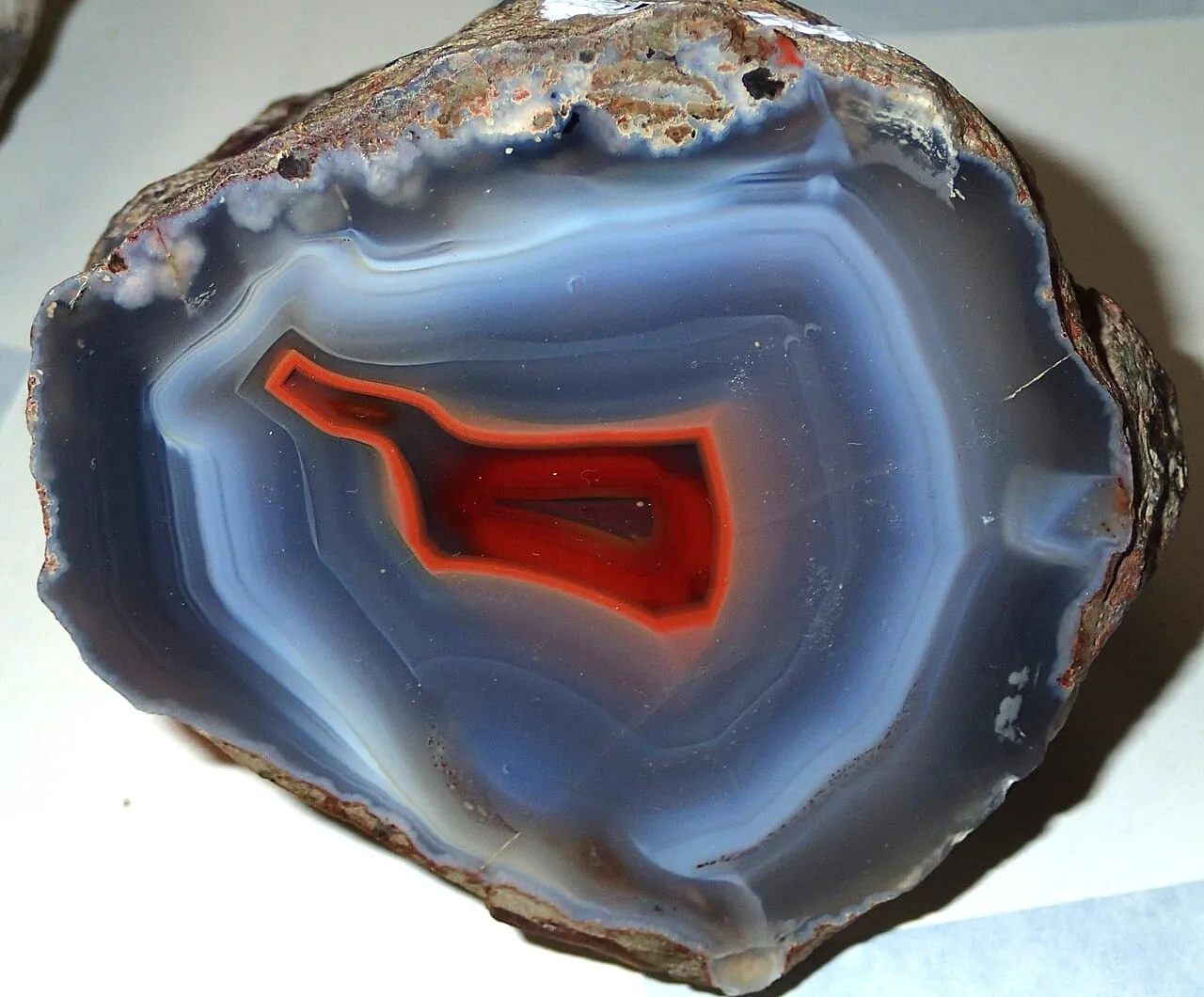
Agate
The banded variety of chalcedony: it grows layer by layer in hollows in volcanic rock and shows a new pattern every time it is cut.
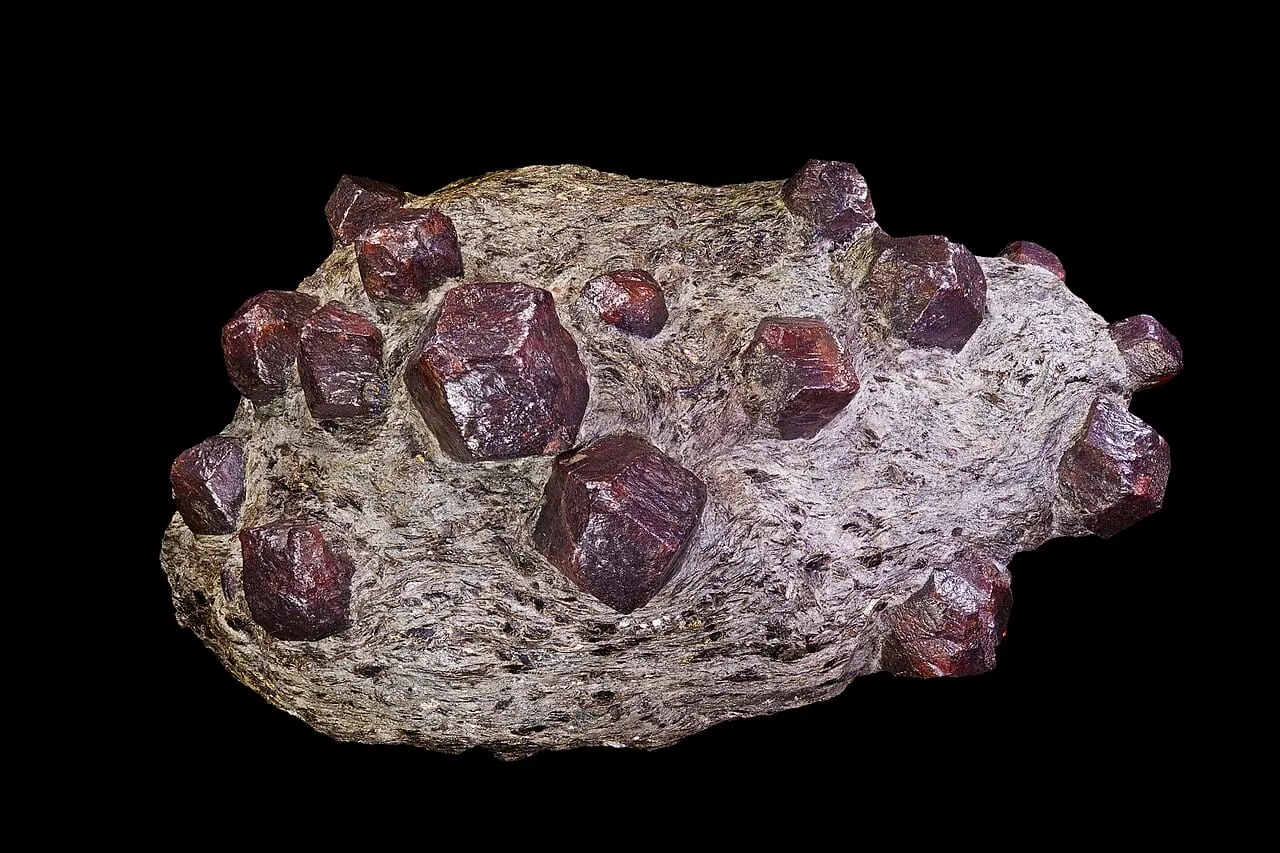
Almandine
The commonest garnet: a deep red, iron-rich stone named after the ancient city of Alabanda in Anatolia, used in jewellery and in sandpaper alike.
Amazonite
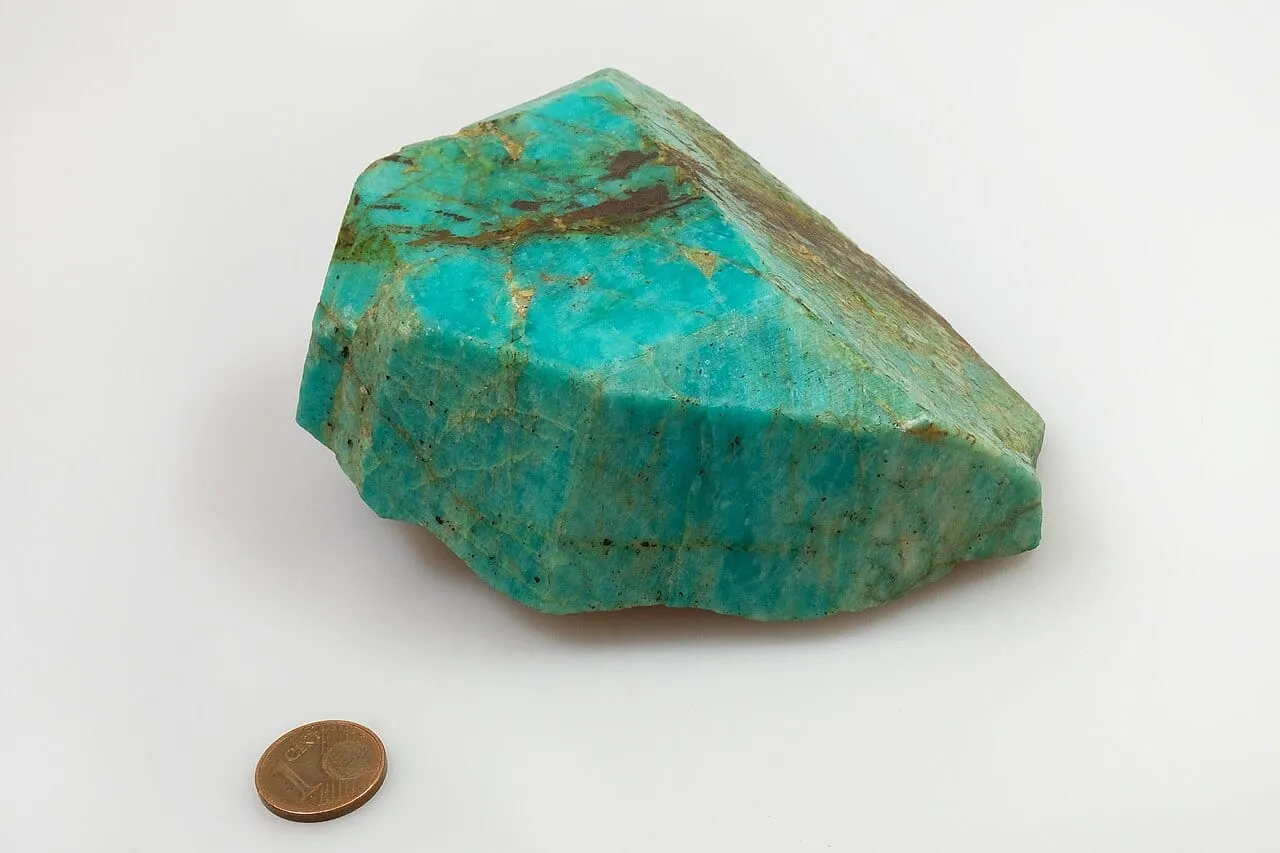
A turquoise-like green-blue feldspar: a variety of microcline worn as jewellery for more than three thousand years, but it can release lead.