Mineral
Jarosite
KFe₃(SO₄)₂(OH)₆Jarosit
A yellow-brown potassium iron sulfate formed as pyrite weathers; it has also been found on Mars, where it is taken as a sign of acidic water.
- Popularly: Common stone

In short
Jarosite is a mineral made of potassium, iron, sulfur, oxygen and hydrogen (potassium iron sulfate hydroxide, KFe₃(SO₄)₂(OH)₆). It mostly forms crusts of tiny crystals and earthy masses ranging from amber-yellow to dark brown. It forms as iron-bearing sulfide minerals such as pyrite are broken down by air and water, and it needs acidic water (a pH below about 3) to form. It is named after the Barranco del Jaroso in Almería, Spain; in 2004 NASA reported that the Opportunity rover had found jarosite on Mars.
Photos
.jpg)
How does it form?
Jarosite is mostly a secondary mineral: it forms near the surface as iron-bearing sulfide minerals such as pyrite are broken down by air and water (oxidation). This process produces acidic, sulfate-rich water, and jarosite can only precipitate from water like that. More rarely it forms as a primary mineral around hot springs and from low-temperature hot-water (hydrothermal) solutions. It is common in acid mine drainage settings (acidic water running out of mines), and it also forms as a by-product of zinc refining.
What is it used for?
Jarosite has no use as an ore or ornamental stone; its importance is scientific and environmental.
- Understanding Mars’s past: The Spirit, Opportunity and Curiosity rovers have detected jarosite or ferric sulfate on Mars. Because jarosite forms only in acidic water, the rocks that contain it are thought to have met liquid, acidic water in the past.
- Mining and the environment: It is a trace of acid production in pyrite-bearing deposits and of acid mine drainage settings; it is also a by-product of zinc refining.
- Physics research: The layers of some jarosite compounds contain an atomic pattern called a “kagome” lattice, which is famous in the study of “geometrically frustrated” magnetic materials.
- Collecting: Its lustrous, well-formed crystals interest mineral collectors.
In Türkiye
In Türkiye jarosite has been reported from the Çöpler porphyry-epithermal gold deposit in İliç district, Erzincan. According to a study by Bozkaya and colleagues published in the Geological Bulletin of Türkiye in 2018, quartz and jarosite occur as well-formed (euhedral) crystals in the deposit’s clay-alteration (argillic) zones. The alteration developed below 200 °C under acidic conditions; a jarosite-bearing sample gave a K/Ar age of 43.6 ± 1.0 million years.
What determines its value?
Jarosite is neither a commercial ore nor an ornamental stone; its crusts are very common on the surface of sulfide deposits and cheap. Collectors look for large, lustrous, well-formed crystals and for specimens from famous places such as the Barranco del Jaroso; most specimens are dull, earthy crusts. Its real importance is scientific rather than financial: it helps us understand Mars’s past and the behaviour of mine waste.
This information is educational, not buying, selling or investment advice. Value varies enormously with quality and treatment.
How to recognise it
- 1
Its colour ranges from amber-yellow to dark brown, its streak (the mark left on a porcelain plate) is pale yellow, and its lustre runs from diamond-like to glassy, resinous on fresh breaks.
- 2
Its hardness is 2.5–3.5 and it is brittle: a knife scratches it easily. That separates it from goethite and limonite, which look rusty yellow-brown too but are much harder (4–5.5).
- 3
Its specific gravity is about 3 (2.9–3.3): slightly heavier than a piece of quartz of the same size.
- 4
It mostly forms crusts of tiny crystals, powder or earthy masses; well-formed crystals are cube-like rhombohedra or plates and only rarely reach 25 cm.
- 5
Look for it on the weathered, rusty yellow-brown surfaces of rocks and ore deposits that contain iron sulfides such as pyrite.
Myths and misconceptions
MythJarosite is a very rare mineral found only in space.
FactIts discovery on Mars made the news, but jarosite is common on Earth: it appears on the weathering surfaces of pyrite-bearing rocks and in mines across the world. What makes jarosite on Mars important is that the mineral can only form in acidic water.
MythAnything rusty yellow-brown is limonite or goethite.
FactJarosite has a similar colour and is often mistaken for limonite; but it is an iron sulfate, whereas goethite and limonite are iron oxide-hydroxides. Jarosite is much softer (hardness 2.5–3.5, against 5–5.5 for goethite).
Did you know?
Jarosite was first described in 1852 by August Breithaupt from specimens from the Barranco del Jaroso (Jaroso ravine) in the Sierra Almagrera, Almería, Spain; the mineral is named after the ravine.
In March 2004 NASA announced that the Opportunity rover’s Mössbauer spectrometer had found jarosite in rocks at Meridiani Planum on Mars. According to NASA, jarosite may point to the rocks having formed in an acidic lake or an acidic hot-spring setting.
According to the Handbook of Mineralogy, jarosite crystals can grow to 25 cm; large jarosite crystals are known from the La Domitila mine in Chihuahua, Mexico.
Where is it found?
Loading map…
- Barranco del Jaroso, Sierra Almagrera, Almería, Spain · Type localityThe place that gave the mineral its name; August Breithaupt described the first scientifically studied specimens from here in 1852
- Horní Slavkov (Schlaggenwald), Karlovy Vary Region, Czechia · Historic sourceAn old tin and silver mining town listed by the Handbook of Mineralogy for jarosite
- Kamariza mine, Lavrio (Laurion), Attica, Greece · Historic sourceAn ancient silver–lead mining district listed by the Handbook of Mineralogy for jarosite
- Tombstone, Arizona, USA · Historic sourceAn old silver-mining town listed by the Handbook of Mineralogy for jarosite
- Marysvale, Utah, USA · Known localityThe Marysvale mining area (Ohio district, Piute County) listed by the Handbook of Mineralogy for jarosite
- Pioche, Nevada, USA · Known localityThe Meadow Valley mines area listed by the Handbook of Mineralogy for jarosite
- Chuquicamata, Antofagasta, Chile · Known localityA large copper-mining district listed by the Handbook of Mineralogy for jarosite
- İliç (Çöpler area), Erzincan, Türkiye · Known localityWell-formed jarosite crystals with quartz have been reported from the clay-alteration zones of the Çöpler porphyry-epithermal gold deposit
Locations are approximate to protect sites. Red dots mark places in Türkiye. Open in the big map →
Frequently asked questions
What is jarosite?
Jarosite is a mineral made of potassium, iron, sulfur, oxygen and hydrogen (potassium iron sulfate hydroxide, KFe₃(SO₄)₂(OH)₆). It mostly forms crusts of tiny crystals and earthy masses ranging from amber-yellow to dark brown. It forms as iron-bearing sulfide minerals such as pyrite are broken down by air and water, and it needs acidic water (a pH below about 3) to form. It is named after the Barranco del Jaroso in Almería, Spain; in 2004 NASA reported that the Opportunity rover had found jarosite on Mars.
What is jarosite used for?
Jarosite has no use as an ore or ornamental stone; its importance is scientific and environmental. Understanding Mars’s past: The Spirit, Opportunity and Curiosity rovers have detected jarosite or ferric sulfate on Mars. Because jarosite forms only in acidic water, the rocks that contain it are thought to have met liquid, acidic water in the past. Mining and the environment: It is a trace of acid production in pyrite-bearing deposits and of acid mine drainage settings; it is also a by-product of zinc refining.
How hard is jarosite?
It has a hardness of 2.5–3.5 on the Mohs scale. A fingernail cannot scratch it, but a steel knife can. Its specific gravity is 2.9–3.3 g/cm³.
Where is jarosite found?
Its best-known localities: Barranco del Jaroso, Sierra Almagrera, Almería, Spain; Horní Slavkov (Schlaggenwald), Karlovy Vary Region, Czechia; Kamariza mine, Lavrio (Laurion), Attica, Greece; Tombstone, Arizona, USA; Marysvale, Utah, USA.
Where is jarosite found in Türkiye?
Known localities in Türkiye: İliç (Çöpler area), Erzincan, Türkiye.
How can you tell if jarosite is real?
Its colour ranges from amber-yellow to dark brown, its streak (the mark left on a porcelain plate) is pale yellow, and its lustre runs from diamond-like to glassy, resinous on fresh breaks. Its hardness is 2.5–3.5 and it is brittle: a knife scratches it easily. That separates it from goethite and limonite, which look rusty yellow-brown too but are much harder (4–5.5). Its specific gravity is about 3 (2.9–3.3): slightly heavier than a piece of quartz of the same size.
Is jarosite valuable?
On the “street to diamond” value ladder it sits on step 3 of nine: Building and industrial stone. Jarosite is neither a commercial ore nor an ornamental stone; its crusts are very common on the surface of sulfide deposits and cheap. Collectors look for large, lustrous, well-formed crystals and for specimens from famous places such as the Barranco del Jaroso; most specimens are dull, earthy crusts. Its real importance is scientific rather than financial: it helps us understand Mars’s past and the behaviour of mine waste.
Sources
- Jarosite · Wikipedia
- Handbook of Mineralogy: Jarosite · Mineralogical Society of America
- Opportunity Rover Finds Strong Evidence Meridiani Planum Was Wet (press release, 2 March 2004) · NASA, 2004
- Meridiani Planum · Wikipedia
- Sierra Almagrera · Wikipedia
- Mineralogical Evidences on Argillic Alteration in the Çöpler Porphyry-Epithermal Gold Deposit (Erzincan, East-Central Anatolia) (O. Bozkaya et al.), Türkiye Jeoloji Bülteni 61, 335–358 · Türkiye Jeoloji Kurumu, 2018
- Jarosite: Identification, Properties & Lookalikes · rockhounding.org
External links
Draft: awaiting expert reviewReport an error ↗
On the same step
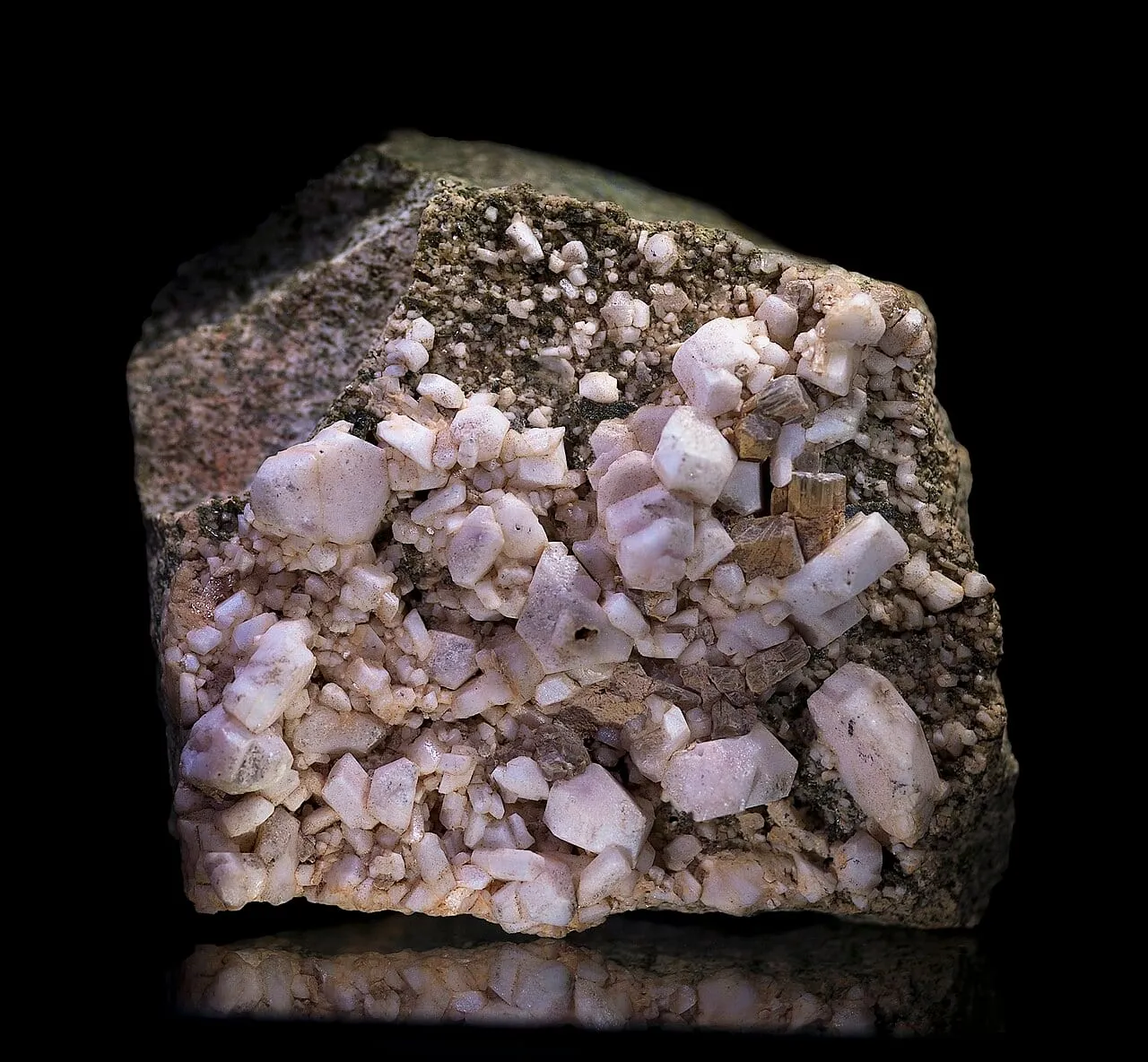
Albite
The white, sodium end of the feldspars: with its deposits at Çine–Milas, a glass and ceramics raw material that makes Türkiye one of the world’s main feldspar producers.
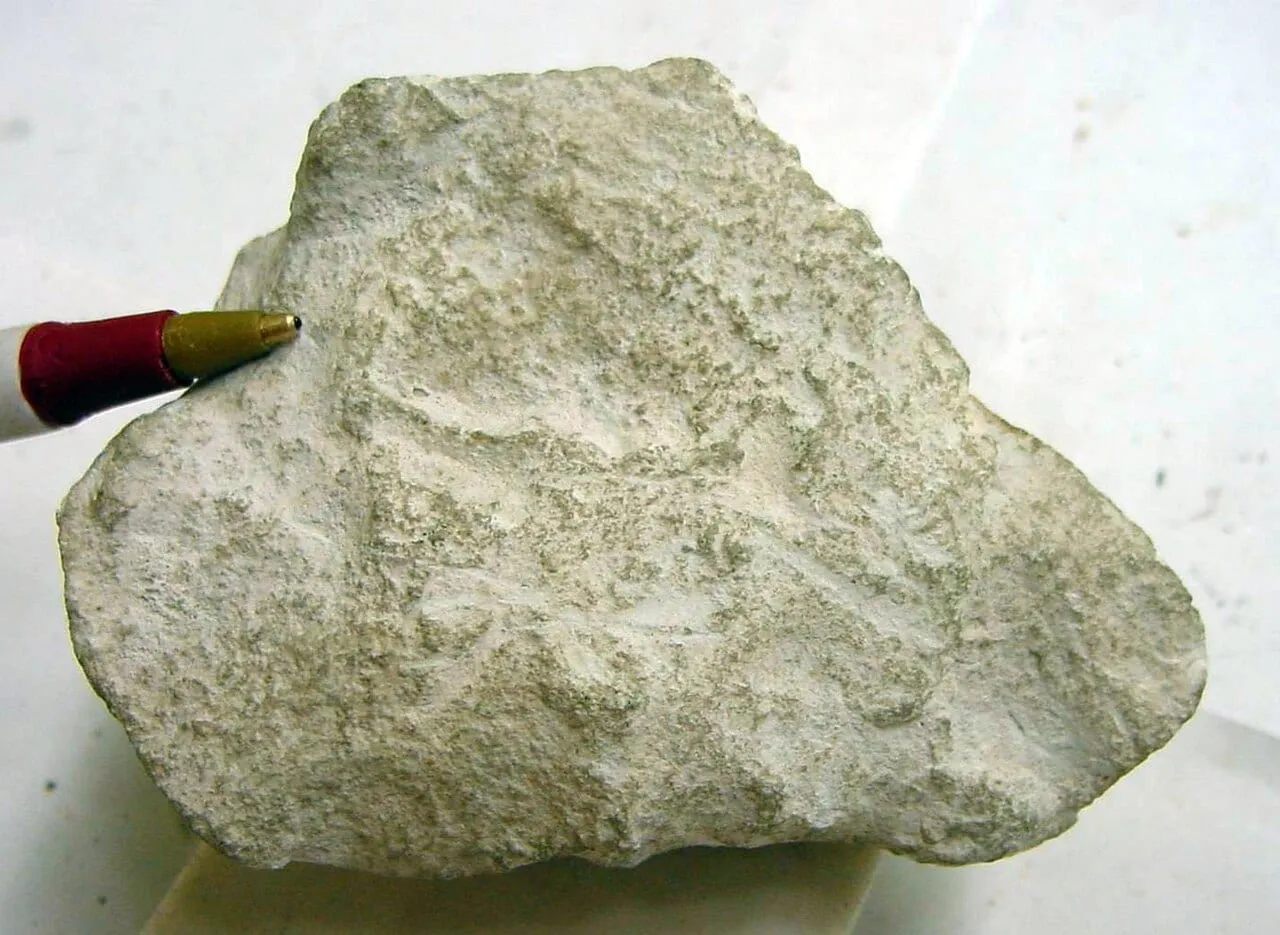
Alunite
The “alum stone” from which alum was made for centuries. Foça, Şaphane in Kütahya and Şebinkarahisar are Türkiye's old alum homelands.
Anhydrite
Gypsum without its water: a calcium sulfate mineral, whose blue-grey Peruvian form is sold as “angelite”.