Rock
Granodiorite
Granodiyorit
The rock of the Rosetta Stone and the Pantheon's columns: granite's darker, plagioclase-rich cousin from deep underground.
- Popularly: Natural stone (building and decor)
- Building stone
- Important in Türkiye

In short
Granodiorite is a coarse-grained rock formed when magma cools slowly deep in the crust. It looks very like granite; it differs in holding more plagioclase than orthoclase feldspar and usually more black minerals (biotite, hornblende), so it looks a little darker. The average composition of the upper continental crust is close to that of granodiorite. In Türkiye it occurs in the Uludağ pluton in Bursa and the Kozak pluton in Bergama, and in the trade it is often called “granite”.
Photos

How does it form?
Granodiorite is a plutonic rock, formed when silica-rich magma cools slowly and solidifies deep in the crust in huge masses called batholiths or stocks. Because the cooling is so slow, the minerals grow into large crystals. As the overlying rocks are eroded over millions of years, granodiorite reaches the surface.
The same magma reaching the surface and cooling quickly forms fine-grained dacite. Granodiorite is one of the most common plutonic rocks of the crust; the average composition of the upper continental crust is the same as granodiorite’s.
What is it used for?
- Crushed stone: Crushed, it is used as road and concrete aggregate.
- Building stone: It is used as facade cladding, flooring and paving, usually under the name “granite”.
- In history: In ancient Egypt statues and inscribed stones, and in Roman times large building elements such as the Pantheon’s columns, were cut from granodiorite quarries.
Where is it found?
Granodiorite is a common rock of the world’s mountain belts. In Egypt the quarries of Aswan and Mons Claudianus were the known granodiorite sources of the ancient world. In the USA the Sierra Nevada Batholith and the Little Cottonwood stock in Utah, and in Malaysia Mount Kinabalu, are granodiorite masses.
Granodiorite in Türkiye
In the Uludağ Massif in Bursa, the elliptical Uludağ granitoid, about 14 × 7 km, is mostly granodioritic: it consists of coarse-grained biotite granodiorite, two-mica granodiorite and leucogranodiorite, and is Upper Oligocene in age. In the skarn zone that formed where this granodiorite meets marble, the tungsten mine of Uludağ, once in operation and now closed, was opened. The Kozak pluton in Bergama, İzmir, is, according to MTA studies, a light-coloured, heavily jointed hornblende granodiorite whose crystals of quartz, hornblende, biotite and feldspar are visible to the eye. Stone quarried there is sold as Bergama Graniti and was registered as a geographical indication in 2017. The granite page also mentions Bergama Graniti.
What determines its value?
Granodiorite is a plentiful plutonic rock; sold by the tonne as crushed stone it is worth little. As block and cladding stone, its value depends on whether large, crack-free blocks can be quarried, on an even and attractive colour and pattern, on how well it polishes, on its strength and on the distance of the quarry. Because it is sold as “granite”, the name granodiorite adds no separate value; the fame of the quarry area and the look of the stone matter.
This information is educational, not buying, selling or investment advice. Value varies enormously with quality and treatment.
How to recognise it
- 1
Visible grains of quartz (glassy grey), plagioclase (white, milky), a little pinkish alkali feldspar and black biotite and hornblende interlock.
- 2
It usually looks darker and two-toned than granite, because black minerals are more abundant and pink alkali feldspar is scarcer.
- 3
It scratches glass, cannot be scratched with a steel knife, and does not fizz in vinegar or dilute acid.
- 4
Granite and granodiorite are hard to tell apart by eye; a firm answer comes from the proportions of the feldspar types.
Fakes and imitations
What shops usually don’t tell you:
- In the stone trade most hard silicate rocks that take a polish are sold as “granite”, and granodiorite is among them. “Bergama Graniti” is largely granodiorite.
- Many of the dark grey ancient Egyptian statues and inscribed stones called “basalt” or “diorite” are, by today's classification, granodiorite.
Myths and misconceptions
MythThe Rosetta Stone is made of black basalt.
FactThe Rosetta Stone is granodiorite. Protective coatings applied in the 19th century made it look like black basalt; a cleaning in 1999 revealed the rock's dark grey colour and crystalline structure.
MythGranodiorite is just another name for granite.
FactThey look alike, but in granodiorite plagioclase feldspar outweighs orthoclase, while in granite alkali feldspar stands out. Granodiorite usually looks darker and is often sold as “granite”.
Did you know?
The Rosetta Stone is granodiorite. Protective coatings applied in the 19th century long made it look like black basalt; when it was cleaned in 1999 its dark grey colour, sparkling crystalline structure and a pink vein across the top left corner came to light.
Each column of the portico of the Pantheon in Rome stands about 12 metres (39 feet) high and weighs about 60 tons; they are granodiorite from the Mons Claudianus quarry in Egypt.
Mount Kinabalu in Malaysia, 4,095 metres high, is a huge granodiorite pluton that cooled about 10 million years ago, and it is still gaining about 5 mm of height a year.
Where is it found?
Loading map…
- Aswan and Gebel Tingar, Egypt · Historic sourceDark grey granodiorite was quarried at Aswan alongside granite. The Rosetta Stone is thought most likely to come from a small granodiorite quarry at Gebel Tingar.
- Mons Claudianus, Eastern Desert, Egypt · Historic sourceA granodiorite quarry worked in Roman times, from the 1st to the mid-3rd century AD. The columns of the portico of the Pantheon in Rome came from here.
- Little Cottonwood Canyon, Utah, USA · Known localityThe Little Cottonwood stock, about 30.5-29 million years old, consists mostly of granodiorite, quartz monzonite and granite; the stone of the Salt Lake Temple was quarried here.
- Sierra Nevada Batholith, California, USA · Major depositA vast mass of plutonic rock about 640 km long, largely formed 105-85 million years ago, made of rocks such as granodiorite and granite.
- Mount Kinabalu, Sabah, Malaysia · Known localityThe 4,095-metre mountain is a pluton of granodiorite that intruded into sedimentary and ultrabasic rocks; the granodiorite cooled about 10 million years ago, and the mountain is still rising about 5 mm a year.
- Uludağ Massif, Bursa, Türkiye · Major depositThe elliptical Uludağ granitoid, about 14 × 7 km, is mostly granodioritic and Upper Oligocene in age. Where it meets marble, the skarn deposit of the now-closed tungsten mine formed.
- Kozak pluton, Bergama, İzmir, Türkiye · Known localityAccording to MTA studies the Kozak pluton is a light-coloured, heavily jointed hornblende granodiorite; stone quarried here was registered as a geographical indication, “Bergama Graniti”, in 2017.
Locations are approximate to protect sites. Red dots mark places in Türkiye. Open in the big map →
Frequently asked questions
What is granodiorite?
Granodiorite is a coarse-grained rock formed when magma cools slowly deep in the crust. It looks very like granite; it differs in holding more plagioclase than orthoclase feldspar and usually more black minerals (biotite, hornblende), so it looks a little darker. The average composition of the upper continental crust is close to that of granodiorite. In Türkiye it occurs in the Uludağ pluton in Bursa and the Kozak pluton in Bergama, and in the trade it is often called “granite”.
What is granodiorite used for?
Crushed stone: Crushed, it is used as road and concrete aggregate. Building stone: It is used as facade cladding, flooring and paving, usually under the name “granite”. In history: In ancient Egypt statues and inscribed stones, and in Roman times large building elements such as the Pantheon's columns, were cut from granodiorite quarries.
How hard is granodiorite?
It has a hardness of 6–7 on the Mohs scale. It can scratch glass; a steel knife scratches it only with difficulty. Its specific gravity is 2.6–2.8 g/cm³.
Where is granodiorite found?
Its best-known localities: Sierra Nevada Batholith, California, USA; Uludağ Massif, Bursa, Türkiye; Aswan and Gebel Tingar, Egypt; Mons Claudianus, Eastern Desert, Egypt; Little Cottonwood Canyon, Utah, USA.
Where is granodiorite found in Türkiye?
Known localities in Türkiye: Uludağ Massif, Bursa, Türkiye; Kozak pluton, Bergama, İzmir, Türkiye.
How can you tell if granodiorite is real?
Visible grains of quartz (glassy grey), plagioclase (white, milky), a little pinkish alkali feldspar and black biotite and hornblende interlock. It usually looks darker and two-toned than granite, because black minerals are more abundant and pink alkali feldspar is scarcer. It scratches glass, cannot be scratched with a steel knife, and does not fizz in vinegar or dilute acid. In the stone trade most hard silicate rocks that take a polish are sold as “granite”, and granodiorite is among them. “Bergama Graniti” is largely granodiorite.
Is granodiorite valuable?
On the “street to diamond” value ladder it sits on step 3 of nine: Building and industrial stone. Granodiorite is a plentiful plutonic rock; sold by the tonne as crushed stone it is worth little. As block and cladding stone, its value depends on whether large, crack-free blocks can be quarried, on an even and attractive colour and pattern, on how well it polishes, on its strength and on the distance of the quarry. Because it is sold as “granite”, the name granodiorite adds no separate value; the fame of the quarry area and the look of the stone matter.
Sources
- Granodiorite · Wikipedia
- Granodiyorit · Vikipedi
- Rosetta Stone · Wikipedia
- Ornamental Stones (Harrell), UCLA Encyclopedia of Egyptology 1(1) · University of California, 2013
- Mons Claudianus · Wikipedia
- Little Cottonwood Canyon · Wikipedia
- Sierra Nevada Batholith · Wikipedia
- Mount Kinabalu · Wikipedia
- Physico-mechanical characterization and gamma radiation shielding capability of granodiorite from Suwayqat El-Arsha, Egypt · PubMed Central
- Uludağ Masifi'nin (Bursa) petrol ve doğalgaz potansiyelinin yeni bir jeokimyasal yöntemle değerlendirilmesi (Palabıyık, Özdemir, Şahinoğlu & Karataş), Trakya Üniversitesi Mühendislik Bilimleri Dergisi 21(1): 45–66 · Trakya Üniversitesi, 2020
- Uludağ · Wikipedia
- Uludağ volfram yataklarının değerlendirilmesi (Ekinci), yüksek lisans tezi · İstanbul Teknik Üniversitesi, 1993
- Dikili-Bergama-Çandarlı (Batı Anadolu) Yöresinin Jeolojisi ve Magmatik Kayaçların Petrolojisi (Ercan ve ark.), Jeoloji Mühendisliği 20 · MTA Genel Müdürlüğü, 1984
- Bergama Graniti, coğrafi işaret tescili (No. 271) · T.C. Kültür ve Turizm Bakanlığı, İzmir İl Müdürlüğü, 2017
External links
Draft: awaiting expert reviewReport an error ↗
On the same step
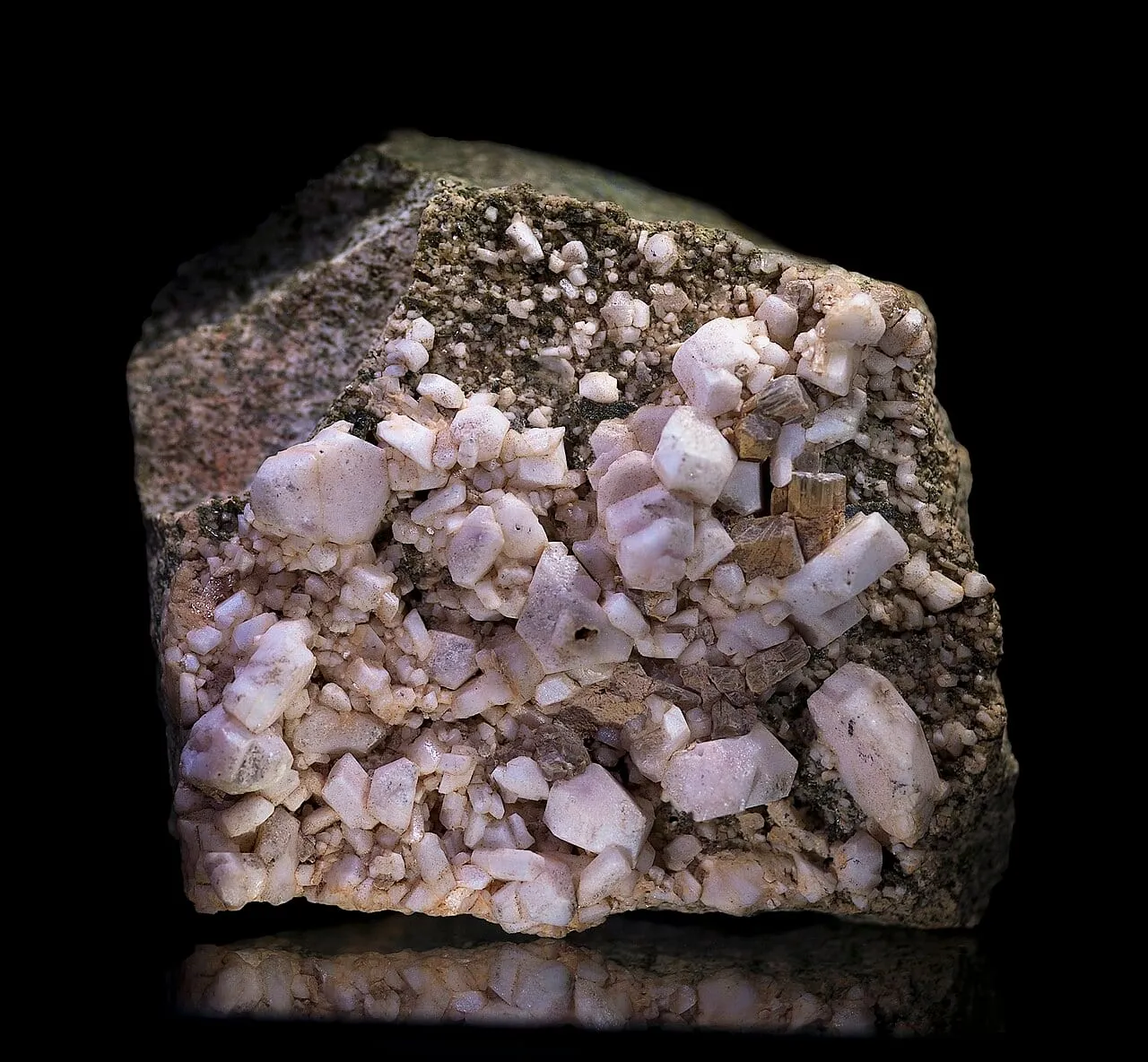
Albite
The white, sodium end of the feldspars: with its deposits at Çine–Milas, a glass and ceramics raw material that makes Türkiye one of the world’s main feldspar producers.
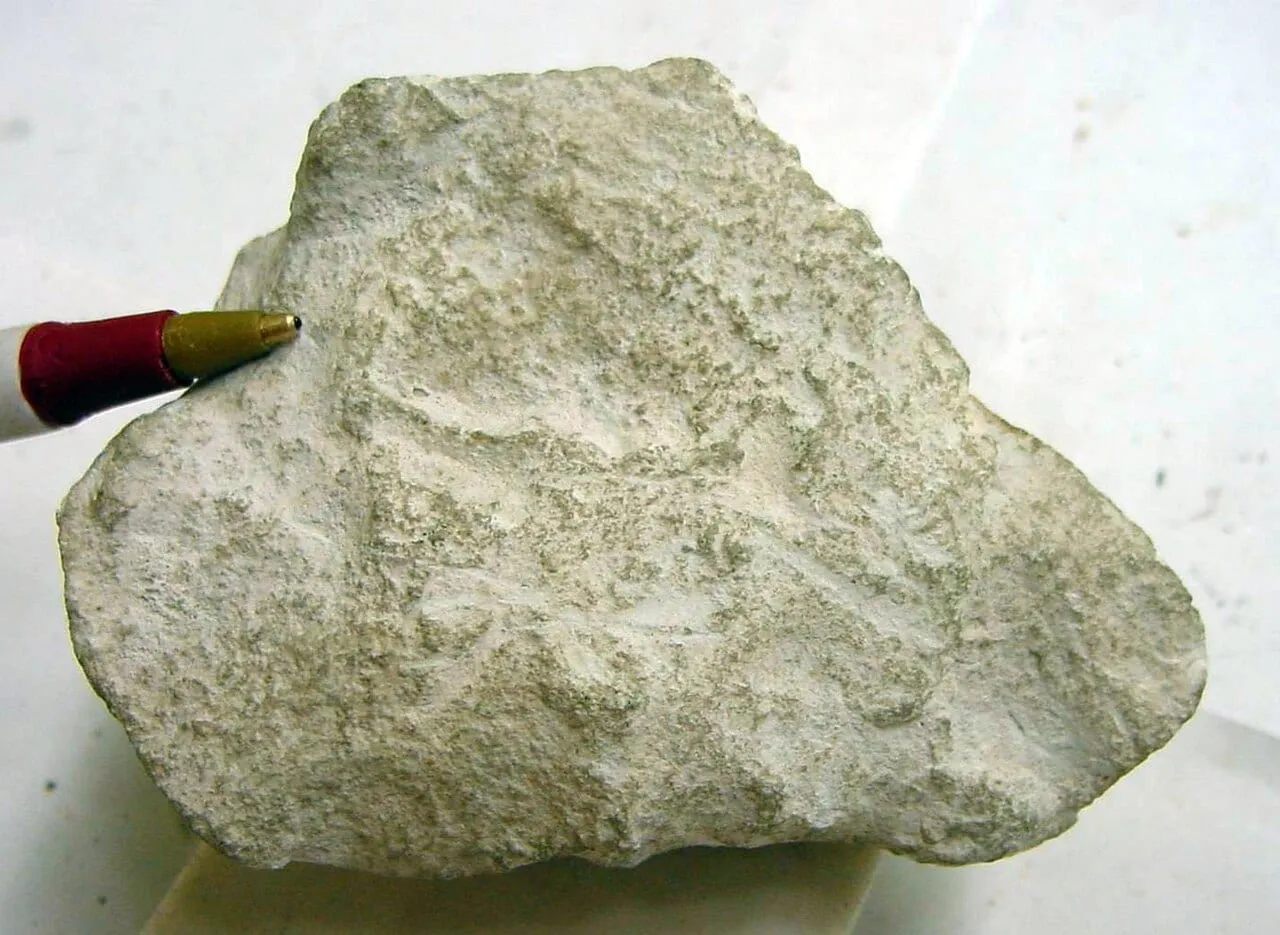
Alunite
The “alum stone” from which alum was made for centuries. Foça, Şaphane in Kütahya and Şebinkarahisar are Türkiye's old alum homelands.
Anhydrite
Gypsum without its water: a calcium sulfate mineral, whose blue-grey Peruvian form is sold as “angelite”.