Rock
Dacite
Dasit
Between andesite and rhyolite: a quartz-bearing volcanic rock that builds lava domes and drives explosive eruptions.
_1.jpg)
In short
Dacite is a pale rock that forms when fairly silica-rich lava from a volcano cools. Its lava is so sticky that it hardly flows; it piles up over the vent as a dome, or explodes violently because of the gas trapped inside. The rock erupted by Mount St. Helens in the USA in 1980 was dacite.
How does it form?
Dacite forms mostly at volcanoes above subduction zones. Dacitic magma is richer in silica and more viscous than andesitic magma, and as silica and gas contents rise, eruptions become more explosive.
Because dacite lava is so viscous it cannot flow far; it piles up over the vent to build steep-sided lava domes. When the gas in the magma cannot escape easily, the eruption turns explosive and produces pumice, ash and pyroclastic flows. Mount St. Helens in the USA is a mainly explosive dacite volcano. The slowly cooled, plutonic equivalent of dacite is granodiorite.
Dacite in Türkiye
Dacite is common at the large volcanoes of Central Anatolia. According to Türkiye’s General Directorate of Mineral Research and Exploration (MTA), Mount Erciyes in Kayseri is built largely of andesitic and dacitic lava flows and is surrounded by dacitic and rhyodacitic domes formed in the Pleistocene and possibly the early Holocene. These domes formed together with significant ash falls and pyroclastic flows. Large explosive eruptions at Erciyes are known to have continued at least into the early Holocene.
Dacite is not used as a building stone as widely as andesite, but it is an important rock for understanding how volcanoes behave.
How to recognise it
- 1
White feldspar and black biotite or hornblende crystals sit in a light grey, pale brown or pinkish groundmass.
- 2
Unlike andesite it sometimes contains glassy, rounded quartz grains, but the two are often hard to tell apart by eye.
- 3
It is usually paler and slightly lighter than basalt and andesite.
- 4
A firm name needs chemical analysis (silica and alkali contents).
Fakes and imitations
What shops usually don’t tell you:
- The boundaries between dacite, andesite and rhyolite are defined by chemical analysis, so names given in the field or in the stone trade are often wrong.
- In the stone trade dacite is usually sold as “andesite” or simply as “volcanic stone”.
Did you know?
Dacite is named after Dacia, the Roman province that included Transylvania, where the rock was first described.
In the 1980 eruption of Mount St. Helens, the top 400 metres of the summit collapsed in a huge debris avalanche; a dacite lava dome later grew in the crater left behind.
Where is it found?
Loading map…
- Mount St. Helens, Washington, USA · Major depositA mainly explosive dacite volcano; after the 1980 eruption a dacite lava dome grew in its crater.
- Mount Erciyes, Kayseri, Türkiye · Known localityA stratovolcano built largely of andesitic and dacitic lava flows, ringed by dacitic and rhyodacitic domes.
- Transylvania, Romania · Historic sourceDacite was described in an 1863 work on the geology of Transylvania and named after Dacia, the Roman province that covered the region.
Locations are approximate to protect sites. Red dots mark places in Türkiye. Open in the big map →
Sources
- Dacite · Encyclopaedia Britannica
- Mount St. Helens · U.S. Geological Survey
- Erciyes Dağı · MTA, Türkiye Volkanları (TurkVolc)
External links
Draft: awaiting expert reviewReport an error ↗
On the same step
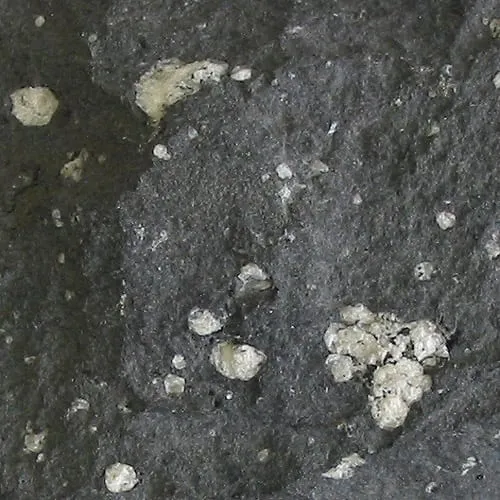
Andesite
The rock of volcanic arcs, named after the Andes — and the pink-grey stone of Ankara Castle.
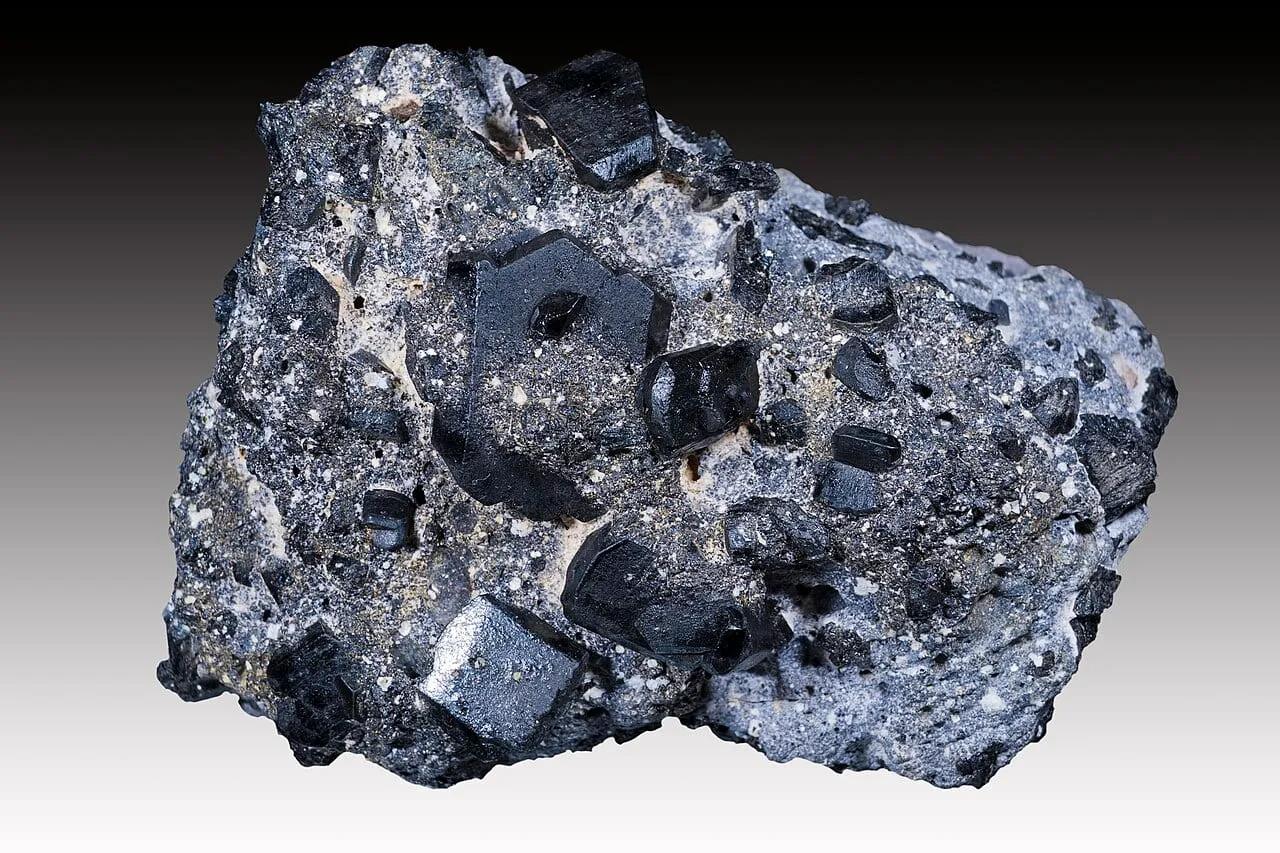
Augite (pyroxene)
The most common pyroxene, which darkens basalt and gabbro: inconspicuous, yet one of the key building blocks of Earth’s crust.
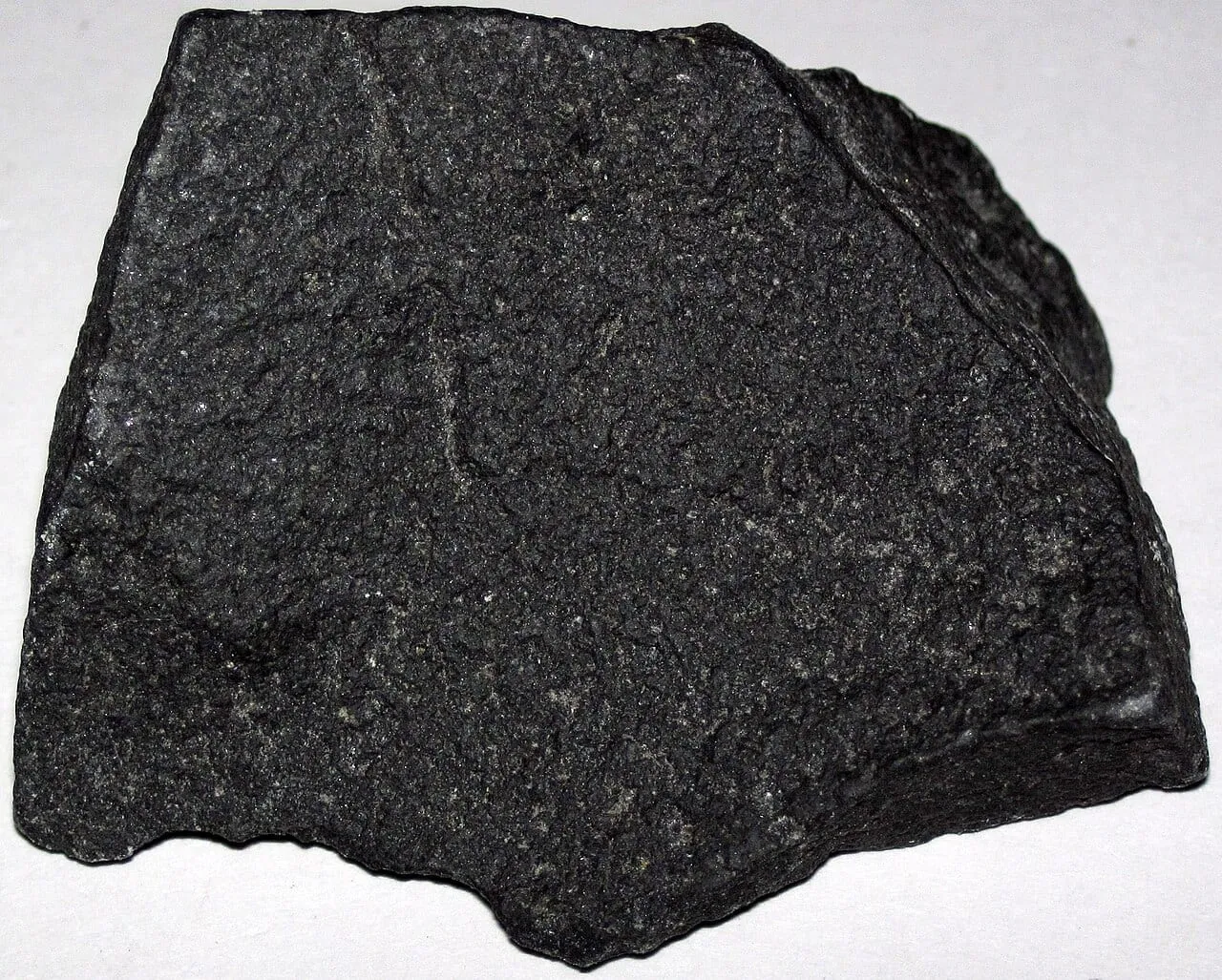
Basalt
The rock of the ocean floors and the Moon’s dark plains — the most common volcanic rock on Earth.