Rock
Granite
Granit
From kitchen worktops to monuments: a tough, coarse-grained rock born from magma that cooled slowly deep underground.
- Everyday
- Building stone

In short
Granite is a rock that forms when molten rock (magma) cools very slowly kilometres below the surface. Because it cools so slowly, its crystals have time to grow, so you can see the pink, white, grey and black grains one by one. It is hard and long-lasting, which is why it is used in buildings, kerbs and kitchen worktops.
How does it form?
Granite is an intrusive (plutonic) igneous rock: it forms when silica-rich magma cools and solidifies very slowly deep in Earth’s crust. Cooling can take thousands or even millions of years, so the minerals grow into large crystals. These big bodies of magma are called plutons; granite reaches the surface only after the rocks above it have been worn away over millions of years.
Granite is the most common plutonic rock of the continental crust. If magma of the same composition erupts and cools quickly at the surface, it forms fine-grained rhyolite instead.
What is it used for?
- Building stone: Hard and resistant to wear, it is used for facades, steps, kerbstones and paving setts.
- Interiors: Polished granite slabs are widely used for kitchen worktops and floors.
- Monuments and gravestones: It withstands the weather for a very long time.
Granite in Türkiye
Granite and related plutonic rocks crop out in many parts of Türkiye. Stone quarried on the Kozak Plateau in Bergama (İzmir) was registered as a geographical indication, “Bergama Graniti”, in 2017. Geologists classify most of this pluton as granodiorite, a close relative of granite; in the stone trade both are simply called “granite”.
How to recognise it
- 1
It is made of interlocking crystals you can see: glassy grey quartz, pink or white feldspar, and small black grains of mica or hornblende.
- 2
Feldspar grains flash flat, shiny faces when you tilt them in the light; quartz grains look glassy and break irregularly.
- 3
It can scratch glass, and a steel knife cannot scratch its quartz and feldspar grains.
- 4
It does not fizz in vinegar or dilute acid, which tells it apart from marble and limestone.
Fakes and imitations
What shops usually don’t tell you:
- Most stone sold as “black granite” is not granite at all but dark, quartz-poor rocks such as gabbro, diabase (dolerite) or anorthosite.
- In the stone trade “granite” is used for most hard silicate rocks that take a polish, so gneiss, syenite and similar rocks may also be sold as granite.
- Engineered quartz (quartz composite) worktops are a mix of crushed quartz and resin; their pattern is more regular and uniform than natural granite.
- On granite-look porcelain tiles the pattern is only on the surface and repeats every few tiles.
Safety
Granite is harmless to handle. However, the fine dust from cutting, grinding and polishing contains crystalline silica (quartz dust), which can cause silicosis, a permanent lung disease, when inhaled. Stoneworkers should use wet cutting and proper respiratory protection.
Did you know?
The four giant presidential faces on Mount Rushmore are carved into granite that crystallised about 1.7 billion years ago.
Aberdeen in Scotland is nicknamed the “Granite City” because so many of its historic buildings are made of local granite.
Where is it found?
Loading map…
- Aberdeen, Scotland · Historic sourceKnown as the “Granite City” because many of its historic buildings were built from granite quarried at nearby Rubislaw.
- Mount Rushmore, South Dakota, USA · Known localityThe giant presidential faces are carved into Harney Peak Granite, about 1.7 billion years old.
- Kozak Plateau, Bergama, İzmir, Türkiye · Known localityThe Kozak pluton is geologically mostly granodiorite; stone quarried here was registered as a geographical indication, “Bergama Graniti”, in 2017.
Locations are approximate to protect sites. Red dots mark places in Türkiye. Open in the big map →
Sources
- Granite · Encyclopaedia Britannica
- Geologic Activity — Mount Rushmore National Memorial · U.S. National Park Service
- Bergama Graniti — Coğrafi İşaret Tescil Belgesi (No. 271) · TÜRKPATENT, 2017
- Rubislaw Granite and an Iconic Nickname · Sedgwick Museum of Earth Sciences, University of Cambridge
External links
Draft: awaiting expert reviewReport an error ↗
On the same step
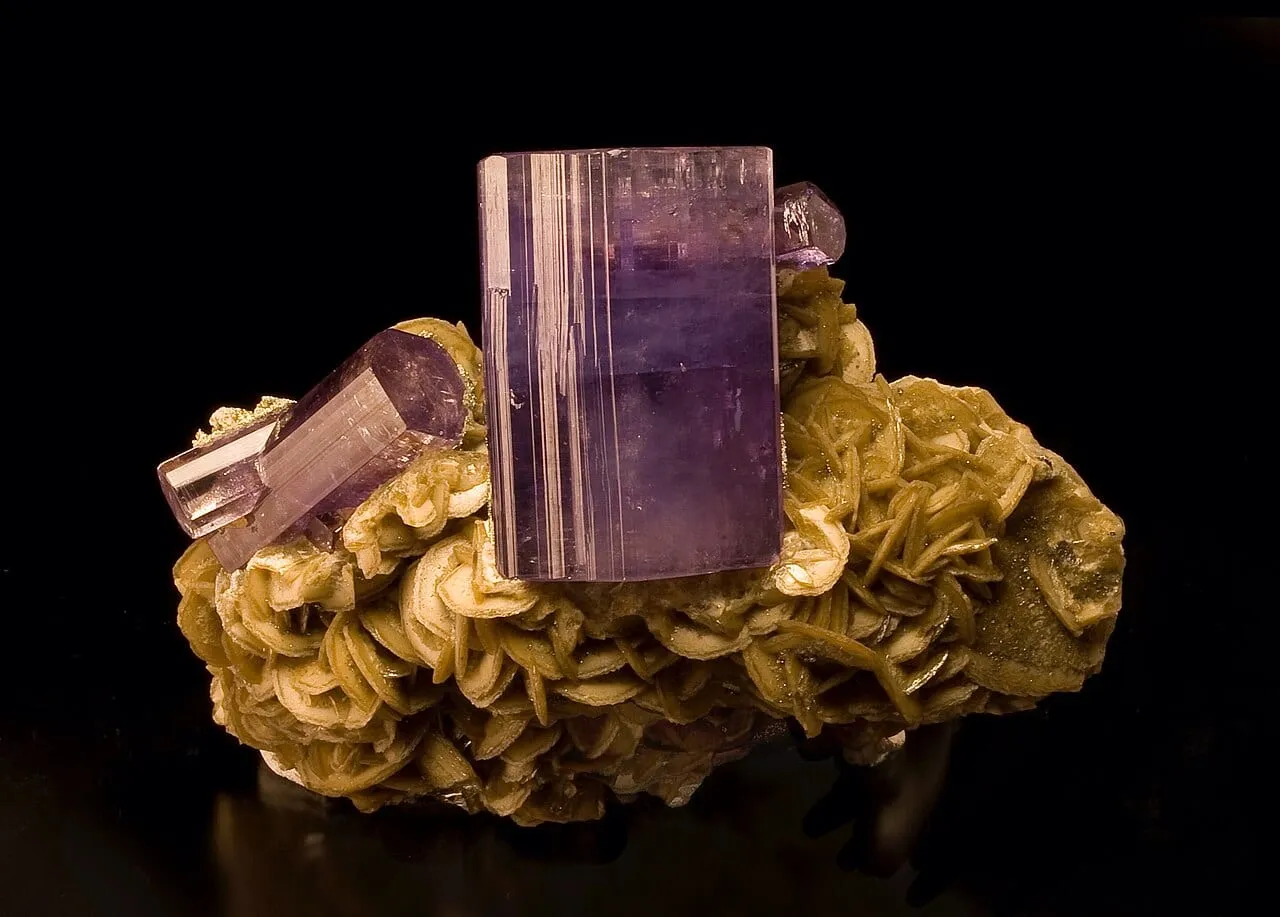
Apatite
A mineral cousin of our teeth and bones, the source of the phosphorus in fertilisers, and number 5 on the Mohs scale.
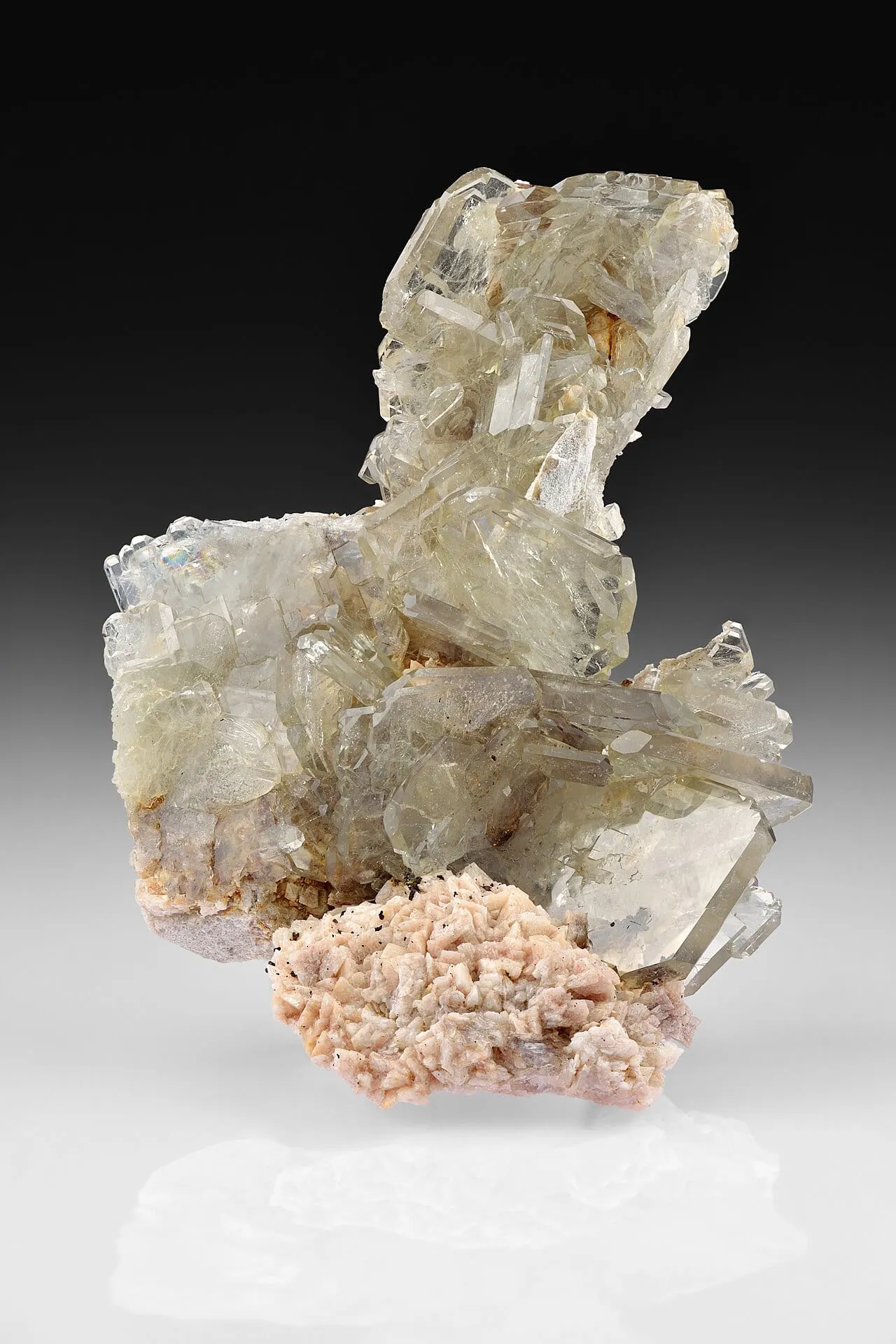
Baryte
A pale barium mineral that feels surprisingly heavy in the hand; even its name comes from the Greek word for heavy.
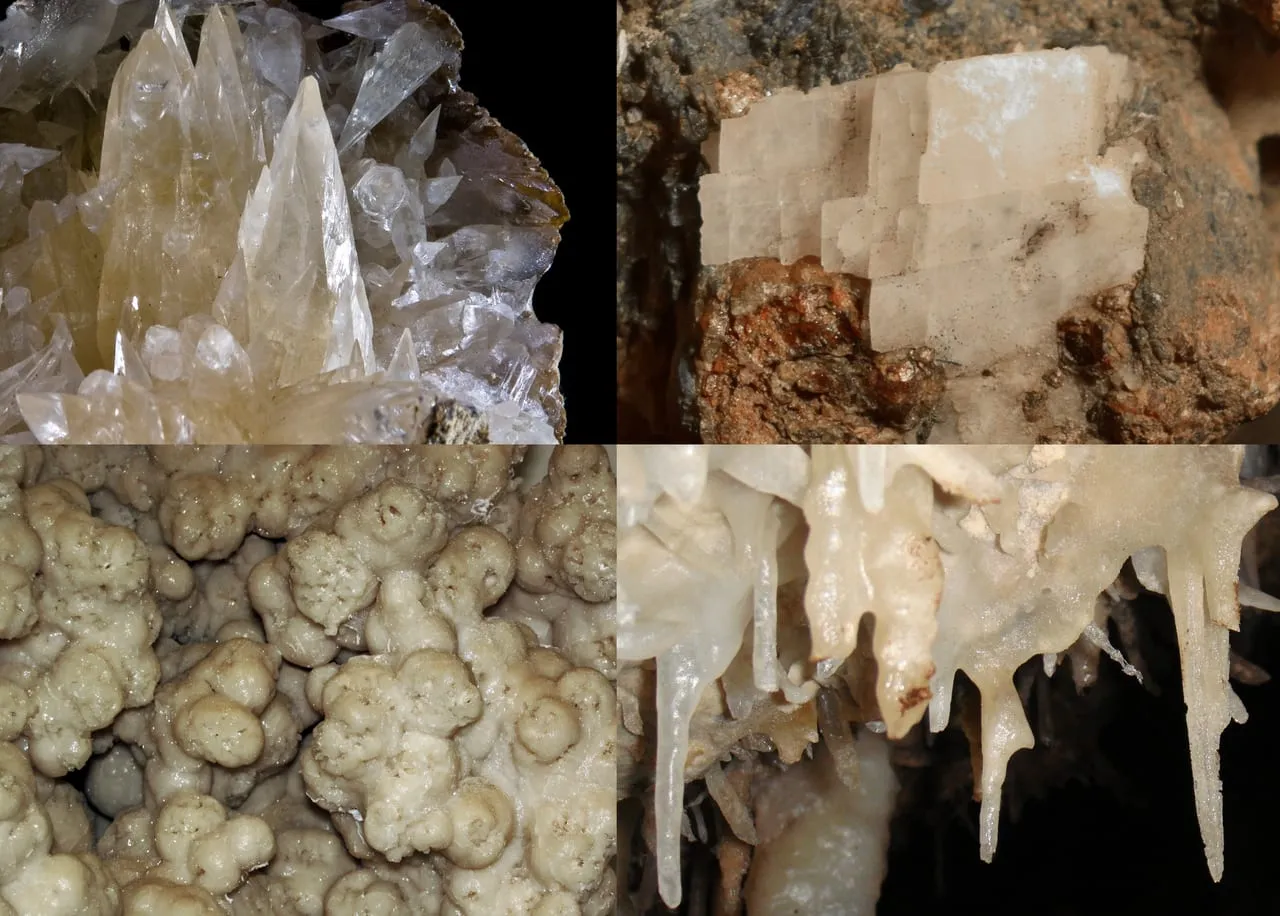
Calcite
The main mineral of limestone, marble and cave stalactites: it fizzes in acid, and its clear crystals show everything double.