Mineral
Cobaltite
CoAsSKobaltit
One of the ore minerals of cobalt: silver-white with a metallic lustre, made of cobalt, arsenic and sulfur.
Also known as: Cobaltine (older name)
- Popularly: Ore and raw material
- Ore
- Handle with care

In short
Cobaltite is a silver-white mineral with a metallic lustre, made of cobalt, arsenic and sulfur (CoAsS). Its crystals often look like cubes or pyrite crystals. About 45% of its weight is arsenic, so it is poisonous. Although it is one of the minerals mined for cobalt, most cobalt today is a by-product of copper and nickel mining.
Photos

How does it form?
Cobaltite forms in high-temperature hydrothermal deposits, as grains scattered through the rock and as veins, and in veins in contact-metamorphosed rocks. It occurs with magnetite, sphalerite, chalcopyrite, skutterudite and other cobalt-nickel sulfides and arsenides.
Near the surface, as air and water weather it, cobaltite turns into erythrite, a pink hydrated cobalt arsenate that shows as a pink crust, the “cobalt bloom”, on the rock.
What is it used for?
- Cobalt metal: According to the USGS, about 51% of the cobalt used in the United States goes into superalloys (mainly aircraft gas turbine engines), 25% into chemical uses and 9% into cemented carbides for cutting and wear-resistant uses. According to Wikipedia, the largest demand today comes from lithium-ion batteries.
- Blue colour: Cobalt compounds give glass, ceramics and paint a vivid blue.
- History: Indian jewellers used cobaltite to make blue enamel on gold and silver jewellery.
- Life: Cobalt is the element at the centre of vitamin B12 (cobalamin); in trace amounts it is essential for living things.
The silver rush and cobalt
The town of Cobalt in Ontario, Canada, was born from silver found in 1903 during the building of a railway. The silver ore came with arsenic and cobalt minerals, and by 1908 the district was regarded as the world’s largest producer of silver and, as a by-product, of cobalt. Arsenic that ended up in the tailings and waste rock now contaminates the surface water of the area.
What determines its value?
Cobaltite is an ore, and its value depends on the cobalt grade of the ore, the cost of separating harmful components such as arsenic, the size of the deposit and demand for cobalt (above all from the battery and superalloy industries). According to the USGS, the great majority of the world’s cobalt resources lie in sediment-hosted copper deposits in Congo and Zambia, in nickel laterites and in magmatic nickel-copper sulfide deposits; cobaltite is not singled out as a leading ore mineral among these deposit types. For collectors, well-formed cubic or pyritohedral crystals, freedom from damage and famous localities such as Tunaberg or Cobalt (Ontario) count. Because it contains arsenic, it must be stored safely.
This information is educational, not buying, selling or investment advice. Value varies enormously with quality and treatment.
How to recognise it
- 1
It is silver-white, often with a reddish tint, and has a metallic lustre. The streak (powder colour) is greyish black.
- 2
Its hardness is 5.5 (a steel knife scratches it only with difficulty) and its specific gravity is about 6.3, so it feels heavy. It splits perfectly in one direction and is brittle.
- 3
Crystals are often cubes or pyrite-like forms (pseudo-pyritohedra), and their faces can be striated as on pyrite. Compact or granular masses also occur.
- 4
On weathered surfaces a pink-red crust (erythrite, a hydrated cobalt arsenate) may form; it signals that cobalt minerals are nearby.
Fakes and imitations
What shops usually don’t tell you:
- Cobaltite has no widely known imitation. It can be confused with similar silvery-grey, heavy, metallic arsenic minerals (such as arsenopyrite or skutterudite); because they are hard to tell apart by eye, analysis is needed for a sure identification.
Safety
Cobaltite is about 45% arsenic by weight; it is poisonous if swallowed or if its dust is breathed. Do not lick it, put it in your mouth, or put it in water to make “stone water” or an “elixir”. Do not heat it (arsenic-bearing fumes are released), crush, grind or sand it. Specimens with a pink bloom of erythrite on the surface also contain arsenic. Wash your hands after handling and keep specimens in a closed container, away from children and pets.
Myths and misconceptions
MythCobaltite is a blue stone, the colour of “cobalt blue”.
FactCobaltite is not blue but silver-white to violet steel-grey, with a pink bloom of erythrite on weathered surfaces. The blue colour comes from adding cobalt compounds to glass, ceramics and paint.
MythToday’s cobalt comes from mining cobalt minerals such as cobaltite.
FactCobalt is mostly a by-product of copper and nickel mining. According to the USGS, about 230 thousand tonnes of the roughly 310 thousand tonnes produced worldwide in 2025 came from the Democratic Republic of the Congo; cobaltite is one of the minerals mined for cobalt, but it is not the main source.
Did you know?
The name “cobalt” comes from the German Kobold, “underground goblin”: this ore resisted the smelting methods of the Middle Ages and gave off foul-smelling, poisonous fumes, so miners thought it bewitched. The Swedish chemist Georg Brandt isolated cobalt as a pure metal around 1735.
At Modum in Norway, the Blaafarveværket works made pigments that give glass and ceramics a blue colour from cobalt ore; in 1822–1849 it supplied 80% of the world market for cobalt pigments.
Indian jewellers used cobaltite under the name “sehta” to make blue enamel on gold and silver ornaments.
Where is it found?
Loading map…
- Tunaberg, Södermanland, Sweden · Historic sourceAccording to the Handbook of Mineralogy, Tunaberg is among the places in Sweden that give fine crystals
- Skutterud (Blaafarveværket), Modum, Norway · Historic sourceAccording to the Handbook, cobaltite is known from here; the Blaafarveværket cobalt works operated from 1776 to 1898 and in 1822–1849 supplied about 80% of the world market for cobalt pigments
- Cobalt, Ontario, Canada · Known localityThe town of the silver ore found in 1903 with arsenic and cobalt minerals; by 1908 it was considered the world's largest producer of silver and cobalt. According to the Handbook, good crystals occur in the Cobalt and Sudbury districts of Ontario
- Khetri, Rajasthan, India · Known localityAccording to Wikipedia, cobaltite crystals have been found at Khetri; Indian jewellers used cobaltite under the name “sehta” to make blue enamel
- Botallack mine, St Just, Cornwall, England · Historic sourceThe Handbook of Mineralogy also lists cobaltite from the Botallack mine in Cornwall; the mine produced tin, copper and arsenic
- Broken Hill, New South Wales, Australia · Known localityAccording to the Handbook it occurs at Broken Hill and Torrington; Broken Hill is one of the world's largest silver-lead-zinc deposits
Locations are approximate to protect sites. Red dots mark places in Türkiye. Open in the big map →
Frequently asked questions
What is cobaltite?
Cobaltite is a silver-white mineral with a metallic lustre, made of cobalt, arsenic and sulfur (CoAsS). Its crystals often look like cubes or pyrite crystals. About 45% of its weight is arsenic, so it is poisonous. Although it is one of the minerals mined for cobalt, most cobalt today is a by-product of copper and nickel mining.
What is cobaltite used for?
Cobalt metal: According to the USGS, about 51% of the cobalt used in the United States goes into superalloys (mainly aircraft gas turbine engines), 25% into chemical uses and 9% into cemented carbides for cutting and wear-resistant uses. According to Wikipedia, the largest demand today comes from lithium-ion batteries. Blue colour: Cobalt compounds give glass, ceramics and paint a vivid blue. History: Indian jewellers used cobaltite to make blue enamel on gold and silver jewellery.
How hard is cobaltite?
It has a hardness of 5.5 on the Mohs scale. A fingernail cannot scratch it, but a steel knife can. Its specific gravity is 6.33 g/cm³.
Where is cobaltite found?
Its best-known localities: Tunaberg, Södermanland, Sweden; Skutterud (Blaafarveværket), Modum, Norway; Botallack mine, St Just, Cornwall, England; Cobalt, Ontario, Canada; Khetri, Rajasthan, India.
How can you tell if cobaltite is real?
It is silver-white, often with a reddish tint, and has a metallic lustre. The streak (powder colour) is greyish black. Its hardness is 5.5 (a steel knife scratches it only with difficulty) and its specific gravity is about 6.3, so it feels heavy. It splits perfectly in one direction and is brittle. Crystals are often cubes or pyrite-like forms (pseudo-pyritohedra), and their faces can be striated as on pyrite. Compact or granular masses also occur. Cobaltite has no widely known imitation. It can be confused with similar silvery-grey, heavy, metallic arsenic minerals (such as arsenopyrite or skutterudite); because they are hard to tell apart by eye, analysis is needed for a sure identification.
Is cobaltite valuable?
On the “street to diamond” value ladder it sits on step 4 of nine: Fine dimension stone and ore. Cobaltite is an ore, and its value depends on the cobalt grade of the ore, the cost of separating harmful components such as arsenic, the size of the deposit and demand for cobalt (above all from the battery and superalloy industries). According to the USGS, the great majority of the world’s cobalt resources lie in sediment-hosted copper deposits in Congo and Zambia, in nickel laterites and in magmatic nickel-copper sulfide deposits; cobaltite is not singled out as a leading ore mineral among these deposit types. For collectors, well-formed cubic or pyritohedral crystals, freedom from damage and famous localities such as Tunaberg or Cobalt (Ontario) count. Because it contains arsenic, it must be stored safely.
Is cobaltite dangerous?
Cobaltite is about 45% arsenic by weight; it is poisonous if swallowed or if its dust is breathed. Do not lick it, put it in your mouth, or put it in water to make “stone water” or an “elixir”. Do not heat it (arsenic-bearing fumes are released), crush, grind or sand it. Specimens with a pink bloom of erythrite on the surface also contain arsenic. Wash your hands after handling and keep specimens in a closed container, away from children and pets.
Sources
- Handbook of Mineralogy: Cobaltite · Mineralogical Society of America
- Cobaltite · Wikipedia
- Cobaltite (Webmineral) · Webmineral
- Cobalt · Wikipedia
- Mineral Commodity Summaries 2026: Cobalt · U.S. Geological Survey, 2026
- Blaafarveværket · Wikipedia
- Cobalt, Ontario · Wikipedia
- Tunaberg · Wikipedia
- Khetri · Wikipedia
- Botallack Mine · Wikipedia
- Broken Hill, New South Wales · Wikipedia
External links
Draft: awaiting expert reviewReport an error ↗
On the same step
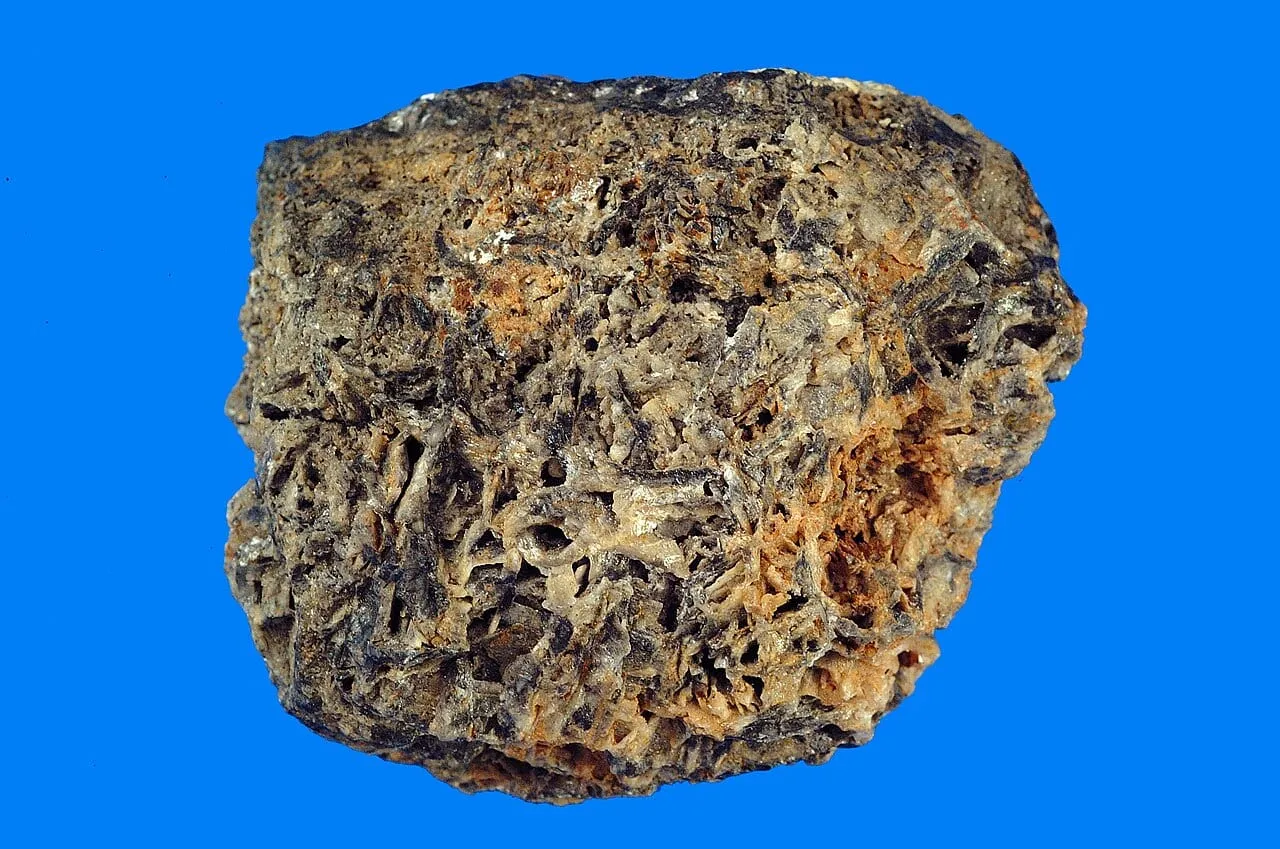
Anglesite
A heavy lead sulfate mineral with a diamond-like shine that grows as a crust around galena; it is named after the island of Anglesey in Wales.
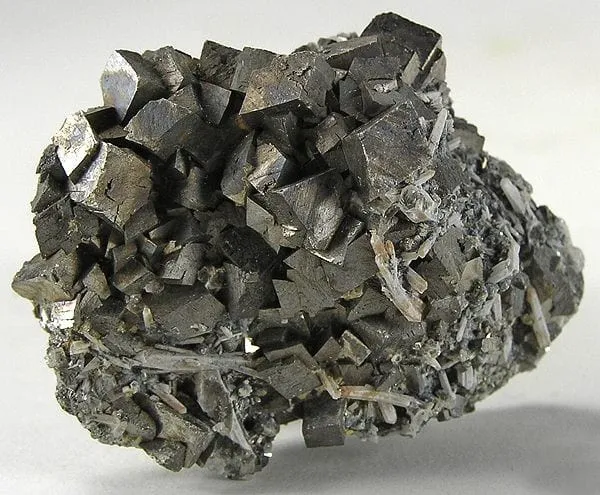
Arsenopyrite
A widespread silvery-grey sulfide containing arsenic: it smells of garlic when struck and is poisonous.
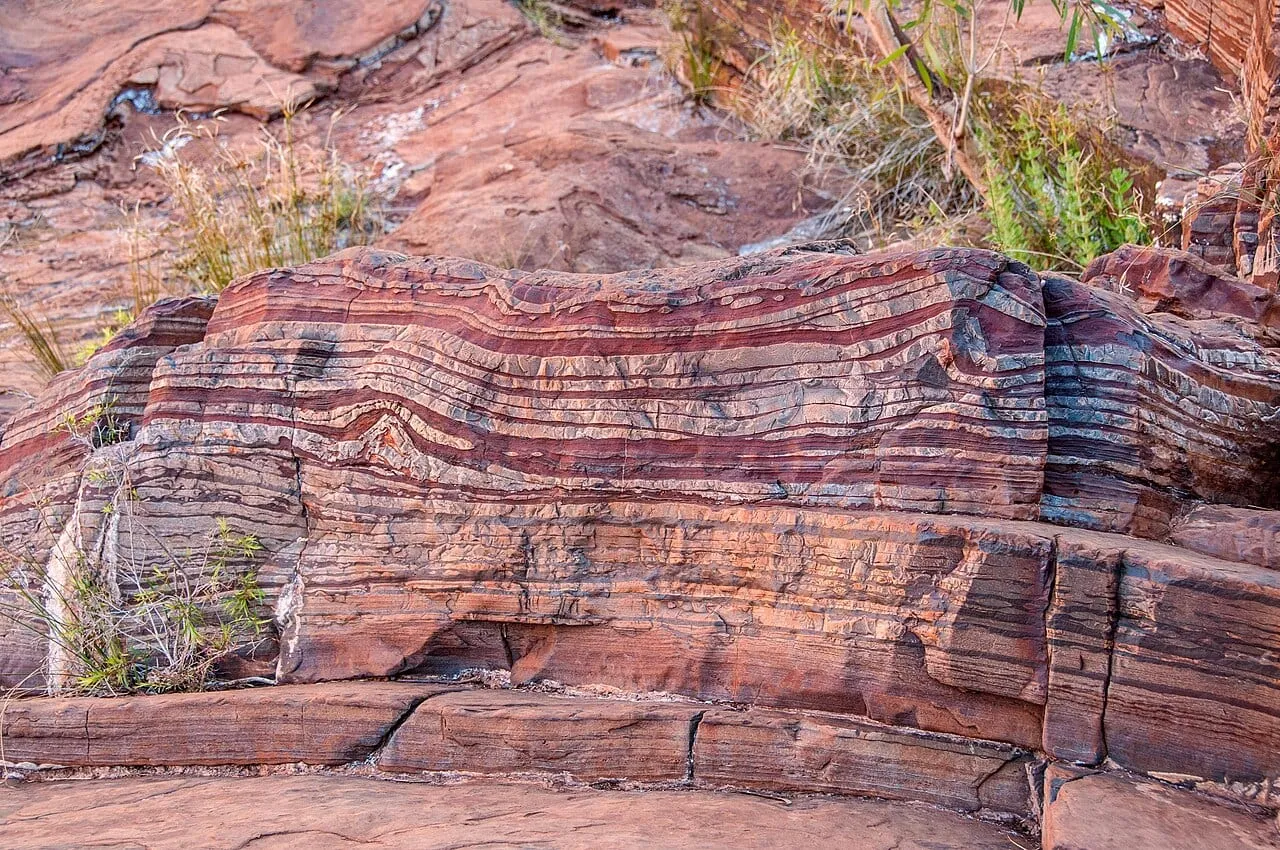
Banded iron formation
An ancient rock of alternating iron-oxide and chert bands: the record of oxygen beginning to build up on Earth, and the main source of iron ore.