VarietyA variety of Quartz
Ametrine
SiO₂Ametrin
Quartz with purple and yellow-orange zones in the same crystal: the only commercial source of natural ametrine is practically one Bolivian mine.
Also known as: Trystine · Golden amethyst · Bolivianite (trade name)
- Popularly: Semi-precious stone
- Gemstone
In short
Ametrine is a variety of quartz with both purple (amethyst-like) and yellow-orange (citrine-like) zones in the same crystal; its name is a blend of amethyst and citrine. Both colours come from traces of iron in the crystal structure, and the difference in colour comes from the iron being in different oxidation states. Natural ametrine is mined almost exclusively at a single mine in Bolivia, the Anahí mine.
Photos
How does it form?
Both the purple and the yellow-orange colours of ametrine come from traces of iron built into the crystal structure; when the iron is in different oxidation states the colour differs as well. Temperature changing from one part of the crystal to another as it grows creates this difference. GIA’s 1994 study showed that the amethyst–citrine colour combination of the Anahí crystals is natural and not the result of laboratory treatment; the crystal chemistry that controls this zoned colour distribution has still not been fully explained.
What is it used for?
- Jewellery: rings, necklaces, earrings and bracelets are made from it.
- Collecting and decoration: crystals are sought after as collector’s pieces and ornaments.
Natural or treated?
Sources do not fully agree here. According to GIA’s 1994 study the amethyst–citrine combination in the Anahí crystals is natural. English Wikipedia accepts this, but adds that most ametrine on the market is made by partially heating or irradiating amethyst, and that cheap ametrine is sometimes synthetic. Which one a given stone is can only be found out by laboratory examination.
The Anahí mine
The Anahí mine lies in south-eastern Bolivia near the Brazilian border; the material is taken to Santa Cruz for processing. Production has been going on since 1989, and the mine has been privately owned since 1990. At GIA’s visit in 2008 the mine employed 74 workers and was active in five tunnels; according to GIA’s 1994 paper, more than 100 tonnes of ametrine crystals had been produced by then.
What determines its value?
The value of ametrine depends on how vivid the purple and yellow zones are, on their proportion and the sharpness of the boundary between them, on clarity and on the quality of the cut. Cutters balance the two colours in traditional shapes such as round, oval or pear, and face-up the stone may also show peach or deep orangy-red shades. Natural ametrine comes from a single mine and is sought after for that reason; synthetic and irradiated stones are worth less and the treatments should be disclosed.
This information is educational, not buying, selling or investment advice. Value varies enormously with quality and treatment.
How to recognise it
- 1
Purple and yellow-orange zones sit side by side in the same crystal or cut stone; cutters cut it so that the two colours are balanced.
- 2
It is as hard as quartz (7): it scratches glass, and a steel knife cannot scratch it.
- 3
Green-yellow or golden-blue “ametrine” does not occur in nature; stones with such colours are artificial or dyed.
- 4
Whether a stone is natural, synthetic or treated cannot be told at home; that needs a gem laboratory.
Fakes and imitations
What shops usually don’t tell you:
- Synthetic ametrine: grown by the hydrothermal method in solutions doped with specific elements, then irradiated. Cheap “ametrine” is sometimes synthetic.
- Partly heated or irradiated amethyst: English Wikipedia states that most ametrine on the market is made by partially heating or irradiating amethyst.
Myths and misconceptions
MythAmetrine is made by joining a piece of amethyst to a piece of citrine.
FactNatural ametrine is a single crystal; the two colours lie in different zones of the same crystal. The colour difference is created by temperature varying from zone to zone as the crystal grows.
MythThe yellow part of ametrine is true citrine.
FactSources disagree: some define citrine only as quartz yellowed by aluminium-based colour centres. Heat-oxidised amethyst does not fall under that definition, so by it the yellow part of ametrine is not true citrine.
MythAmetrine is mined in many places around the world.
FactNatural ametrine comes almost exclusively from the Anahí mine in Bolivia. Ametrine-like crystals have been reported from Brazil and India, but they have no commercial importance.
Did you know?
Legend has it that the Anahí mine was the dowry a Spanish conquistador received in the 17th century when he married a princess named Anahí of the Ayoreos tribe; ametrine was introduced to Europe through the conquistador’s gifts to the Spanish queen.
According to GIA’s 2008 visit, about 120 tonnes of quartz are mined at Anahí each year; 44% of it is amethyst, 33% ametrine and 23% citrine.
Where is it found?
Loading map…
- Anahí mine, south-eastern Bolivia · Type localityPractically the only commercial source of natural ametrine; it lies near the Brazilian border, and the material is taken to Santa Cruz for processing
Locations are approximate to protect sites. Red dots mark places in Türkiye. Open in the big map →
Frequently asked questions
What is ametrine?
Ametrine is a variety of quartz with both purple (amethyst-like) and yellow-orange (citrine-like) zones in the same crystal; its name is a blend of amethyst and citrine. Both colours come from traces of iron in the crystal structure, and the difference in colour comes from the iron being in different oxidation states. Natural ametrine is mined almost exclusively at a single mine in Bolivia, the Anahí mine.
What is ametrine used for?
Jewellery: rings, necklaces, earrings and bracelets are made from it. Collecting and decoration: crystals are sought after as collector’s pieces and ornaments.
How hard is ametrine?
It has a hardness of 7 on the Mohs scale. It scratches glass and steel; a steel knife cannot scratch it. Its specific gravity is 2.65–2.66 g/cm³.
Where is ametrine found?
Its best-known localities: Anahí mine, south-eastern Bolivia.
How can you tell if ametrine is real?
Purple and yellow-orange zones sit side by side in the same crystal or cut stone; cutters cut it so that the two colours are balanced. It is as hard as quartz (7): it scratches glass, and a steel knife cannot scratch it. Green-yellow or golden-blue “ametrine” does not occur in nature; stones with such colours are artificial or dyed. Synthetic ametrine: grown by the hydrothermal method in solutions doped with specific elements, then irradiated. Cheap “ametrine” is sometimes synthetic.
Is ametrine valuable?
On the “street to diamond” value ladder it sits on step 5 of nine: Ornamental stone. The value of ametrine depends on how vivid the purple and yellow zones are, on their proportion and the sharpness of the boundary between them, on clarity and on the quality of the cut. Cutters balance the two colours in traditional shapes such as round, oval or pear, and face-up the stone may also show peach or deep orangy-red shades. Natural ametrine comes from a single mine and is sought after for that reason; synthetic and irradiated stones are worth less and the treatments should be disclosed.
Family

_2.jpg)
Sources
- The Anahí Ametrine Mine, Bolivia (Vasconcelos, Wenk & Rossman), Gems & Gemology 30(1) · GIA, 1994
- Gem News International: Anahí ametrine mine, Bolivia, Gems & Gemology 45(1) · GIA, 2009
- Ametrine · Wikipedia
- Ametrin Taşı · Küre Ansiklopedi, 2025
- Ametrine · International Colored Gemstone Association (ICA)
External links
Draft: awaiting expert reviewReport an error ↗
On the same step
Agate
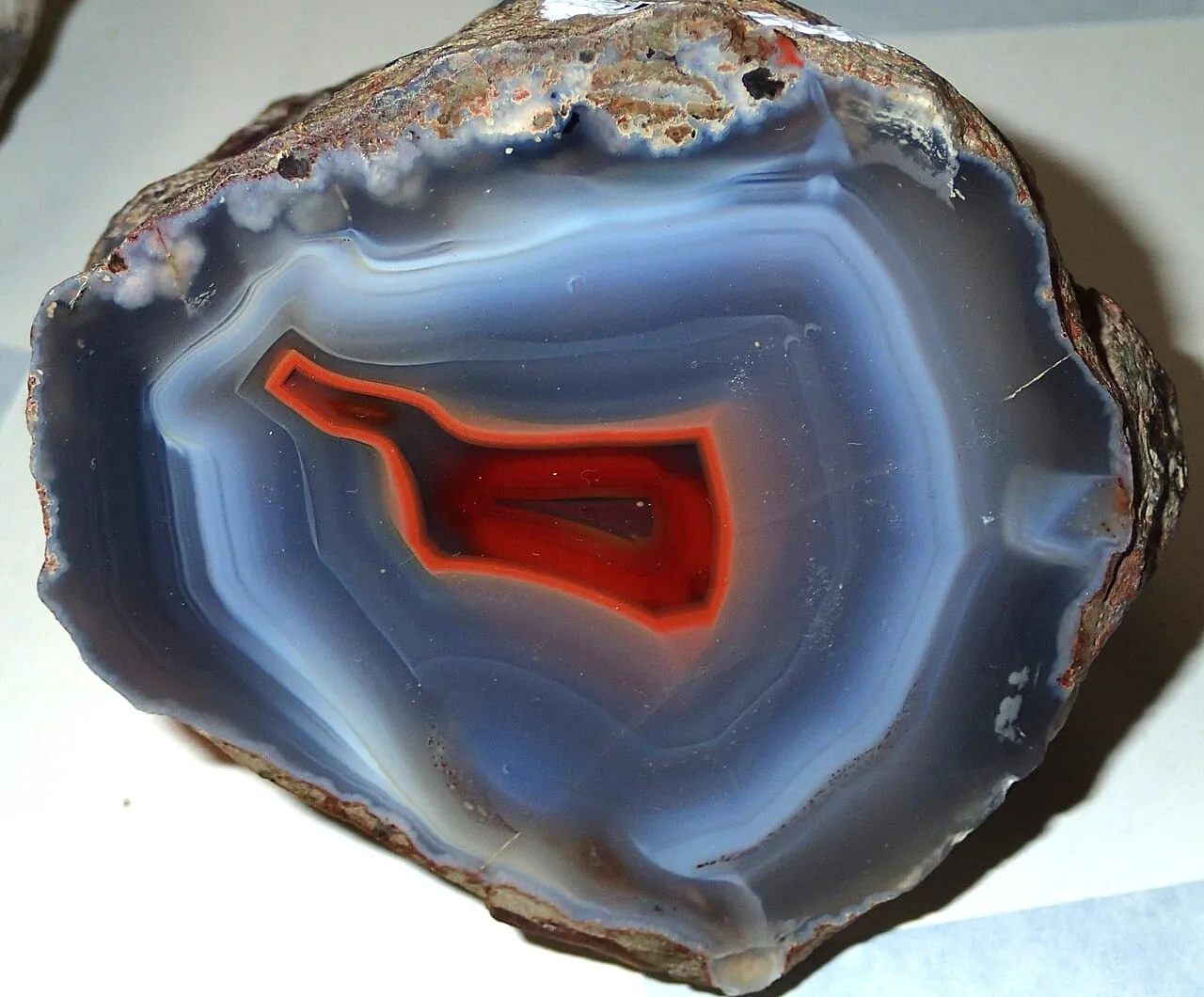
The banded variety of chalcedony: it grows layer by layer in hollows in volcanic rock and shows a new pattern every time it is cut.

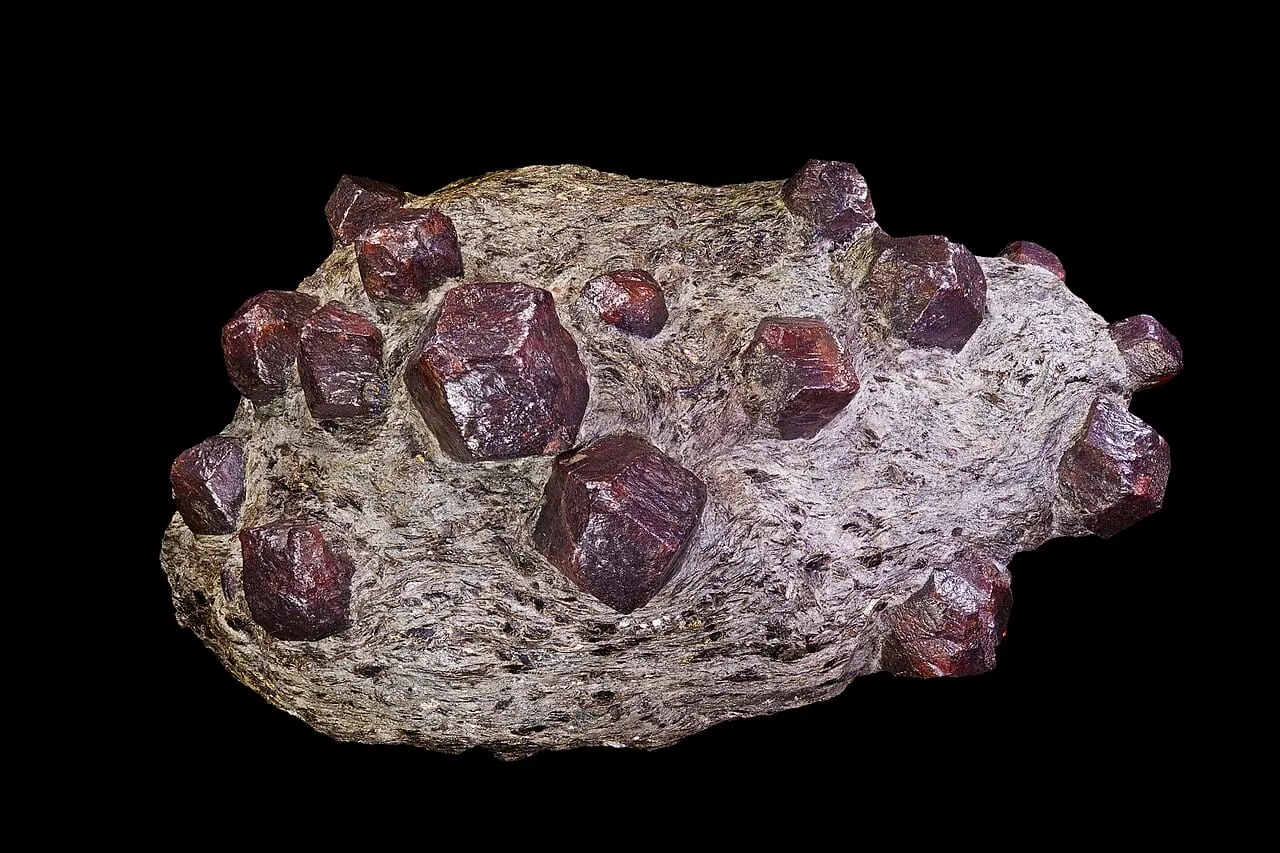
Almandine
The commonest garnet: a deep red, iron-rich stone named after the ancient city of Alabanda in Anatolia, used in jewellery and in sandpaper alike.
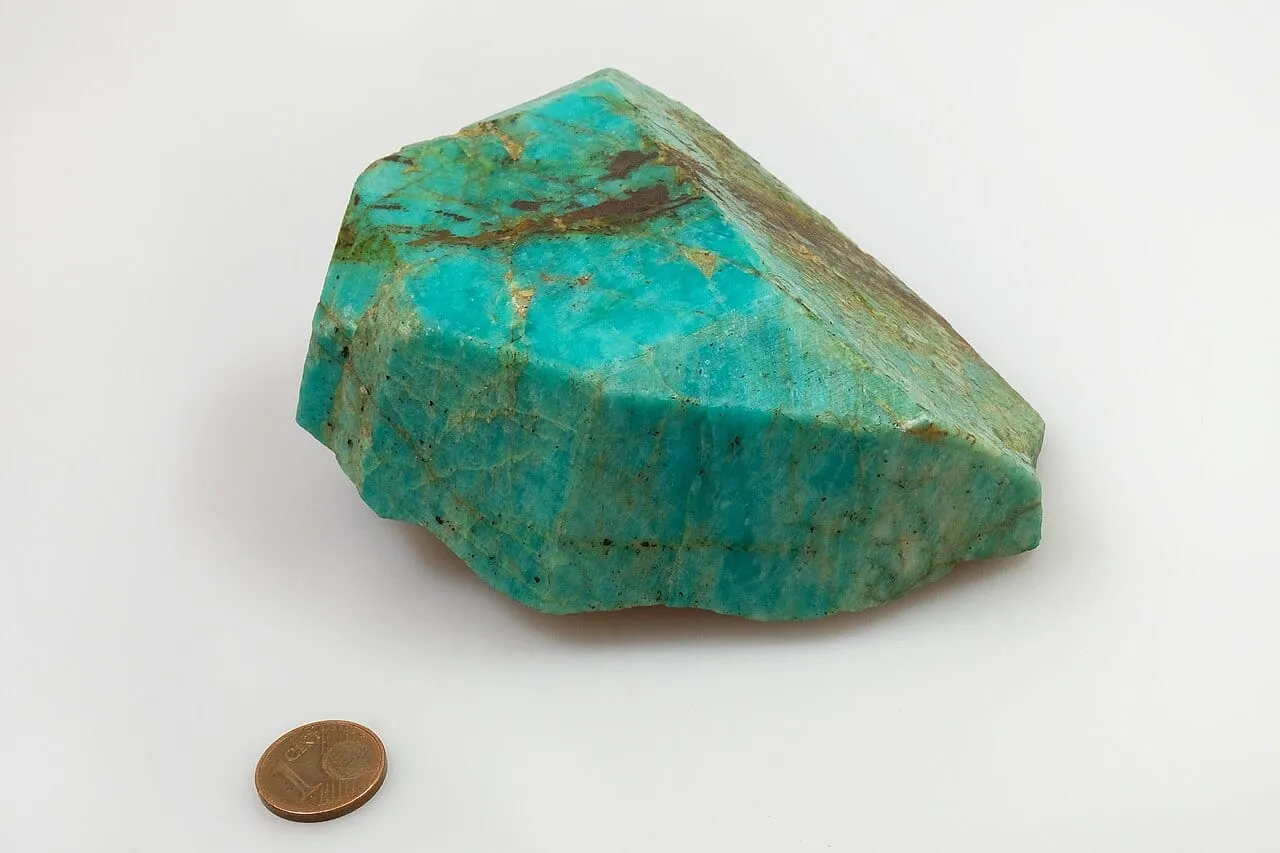
Amazonite
A turquoise-like green-blue feldspar: a variety of microcline worn as jewellery for more than three thousand years, but it can release lead.