Mineral
Wolframite
(Fe,Mn)WO₄Volframit
One of the main ores of tungsten: a very heavy, dark iron-manganese mineral whose name means “wolf’s froth”.
Also known as: Tungsten ore · Ferberite (iron-rich end member) · Hübnerite (manganese-rich end member)
- Popularly: Ore and raw material
- Ore
- Important in Türkiye

In short
Wolframite is an iron-manganese tungstate mineral. It is not a single species but a series between iron-rich ferberite and manganese-rich hübnerite. It is dark grey to brownish black, has a metal-like lustre and is very heavy. According to MTA, about one third of the world’s tungsten resources are wolframite and two thirds are scheelite.
Photos
.jpg)
How does it form?
Wolframite forms in high-temperature hydrothermal veins linked to granite, in altered zones called greisen and in granite pegmatites, accompanied by quartz, cassiterite, arsenopyrite, topaz and fluorite. As magma cools, the hot, tungsten-rich fluids left over deposit minerals in cracks. Because it is heavy and durable, it can also collect in river beds when the host rock wears away.
Wolframite is a series between ferberite (FeWO₄) and hübnerite (MnWO₄): iron and manganese freely replace each other in the crystal structure. Iron-rich members tend towards black, manganese-rich ones towards reddish brown.
What is it used for?
Tungsten from wolframite is a metal with the highest known melting point and very high strength:
- Hard cutting tools: According to the USGS, about 60% of the tungsten used in the United States goes into cemented carbide parts for cutting and wear-resistant uses (mining, drilling, metalworking, construction).
- Alloys and special steels: It gives strength to steels and superalloys.
- Electrical and lighting uses: Filaments, electrodes and heating elements.
- Chemistry and history: It was once also used in dyeing textiles and in fire-retardant fabrics.
A “conflict mineral”?
According to Wikipedia, wolframite has been considered a “conflict mineral” because of unethical mining practices in the Democratic Republic of the Congo. Tungsten is one of the four materials covered by the European Union’s conflict-minerals regulation, which has applied since 1 January 2021 (tin, tantalum, tungsten and gold).
In Türkiye
In Türkiye tungsten ore occurs mainly as scheelite; according to MTA most of the country’s deposits are of skarn type, with scheelite as the main mineral. Wolframite, on the other hand, was recorded in the Uludağ deposit in Bursa: according to an old ore-microscopy study by MTA it occurs as a minor mineral accompanying scheelite in the deep parts of the deposit (the “base zone”).
The Uludağ deposit was worked from 1977 to 1989 and then closed. According to MTA, there is no tungsten mining in Türkiye today; industry’s needs are met by imports.
What determines its value?
Wolframite is an ore, and its value depends first on the proportion of tungsten oxide (WO₃) in the ore, the size of the deposit, the state of accompanying minerals such as tin, bismuth or arsenic, and the cost of processing (wolframite is usually concentrated by gravity and magnetic separation). Because supply is concentrated in a few countries, trade restrictions and export controls matter too: according to the USGS, China supplied 67,000 tonnes of the roughly 85,000 tonnes mined worldwide in 2025. For collectors, crystal form, lustre and freedom from damage count, along with well-known localities such as Panasqueira or Pasto Bueno.
This information is educational, not buying, selling or investment advice. Value varies enormously with quality and treatment.
How to recognise it
- 1
It feels surprisingly heavy: its specific gravity is about 7–7.5, far heavier than a piece of granite or quartz of the same size.
- 2
Its hardness is 4–4.5; a steel knife scratches it. Because it splits perfectly in one direction, crystals are flat, shiny and striated, wedge-shaped or plate-like.
- 3
The streak (powder colour) ranges from reddish brown to brownish black: reddish towards the manganese end, nearly black towards the iron end.
- 4
The iron-rich member, ferberite, is weakly magnetic. It mostly occurs with quartz, cassiterite, arsenopyrite, fluorite and scheelite in veins linked to granite.
Fakes and imitations
What shops usually don’t tell you:
- Wolframite has no widely known imitation; the real confusion is with other dark minerals. Cassiterite is much harder (6–7) and has a whitish streak; magnetite sticks strongly to a magnet and has a black streak.
- The pale tungsten mineral that glows blue under UV light is not wolframite but scheelite; the two often sit side by side in the same vein.
Safety
Wolframite is harmless to handle. Raw specimens may occur with arsenic-bearing minerals such as arsenopyrite, so do not break or crush a raw specimen, do not breathe its dust and wash your hands after handling.
Myths and misconceptions
MythTungsten (carbide) wedding bands and jewellery are unbreakable.
FactTungsten carbide (one of the commonest forms in which tungsten from wolframite and scheelite is used) is very hard, about 9–9.5 on the Mohs scale, and resists scratching well, but it is brittle. According to Wikipedia it can shatter under a hard enough blow, and special tools such as locking pliers may be needed if a ring has to be removed in an emergency.
MythWolfram and tungsten are different metals.
FactThey are two names for the same element, atomic number 74: “tungsten” comes from the Swedish tung sten, “heavy stone”, and “wolfram” from the name of the ore wolframite. Both are used in Turkish; the symbol is W.
Did you know?
The name “wolframite” comes from the German wolf rahm, “wolf’s froth” or “wolf’s cream”. One interpretation is that the name arose because, smelted with tin ore, the mineral devoured the tin like a wolf eating a sheep.
The reason tungsten has the symbol W is this mineral: the element was separated from wolframite ore by the Elhuyar brothers in 1783 and named “wolfram”.
Tungsten has the highest melting point of all known elements, 3,422 °C.
Where is it found?
Loading map…
- Panasqueira, Covilhã, Portugal · Known localityA mining district known for its wolframite crystals; Portugal also appears in the USGS world production table
- Yaogangxian mine, Yizhang, Hunan, China · Known localityWolframite occurs here with tin and arsenic minerals; according to the USGS, China supplies the large majority of world tungsten output
- Hemerdon, Plympton, Devon, England · Known localityThe ore is ferberite, the iron-rich member of the wolframite series; according to Wikipedia the world’s fourth-largest tungsten deposit
- Altenberg and Zinnwald (Cínovec), Ore Mountains, Germany · Historic sourceLarge ferberite crystals have been found at Zinnwald; part of the old Saxon tin–tungsten district
- Calstock, Cornwall, England · Historic sourceAccording to the Handbook of Mineralogy, ferberite occurs around Calstock and elsewhere in Cornwall
- Pasto Bueno, Pallasca, Ancash, Peru · Known localityThe Huallapón mine has produced large, superb hübnerite crystals
- Chungju, Tae-hwa mine, South Korea · Known localityAccording to the Handbook of Mineralogy, ferberite is known from the Tae-hwa mine
- Boulder County, Colorado, USA · Known localityIn the mines of the Boulder tungsten district, well-crystallised ferberite is an ore mineral
- Uludağ, Bursa, Türkiye · Known localityIn the deep parts (the “base zone”) of the Uludağ scheelite deposit, wolframite occurs as a lesser mineral accompanying scheelite
Locations are approximate to protect sites. Red dots mark places in Türkiye. Open in the big map →
Frequently asked questions
What is wolframite?
Wolframite is an iron-manganese tungstate mineral. It is not a single species but a series between iron-rich ferberite and manganese-rich hübnerite. It is dark grey to brownish black, has a metal-like lustre and is very heavy. According to MTA, about one third of the world’s tungsten resources are wolframite and two thirds are scheelite.
What is wolframite used for?
Tungsten from wolframite is a metal with the highest known melting point and very high strength: Hard cutting tools: According to the USGS, about 60% of the tungsten used in the United States goes into cemented carbide parts for cutting and wear-resistant uses (mining, drilling, metalworking, construction). Alloys and special steels: It gives strength to steels and superalloys. Electrical and lighting uses: Filaments, electrodes and heating elements. Chemistry and history: It was once also used in dyeing textiles and in fire-retardant fabrics.
How hard is wolframite?
It has a hardness of 4–4.5 on the Mohs scale. A fingernail cannot scratch it, but a steel knife can. Its specific gravity is 7–7.5 g/cm³.
Where is wolframite found?
Its best-known localities: Altenberg and Zinnwald (Cínovec), Ore Mountains, Germany; Calstock, Cornwall, England; Panasqueira, Covilhã, Portugal; Yaogangxian mine, Yizhang, Hunan, China; Hemerdon, Plympton, Devon, England.
Where is wolframite found in Türkiye?
Known localities in Türkiye: Uludağ, Bursa, Türkiye.
How can you tell if wolframite is real?
It feels surprisingly heavy: its specific gravity is about 7–7.5, far heavier than a piece of granite or quartz of the same size. Its hardness is 4–4.5; a steel knife scratches it. Because it splits perfectly in one direction, crystals are flat, shiny and striated, wedge-shaped or plate-like. The streak (powder colour) ranges from reddish brown to brownish black: reddish towards the manganese end, nearly black towards the iron end. Wolframite has no widely known imitation; the real confusion is with other dark minerals. Cassiterite is much harder (6–7) and has a whitish streak; magnetite sticks strongly to a magnet and has a black streak.
Is wolframite valuable?
On the “street to diamond” value ladder it sits on step 4 of nine: Fine dimension stone and ore. Wolframite is an ore, and its value depends first on the proportion of tungsten oxide (WO₃) in the ore, the size of the deposit, the state of accompanying minerals such as tin, bismuth or arsenic, and the cost of processing (wolframite is usually concentrated by gravity and magnetic separation). Because supply is concentrated in a few countries, trade restrictions and export controls matter too: according to the USGS, China supplied 67,000 tonnes of the roughly 85,000 tonnes mined worldwide in 2025. For collectors, crystal form, lustre and freedom from damage count, along with well-known localities such as Panasqueira or Pasto Bueno.
Is wolframite dangerous?
Wolframite is harmless to handle. Raw specimens may occur with arsenic-bearing minerals such as arsenopyrite, so do not break or crush a raw specimen, do not breathe its dust and wash your hands after handling.
Sources
- Wolframite · Wikipedia
- Handbook of Mineralogy: Ferberite · Mineralogical Society of America
- Handbook of Mineralogy: Hübnerite · Mineralogical Society of America
- Ferberite (Webmineral) · Webmineral
- Mineral Commodity Summaries 2026: Tungsten · U.S. Geological Survey, 2026
- Tungstenin Dünya ve Türkiye'deki yeri (MTA Doğal Kaynaklar ve Ekonomi Bülteni 30) · MTA Genel Müdürlüğü, 2020
- Türkiye'nin bazı nadir cevher minerallerinde erzmikroskopik müşahedeler · MTA Dergisi (P. de Wijkerslooth)
- Wolframite-Stannite-Arsenopyrite-119115.jpg (specimen locality: Yaogangxian Mine) · Wikimedia Commons
- Tungsten · Wikipedia
- Tungsten carbide · Wikipedia
- Hemerdon Mine · Wikipedia
- Conflict minerals regulation · European Commission

External links
Draft: awaiting expert reviewReport an error ↗
On the same step
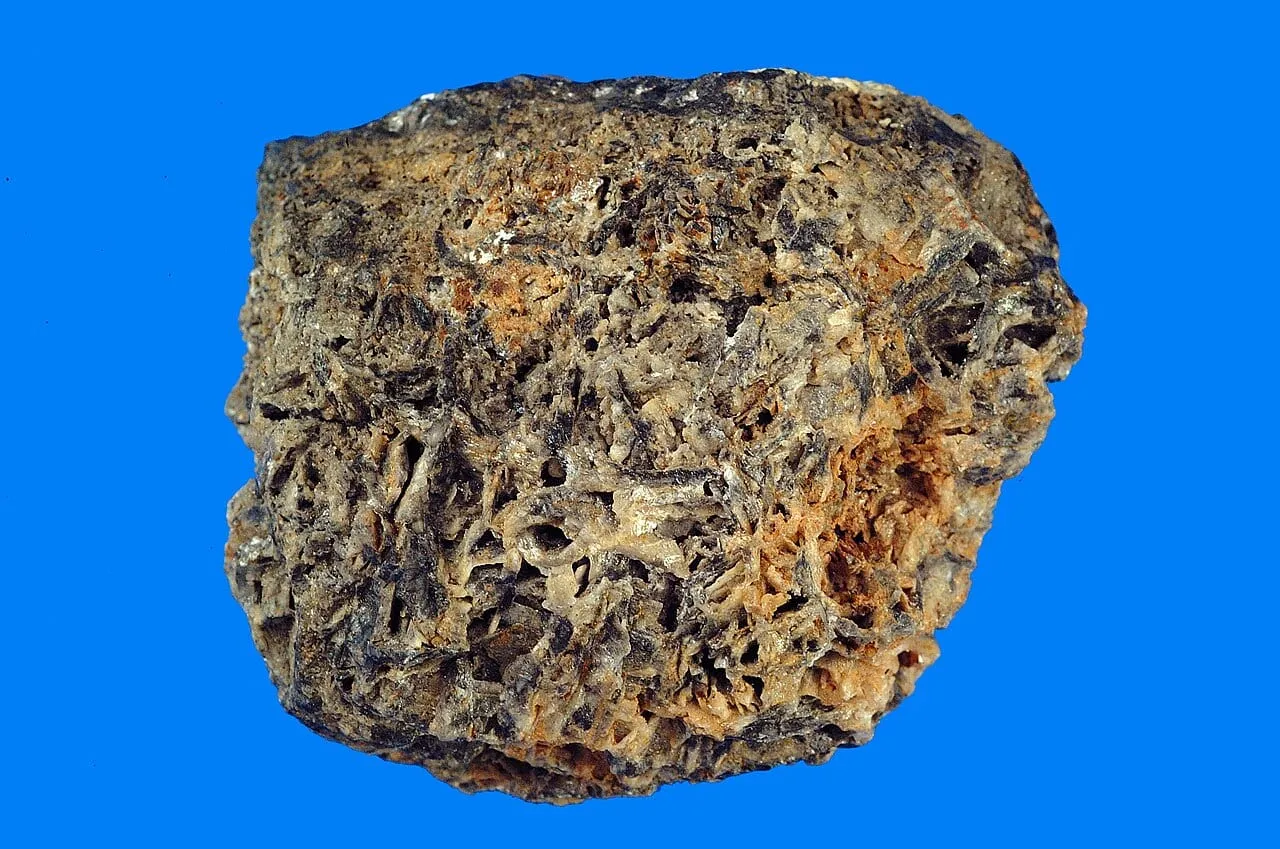
Anglesite
A heavy lead sulfate mineral with a diamond-like shine that grows as a crust around galena; it is named after the island of Anglesey in Wales.
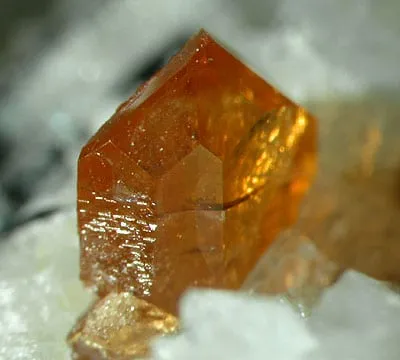
Bastnäsite
One of the main ore minerals of the “rare earth” elements such as cerium, lanthanum and neodymium; a raw material for magnets and electronics.
Borax (tincal)
A sodium borate that dissolves in water and crumbles to white powder in dry air; one of the world’s key tincal deposits is at Kırka in Eskişehir.