Mineral
Witherite
BaCO₃Viterit
A heavy, toxic barium carbonate mineral named after the physician William Withering; farmers used it as rat poison in the 18th century.
- Popularly: Ore and raw material
- Ore
- Industrial
- Handle with care
.jpg)
In short
Witherite is a mineral made of barium and carbon (barium carbonate, BaCO₃). It is colourless, white or pale grey-yellow, usually forms six-sided double-pyramid twinned crystals or rounded masses, and is heavy for a pale mineral. It occurs in veins left by hot water at low temperature, often as an alteration of baryte. It is toxic.
Photos
.jpg)
How does it form?
Witherite mostly occurs in low-temperature hydrothermal veins, left in rock cracks by hot waters; it often forms by the alteration of baryte. Baryte, fluorite, celestine, galena and calcite accompany it. Less often it is found in sediments that settled where there was little oxygen, or in coal measures.
What is it used for?
- Source of barium: Witherite can serve as a barium ore; the Handbook of Mineralogy notes large deposits in China between Ziyang and Chengkou.
- Industry and pottery: Artificially made barium carbonate, the same compound as witherite, is used in ceramics, to remove sulfate in the chlor-alkali industry and as a raw material for ferrite magnets. Witherite itself was used in Josiah Wedgwood’s “Jasper ware”.
- Other uses: According to Wikipedia, witherite has been used for hardening steel and for making cement, glass, enamelware, soap, dye and explosives, and to control the chromate-to-sulfate ratio in chromium electroplating baths.
- Collecting: Mineral collectors seek it for its double-pyramid twins and its fluorescence.
What determines its value?
Witherite is the natural form of barium carbonate, but its deposits are small and scattered, and the barium carbonate that industry needs is largely made artificially. As an ore its value depends on the barium content, the size of the deposit and the cost of mining. Collectors look for large, clear, well-formed crystals, double-pyramid twins, vivid fluorescence and specimens from famous places such as Northumberland or Illinois. Because it is toxic, a collector must store it carefully.
This information is educational, not buying, selling or investment advice. Value varies enormously with quality and treatment.
How to recognise it
- 1
It is heavy for a pale mineral (specific gravity about 4.3): it feels clearly heavier than a calcite-like mineral of the same size.
- 2
Its hardness is 3–3.5: a steel knife scratches it.
- 3
Because of repeated twinning, its crystals are usually six-sided double pyramids with rough faces and horizontal striations. It can also be rounded, fibrous or massive.
- 4
It occurs with baryte, fluorite, calcite and galena; it looks very much like baryte, so a laboratory analysis is needed for certain identification.
- 5
It glows under ultraviolet light (fluorescence) and can keep glowing for a while after the light is switched off (phosphorescence).
Fakes and imitations
What shops usually don’t tell you:
- Witherite can be mistaken for baryte and for pale calcite or aragonite. It is hard to tell them apart by eye; measuring specific gravity and a laboratory analysis are needed.
Safety
Witherite is barium carbonate and is toxic. Unlike barium sulfate (baryte), which does not dissolve in water, barium carbonate can dissolve in stomach acid and be absorbed. Always wash your hands after touching witherite and keep specimens out of the reach of children and pets. Never put witherite in your mouth, grind it or sand it, and do not breathe its dust. Never put it in drinking water.
Myths and misconceptions
MythWitherite is a heavy but harmless spar like baryte; both are barium minerals, so they are the same.
FactBaryte is barium sulfate and does not dissolve in water, so the body does not absorb it; witherite is barium carbonate and can dissolve in stomach acid and be absorbed as a poison. That is why baryte is used in X-ray imaging while witherite was once used as rat poison.
Did you know?
In 1784 the physician and naturalist William Withering noticed that the mineral was different from baryte; in 1789 Abraham Gottlob Werner named it “witherite” in his honour. Withering is also known as the first systematic investigator of the effects of foxglove (digitalis) on heart disease.
In the Anglezarke area of Lancashire, farmers used witherite as rat poison until the 18th century; the naturalist Dr. Leigh recorded its lethal effect after the death of a farmer’s wife and child.
An experiment by Josiah Wedgwood led to witherite being used in his famous “Jasper ware” pottery; until then the mineral had been considered worthless.
Where is it found?
Loading map…
- Alston Moor, Cumbria, England · Historic sourceThe Cumbrian area that both the Handbook of Mineralogy and Wikipedia name for witherite
- Settlingstones mine and Fallowfield, near Hexham, Northumberland, England · Major depositThe Handbook of Mineralogy lists fine witherite crystals from here
- Anglezarke, Lancashire, England · Historic sourceWhere, until the 18th century, farmers used witherite as rat poison
- Rosiclare and Cave-in-Rock area, Hardin County, Illinois, USA · Major depositMines in the Illinois–Kentucky fluorspar district giving large, fine witherite crystals
- Peggau, Styria, Austria · Known localityA place near Graz that the Handbook of Mineralogy lists for witherite
- Příbram, Central Bohemia, Czechia · Historic sourceA district of mines worked for centuries
- Ziyang–Chengkou belt, Shaanxi–Chongqing border, China · Major depositAccording to the Handbook of Mineralogy, large witherite deposits lie along the belt from Ziyang to Chengkou
- Thunder Bay area, Ontario, Canada · Known localityAn Ontario area that Wikipedia names for witherite
Locations are approximate to protect sites. Red dots mark places in Türkiye. Open in the big map →
Frequently asked questions
What is witherite?
Witherite is a mineral made of barium and carbon (barium carbonate, BaCO₃). It is colourless, white or pale grey-yellow, usually forms six-sided double-pyramid twinned crystals or rounded masses, and is heavy for a pale mineral. It occurs in veins left by hot water at low temperature, often as an alteration of baryte. It is toxic.
What is witherite used for?
Source of barium: Witherite can serve as a barium ore; the Handbook of Mineralogy notes large deposits in China between Ziyang and Chengkou. Industry and pottery: Artificially made barium carbonate, the same compound as witherite, is used in ceramics, to remove sulfate in the chlor-alkali industry and as a raw material for ferrite magnets. Witherite itself was used in Josiah Wedgwood’s “Jasper ware”.
How hard is witherite?
It has a hardness of 3–3.5 on the Mohs scale. A fingernail cannot scratch it, but a steel knife can. Its specific gravity is 4.22–4.31 g/cm³.
Where is witherite found?
Its best-known localities: Settlingstones mine and Fallowfield, near Hexham, Northumberland, England; Rosiclare and Cave-in-Rock area, Hardin County, Illinois, USA; Ziyang–Chengkou belt, Shaanxi–Chongqing border, China; Alston Moor, Cumbria, England; Anglezarke, Lancashire, England.
How can you tell if witherite is real?
It is heavy for a pale mineral (specific gravity about 4.3): it feels clearly heavier than a calcite-like mineral of the same size. Its hardness is 3–3.5: a steel knife scratches it. Because of repeated twinning, its crystals are usually six-sided double pyramids with rough faces and horizontal striations. It can also be rounded, fibrous or massive. Witherite can be mistaken for baryte and for pale calcite or aragonite. It is hard to tell them apart by eye; measuring specific gravity and a laboratory analysis are needed.
Is witherite valuable?
On the “street to diamond” value ladder it sits on step 4 of nine: Fine dimension stone and ore. Witherite is the natural form of barium carbonate, but its deposits are small and scattered, and the barium carbonate that industry needs is largely made artificially. As an ore its value depends on the barium content, the size of the deposit and the cost of mining. Collectors look for large, clear, well-formed crystals, double-pyramid twins, vivid fluorescence and specimens from famous places such as Northumberland or Illinois. Because it is toxic, a collector must store it carefully.
Is witherite dangerous?
Witherite is barium carbonate and is toxic. Unlike barium sulfate (baryte), which does not dissolve in water, barium carbonate can dissolve in stomach acid and be absorbed. Always wash your hands after touching witherite and keep specimens out of the reach of children and pets. Never put witherite in your mouth, grind it or sand it, and do not breathe its dust. Never put it in drinking water.
Sources
- Witherite · Wikipedia
- Handbook of Mineralogy: Witherite · Mineralogical Society of America
- Barium carbonate · Wikipedia
- William Withering · Wikipedia
- Anglezarke · Wikipedia
External links
Draft: awaiting expert reviewReport an error ↗
On the same step
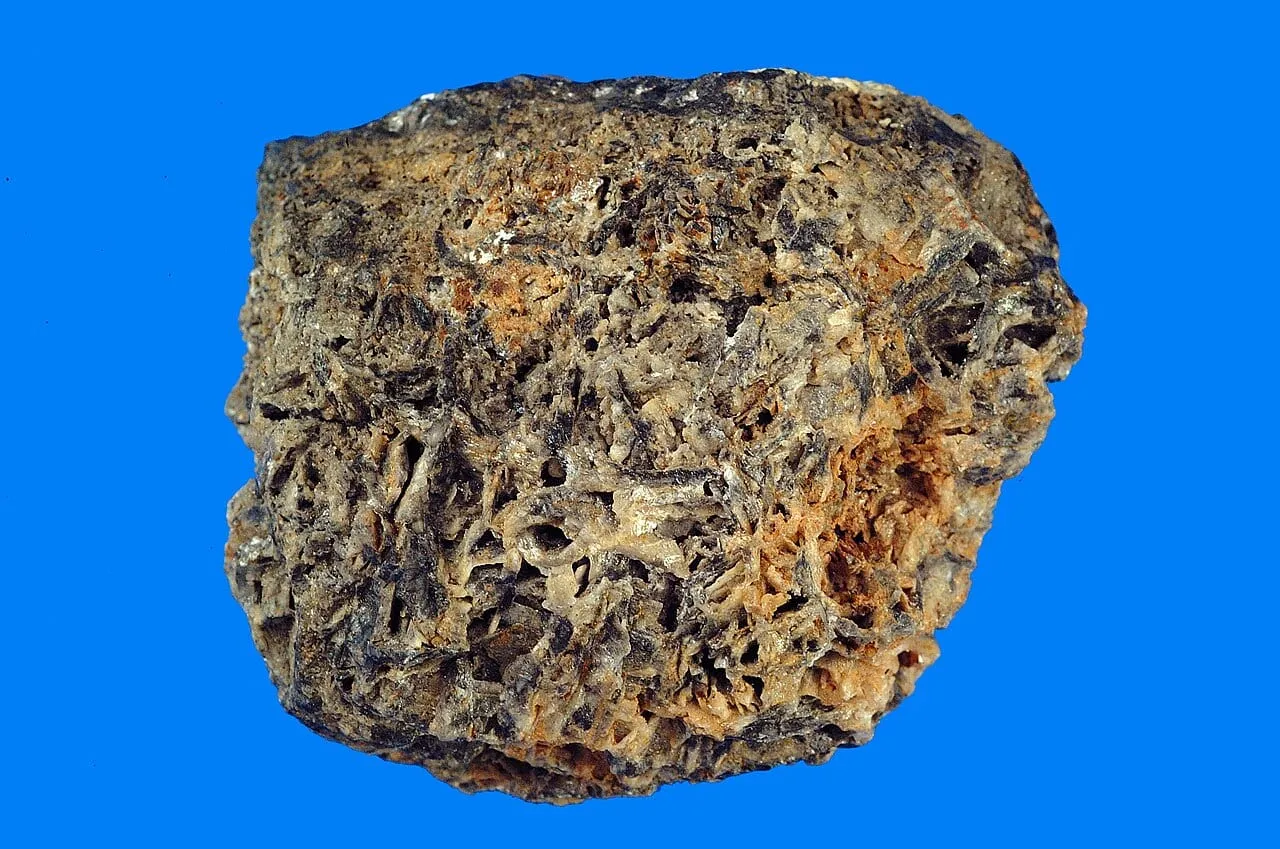
Anglesite
A heavy lead sulfate mineral with a diamond-like shine that grows as a crust around galena; it is named after the island of Anglesey in Wales.
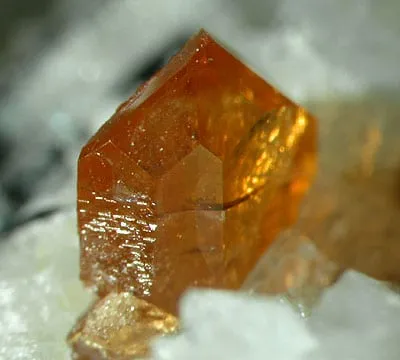
Bastnäsite
One of the main ore minerals of the “rare earth” elements such as cerium, lanthanum and neodymium; a raw material for magnets and electronics.
Borax (tincal)
A sodium borate that dissolves in water and crumbles to white powder in dry air; one of the world’s key tincal deposits is at Kırka in Eskişehir.