VarietyA variety of Obsidian
Mahogany obsidian
Maun obsidiyen
A kind of obsidian with reddish-brown areas, streaks or patches in black volcanic glass, recalling the colour of mahogany wood.
Also known as: Red obsidian · Brown obsidian
- Popularly: Semi-precious stone
In short
Mahogany obsidian is the name given to obsidian that is wholly or partly reddish brown; its most common form is black glass with brown streaks and patches. Like all obsidian, it is a natural glass formed from lava that cooled very quickly; the brown colour comes from iron in the glass and tiny iron-oxide particles. In Türkiye, the brown kind of the geographically indicated obsidian from Sarıkamış in Kars is also called “mahogany” and is used to make prayer beads, pendants and rings.
Photos
How does it form?
Like all obsidian, mahogany obsidian forms when silica-rich (rhyolitic) lava cools so quickly at the surface that it sets as glass before it can crystallise. As the lava flows, bands and flow lines are frozen into the glass, and the brown areas often follow this flow structure as streaks, bands or swirls.
At Sarıkamış, obsidian occurs mainly as veins (dykes) cutting through the rocks. Brown obsidian is found in these veins mixed with the black, in smaller pieces than the black. Some pieces show black veins or spots on a brown background; others show white spots of perlite, formed where the glass took up water and changed.
What is it used for?
- Ornaments and jewellery: It is made into cabochons, pendants, ring stones, beads and spheres. At Sarıkamış, because the brown obsidian comes in small pieces, it is mostly used for small items such as pendants, rings and prayer beads.
- Collecting: Well-patterned pieces are sought by rock collectors; at places such as Glass Buttes in Oregon, collectors can gather their own obsidian.
- Prehistoric tools: Because of its sharp edges, obsidian was made into arrow and spear points for thousands of years. Owyhee obsidian from Idaho and Oregon, mostly black but with mahogany patches in places, was also used for prehistoric projectile points.
Where does the brown colour come from?
The colour of black obsidian comes largely from very small mineral grains scattered through the glass, especially iron-bearing magnetite. According to Oregon State University’s Volcano World, the colour of red or brown obsidian generally comes from tiny crystals or inclusions of iron oxides such as hematite or limonite. A study of mahogany obsidian from Tolcsva in Hungary also showed that the difference between red and black obsidian can be explained by the oxidation state of the iron and the particles in which it is concentrated.
In Türkiye
Obsidian from the Sarıkamış district of Kars was registered as a geographical indication in 2023 under the name “Sarıkamış Obsidyen Taşı”. According to the registration, the stone is mostly black and brown; the brown kind is also described as “mahogany” and is gathered by hand and worked in the district into prayer beads, pendants and cabochons. The obsidians around Boğazköy, on the eastern side of the Acıgöl caldera in Nevşehir, are also banded in grey, black and brown; red obsidian from there has been studied alongside Hungarian mahogany obsidian.
What determines its value?
Mahogany obsidian is a common, inexpensive ornamental stone. Pattern matters most: strong contrast between reddish brown and black, an attractive design and an even spread of colour are sought after. Pieces free of cracks with well-placed inclusions and a good polish also count, and for small items such as cabochons, beads and prayer beads, the quality of the workmanship adds value.
This information is educational, not buying, selling or investment advice. Value varies enormously with quality and treatment.
How to recognise it
- 1
Reddish-brown areas, flow streaks or patches show inside a black, glassy stone; some pieces are almost entirely brown.
- 2
When broken it leaves curved, shell-like surfaces with very sharp edges; there are no crystal faces or cleavage.
- 3
It is about as hard as window glass (roughly 5–5.5); a steel file can scratch it.
- 4
Polished, it shines like glass; the pattern may look banded or swirled, following the direction in which the lava flowed.
Safety
Raw or broken obsidian can have edges sharper than a razor blade and easily cause deep cuts. Wear safety glasses and gloves when breaking or knapping it.
Myths and misconceptions
MythMahogany obsidian is a mineral.
FactObsidian is a natural glass with no ordered crystal structure, so it is not a mineral but a glassy volcanic rock (a mineraloid). Mahogany obsidian is simply brown-coloured obsidian.
MythMahogany obsidian is a different stone from obsidian.
Fact“Mahogany obsidian” is a colour name, given to obsidian with brown or reddish areas. The same deposit can yield both black and mahogany obsidian; at Sarıkamış the two occur mixed in the same veins.
Did you know?
Sarıkamış obsidian was registered as a geographical indication (designation of origin) in 2023; the registration document states that the brown kind of the stone is also described as “maun (mahogany)”.
Chemical analyses of samples from Sarıkamış gave very similar iron-oxide contents for black and brown obsidian; a study of Hungarian mahogany obsidian likewise explains the colour difference by the chemical state of the iron and the particles it sits in, rather than by its amount.
Mahogany obsidian is so rare in north-western Mexico that a single piece found during an excavation in 2015 became the subject of a scientific study to trace its origin, which was linked to the Agua Fría source in Sonora.
Where is it found?
Loading map…
- Glass Buttes, Lake County, Oregon, USA · Major depositAbout 5–5.8 million years old; yields many kinds of obsidian, including mahogany, rainbow, gold and silver sheen
- Owyhee area (around Oreana), Owyhee County, Idaho, USA · Known localityMostly black obsidian with reddish-brown patches and streaks (mahogany) in places; used for prehistoric projectile points
- Tolcsva (Szokolya hill), Tokaj Mountains, Hungary · Known localityThe outcrop of brown to red (mahogany) obsidian, very rare among Carpathian obsidians, was located in 2007
- Sarıkamış, Kars, Türkiye · Major depositThe brown kind of the geographically indicated Sarıkamış obsidian, also called “mahogany”; found mixed with black obsidian in veins exposed in road cuts
- Boğazköy, Acıgöl caldera, Nevşehir, Türkiye · Known localityGrey, black and brown banded obsidian; red obsidian from here was compared with Hungarian mahogany obsidian
Locations are approximate to protect sites. Red dots mark places in Türkiye. Open in the big map →
Frequently asked questions
What is mahogany obsidian?
Mahogany obsidian is the name given to obsidian that is wholly or partly reddish brown; its most common form is black glass with brown streaks and patches. Like all obsidian, it is a natural glass formed from lava that cooled very quickly; the brown colour comes from iron in the glass and tiny iron-oxide particles. In Türkiye, the brown kind of the geographically indicated obsidian from Sarıkamış in Kars is also called “mahogany” and is used to make prayer beads, pendants and rings.
Where is mahogany obsidian found in Türkiye?
It is found in the Sarıkamış district of Kars as the brown kind of the geographically indicated Sarıkamış obsidian, mixed with black obsidian in veins exposed by road cuts. Brown and red obsidian is also known around Boğazköy in the Acıgöl caldera in Nevşehir.
What is mahogany obsidian used for?
Ornaments and jewellery: It is made into cabochons, pendants, ring stones, beads and spheres. At Sarıkamış, because the brown obsidian comes in small pieces, it is mostly used for small items such as pendants, rings and prayer beads. Collecting: Well-patterned pieces are sought by rock collectors; at places such as Glass Buttes in Oregon, collectors can gather their own obsidian. Prehistoric tools: Because of its sharp edges, obsidian was made into arrow and spear points for thousands of years.
How hard is mahogany obsidian?
It has a hardness of 5–5.5 on the Mohs scale. A fingernail cannot scratch it, but a steel knife can. Its specific gravity is 2.35–2.6 g/cm³.
Where is mahogany obsidian found?
Its best-known localities: Glass Buttes, Lake County, Oregon, USA; Sarıkamış, Kars, Türkiye; Owyhee area (around Oreana), Owyhee County, Idaho, USA; Tolcsva (Szokolya hill), Tokaj Mountains, Hungary; Boğazköy, Acıgöl caldera, Nevşehir, Türkiye.
Where is mahogany obsidian found in Türkiye?
Known localities in Türkiye: Sarıkamış, Kars, Türkiye; Boğazköy, Acıgöl caldera, Nevşehir, Türkiye.
How can you tell if mahogany obsidian is real?
Reddish-brown areas, flow streaks or patches show inside a black, glassy stone; some pieces are almost entirely brown. When broken it leaves curved, shell-like surfaces with very sharp edges; there are no crystal faces or cleavage. It is about as hard as window glass (roughly 5–5.5); a steel file can scratch it.
Is mahogany obsidian valuable?
On the “street to diamond” value ladder it sits on step 5 of nine: Ornamental stone. Mahogany obsidian is a common, inexpensive ornamental stone. Pattern matters most: strong contrast between reddish brown and black, an attractive design and an even spread of colour are sought after. Pieces free of cracks with well-placed inclusions and a good polish also count, and for small items such as cabochons, beads and prayer beads, the quality of the workmanship adds value.
Is mahogany obsidian dangerous?
Raw or broken obsidian can have edges sharper than a razor blade and easily cause deep cuts. Wear safety glasses and gloves when breaking or knapping it.
Family
_1.jpg)

Sources
- Obsidian (Volcanic minerals) · Oregon State University, Volcano World
- Obsidian · Wikipedia
- Glass Buttes · Wikipedia
- A novel approach in the mineralogy of Carpathian mahogany obsidian using complementary methods (Kasztovszky et al.), Quaternary International · Elsevier, 2018
- Sarıkamış Obsidyen Taşı (coğrafi işaret, tescil no 1412) · Türk Patent ve Marka Kurumu; T.C. Tarım ve Orman Bakanlığı Kars İl Müdürlüğü, 2023
- Kuzeybatı Anadolu obsidiyen buluntularının kaynak belirleme çalışmaları (Ercan, Yeğingil, Bigazzi, Oddone & Özdoğan), Jeoloji Mühendisliği 36: 19–32 · TMMOB Jeoloji Mühendisleri Odası, 1990
- Acıgöl volcano (Türkiye volcanoes) · MTA
- Owyhee Obsidian (lithic materials database) · ProjectilePoints.net
- Is there mahogany obsidian in northeastern Sonora, Mexico? (Dolan & Shackley), IAOS Bulletin 56 · International Association for Obsidian Studies, 2016
Draft: awaiting expert reviewReport an error
On the same step
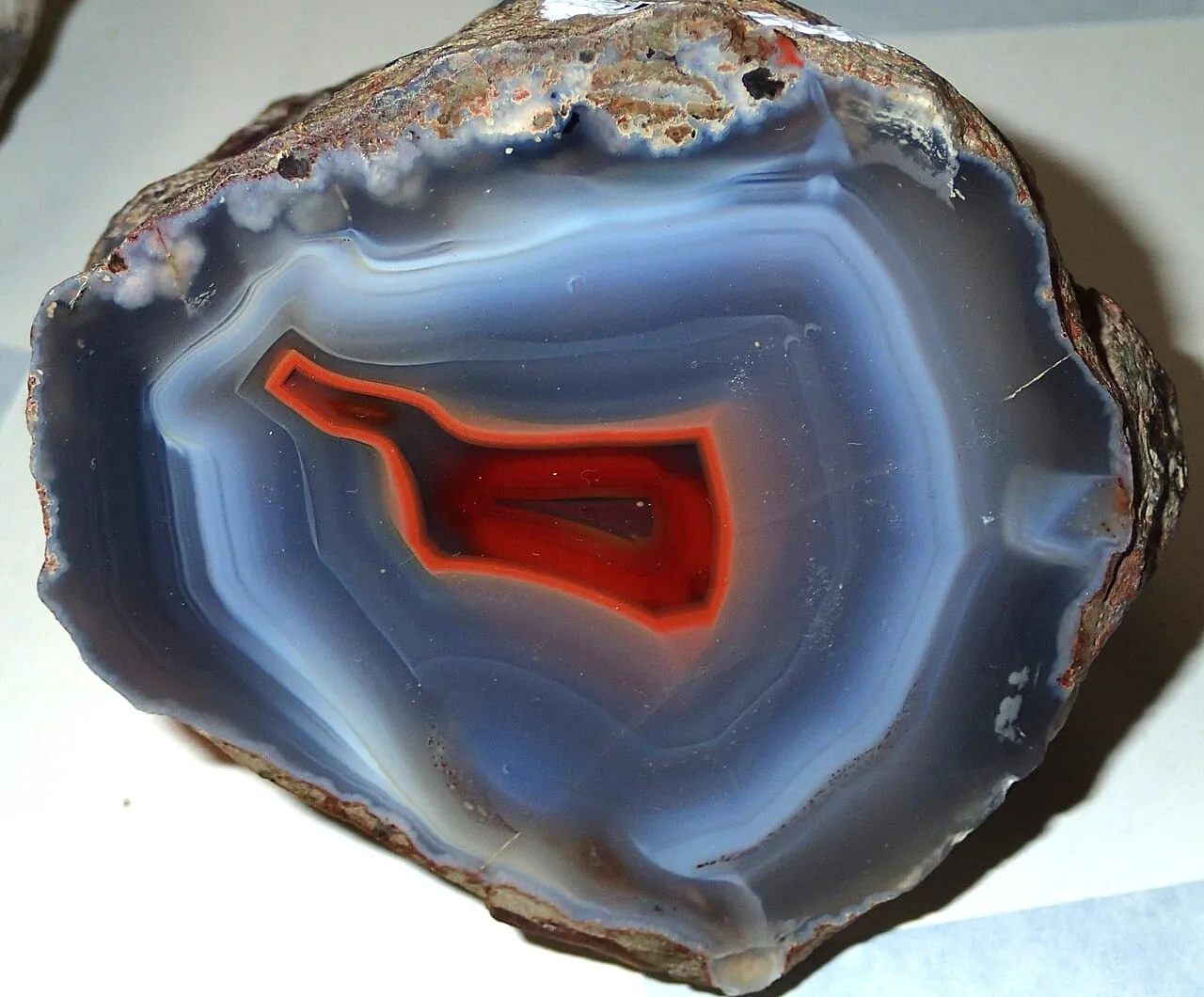
Agate
The banded variety of chalcedony: it grows layer by layer in hollows in volcanic rock and shows a new pattern every time it is cut.
Almandine
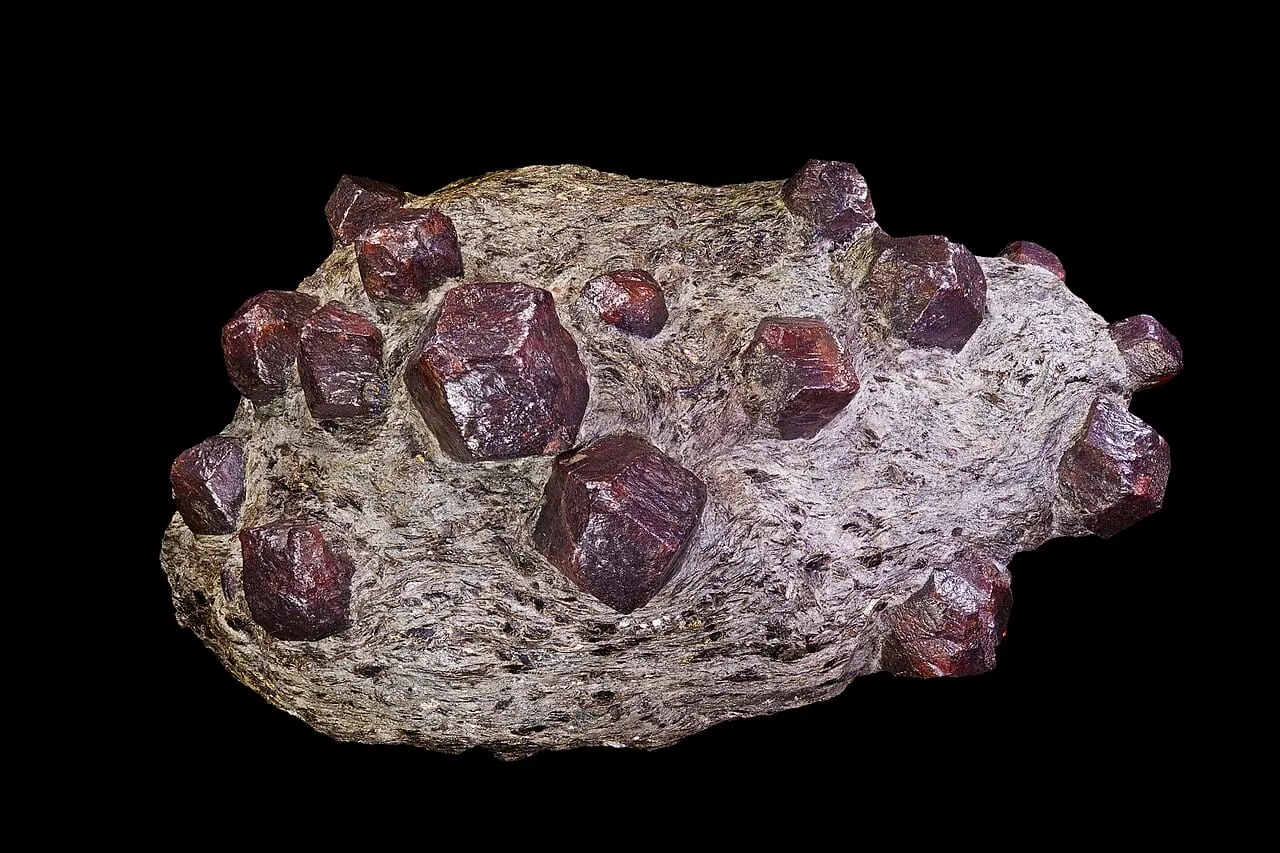
The commonest garnet: a deep red, iron-rich stone named after the ancient city of Alabanda in Anatolia, used in jewellery and in sandpaper alike.
Amazonite
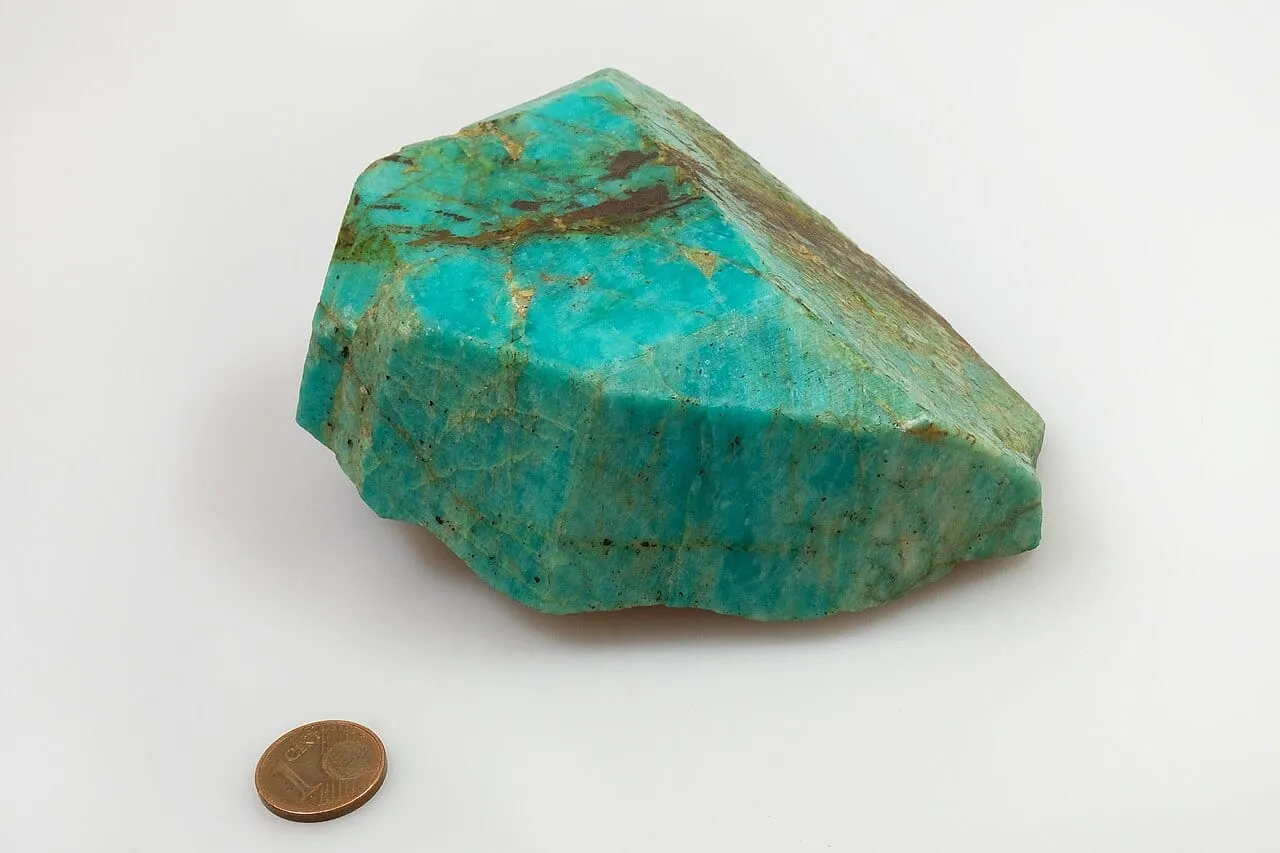
A turquoise-like green-blue feldspar: a variety of microcline worn as jewellery for more than three thousand years, but it can release lead.