Mineral
Goethite (limonite)
α-FeO(OH)Götit (limonit)
The iron mineral behind the colour of rust, yellow ochre and brown soils, named after a poet.
Also known as: Limonite (field term for mixed iron hydroxides) · Yellow ochre · Bog iron ore
- Ore
- Industrial

In short
Goethite is a brown or yellowish mineral made of iron, oxygen and hydrogen. It forms when iron-bearing minerals break down in contact with air and water, so in a way it is nature’s rust. In nature it is usually mixed with other iron hydroxides in earthy masses, and this mixture is called limonite.
How does it form?
Goethite is one of the most common iron minerals at Earth’s surface. When iron-bearing minerals such as pyrite, siderite and magnetite meet oxygen-rich water near the surface, they break down and leave goethite behind. It is therefore abundant in the upper parts of ore deposits, in weathered rocks and in soils. It can also be deposited in bogs and on lake floors; such deposits are called bog iron ore. The brown layer on rusted iron also contains goethite.
What is it used for?
- Pigment: The colour of yellow and brown ochres comes largely from goethite. These pigments have been used from prehistoric cave paintings to modern paints.
- Iron ore: Goethite-rich deposits were once important sources of iron; in northern Europe, bog iron ore was smelted for centuries.
In Türkiye
At the Divriği iron deposits in Sivas Province, the B-kafa orebody is described as limonitic: part of its magnetite and hematite has turned into goethite over time. The yellowish-brown colour of soils and rocks in many parts of Türkiye also comes from goethite.
How to recognise it
- 1
It leaves a brownish-yellow to orange-yellow streak on unglazed porcelain. Hematite’s streak is red.
- 2
It often forms lumpy, grape-like masses; broken open, these can be radially fibrous inside with a velvety, lustrous surface.
- 3
Earthy varieties (limonite) stain your fingers yellow or brown.
- 4
It does not react to a magnet, or only very weakly.
Fakes and imitations
What shops usually don’t tell you:
- “Limonite” is not a separate mineral but a field term for material made mostly of goethite mixed with clay and other iron hydroxides. Labels do not always make this distinction.
- Dark, metallic goethite is easily mistaken for hematite; the most reliable way to tell them apart is the streak colour.
Did you know?
It is named after Johann Wolfgang von Goethe, the German poet and thinker, who was also a keen mineral collector.
Yellow ochre turns red when heated: the heat converts goethite into hematite. Painters’ “burnt” earth pigments are made this way.
Where is it found?
Loading map…
- Siegerland, North Rhine-Westphalia, Germany · Historic sourceOld iron-mining district; well-formed goethite crystals
- Lostwithiel, Cornwall, England · Known localityExceptional goethite crystals from the Restormel mine
- Marquette, Michigan, USA (Lake Superior iron district) · Historic sourceHistoric mines where goethite was worked as iron ore
- Divriği, Sivas, Türkiye · Known localityLimonitic alteration (goethite-rich weathering products) in the B-kafa orebody
Locations are approximate to protect sites. Red dots mark places in Türkiye. Open in the big map →
Sources
- Handbook of Mineralogy: Goethite · Mineralogical Society of America
- Geochronology and stable isotope signature of alteration related to hydrothermal magnetite ores in Central Anatolia, Turkey · Mineralium Deposita 43, 111–124 (Marschik, Spikings & Kuşcu), 2008
- Mineralogical, geochemical and isotopic investigation of the Akdag (Divrigi-Sivas) iron deposit, Turkey · EGU General Assembly 2015, Geophysical Research Abstracts 17 (Varol & Ünlü), 2015
External links
Draft: awaiting expert reviewReport an error ↗
On the same step
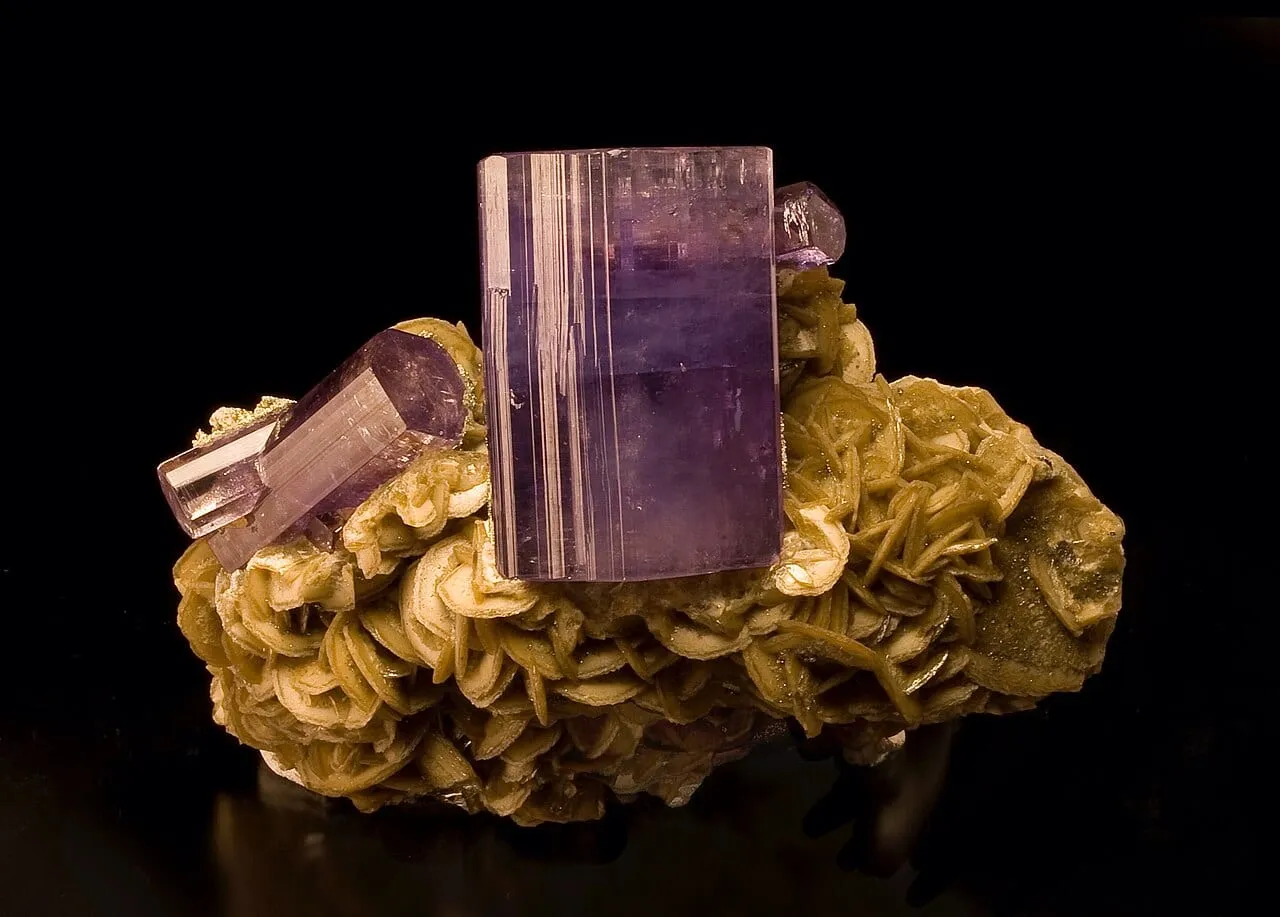
Apatite
A mineral cousin of our teeth and bones, the source of the phosphorus in fertilisers, and number 5 on the Mohs scale.
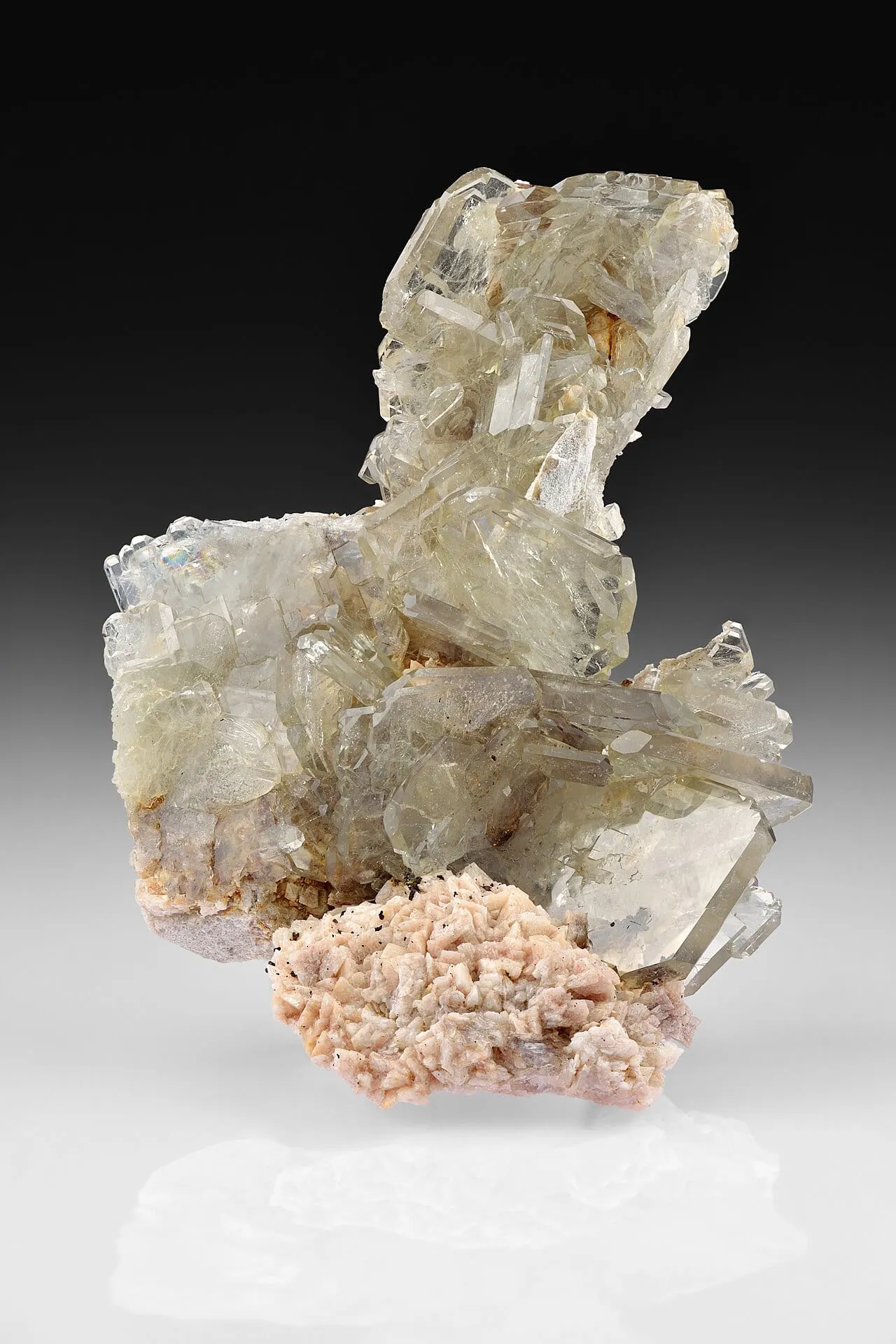
Baryte
A pale barium mineral that feels surprisingly heavy in the hand; even its name comes from the Greek word for heavy.
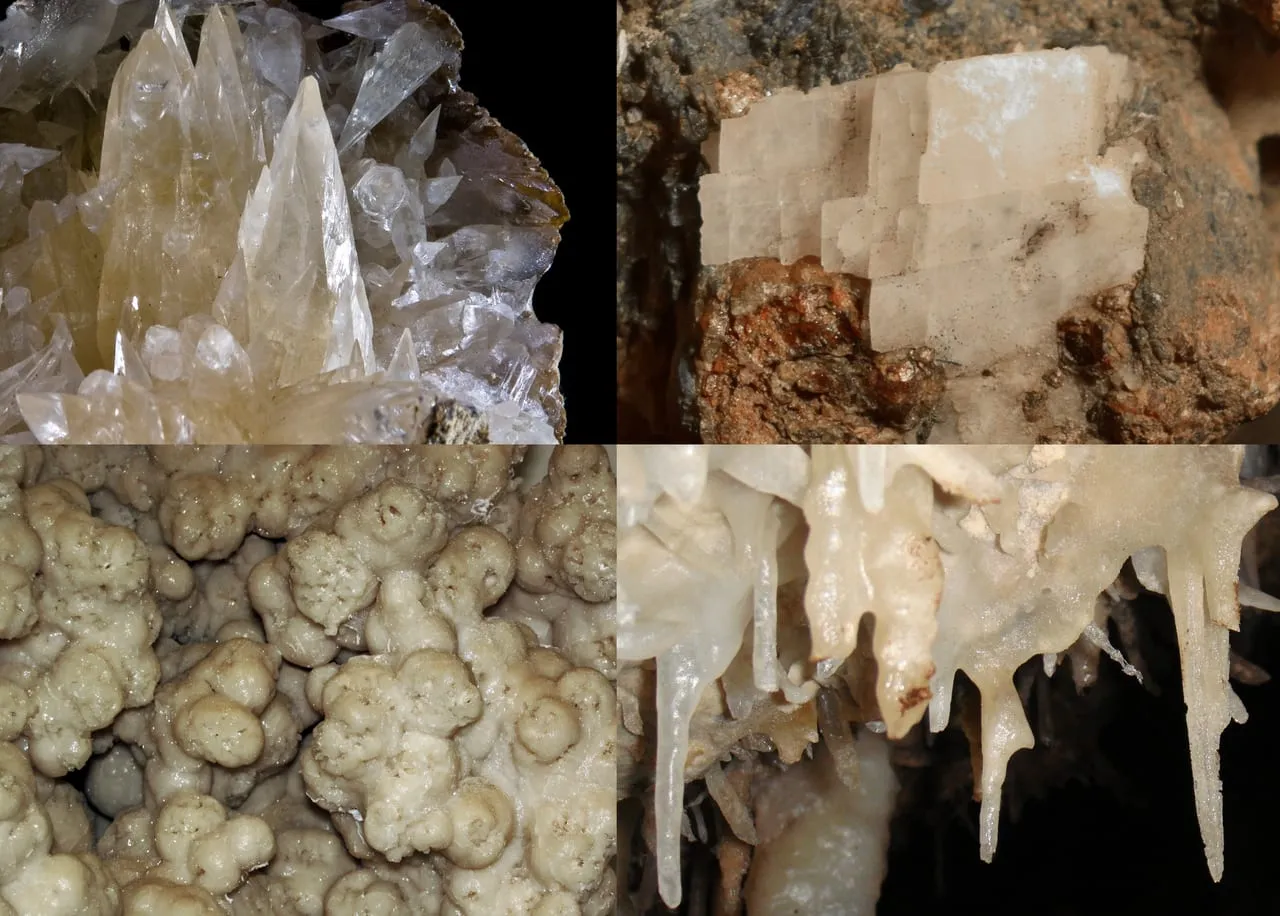
Calcite
The main mineral of limestone, marble and cave stalactites: it fizzes in acid, and its clear crystals show everything double.