Mineraloid
Fulgurite
Fulgurit
The glass tube left where lightning strikes sand: a moment from the sky etched into the ground.
Also known as: Fossilised lightning
- Popularly: Common stone
_1.jpg)
In short
A fulgurite is a natural glass formed where lightning strikes the ground and melts and fuses sand, soil or rock. In sand it usually takes the form of branching, hollow tubes coated with sand on the outside. Its name comes from the Latin fulgur, “lightning”. Because fulgurites are fragile, large ones are hard to collect in one piece.
Photos

How does it form?
When lightning strikes the ground, the electric current travels through the sand or soil and instantly melts the grains in its path. The molten silica cools straight away into glass and leaves a tube along the path the current took. The inside of the tube is smooth or bubbly, while half-melted sand grains stick to the outside. The process was first correctly explained in 1805 by Hentzen and Johann Karl Wilhelm Voigt.
Fulgurites are divided into five types by the material they form in: tubes formed in sand, those formed in various soils, those formed in caliche (a limy crust in soil), those formed on rock, and droplets thrown out by the strike.
What is it used for?
- Past climate: Fulgurites show where and how often lightning struck in the past; scientists use these traces of “palaeolightning” to understand past climates.
- Science: Because they contain shocked quartz and compounds rare on Earth, they help show how extreme heat and pressure change matter.
- Museums and collections: Long, intact specimens are displayed in museums; small pieces are kept in collections as curious natural specimens.
What determines its value?
A fulgurite is not an expensive stone but the trace of a fascinating natural event. Its value depends on its length, how intact it is (as it is fragile, long unbroken pieces are rare), how attractive its branching is and whether its find site is documented. “Fulgurites” formed in electrical accidents do not count as natural.
This information is educational, not buying, selling or investment advice. Value varies enormously with quality and treatment.
How to recognise it
- 1
In sand it is usually a branching, hollow tube; it can also form lumps or crusts.
- 2
The outside is rough with stuck-on sand grains and small stones; the inside is glassy and smooth or lined with fine bubbles.
- 3
Its colour ranges from white to black; those formed in iron-rich sand are a deep brownish green.
- 4
It is usually very fragile and breaks easily.
Fakes and imitations
What shops usually don’t tell you:
- Power lines touching the ground and high-voltage experiments can also melt sand into similar glass. Those formed in power-line accidents are often brightly coloured because of copper mixed into them; such vivid colours are not expected in natural fulgurites.
Myths and misconceptions
MythBrightly coloured, vivid fulgurites are the most valuable natural specimens.
FactNatural fulgurites are white, grey, brownish green or black. Brightly coloured ones mostly form in power-line accidents; their colours come from copper mixed into them.
MythA fulgurite is a crystal or a mineral.
FactA fulgurite is not a crystal: it is a glass with no regular internal structure (amorphous), melted by lightning and cooled very quickly. Its main substance is a natural silica glass called lechatelierite.
Did you know?
The temperature inside a lightning channel exceeds 30,000 kelvin; that heat melts sand into glass in an instant.
A fulgurite found in northern Florida was a little over 4.9 metres long; Yale University’s Peabody Museum displays an example of about 4 metres.
Fulgurites can contain substances such as fullerenes and schreibersite that are very rare on Earth because of the oxygen in the air.
Where is it found?
Loading map…
- Drigg, Cumbria, England · Historic sourceFulgurite tubes up to 9.1 metres long are recorded from the dunes here; Charles Darwin mentioned the Drigg fulgurite tubes in The Voyage of the Beagle.
- Winans Lake, Livingston County, Michigan, USA · Known localityThe largest reported fulgurite mass comes from here: about 4.9 m long and 30 cm across. The point marks the centre of the county.
Locations are approximate to protect sites. Red dots mark places in Türkiye. Open in the big map →
Frequently asked questions
What is fulgurite?
A fulgurite is a natural glass formed where lightning strikes the ground and melts and fuses sand, soil or rock. In sand it usually takes the form of branching, hollow tubes coated with sand on the outside. Its name comes from the Latin fulgur, “lightning”. Because fulgurites are fragile, large ones are hard to collect in one piece.
What is fulgurite used for?
Past climate: Fulgurites show where and how often lightning struck in the past; scientists use these traces of “palaeolightning” to understand past climates. Science: Because they contain shocked quartz and compounds rare on Earth, they help show how extreme heat and pressure change matter. Museums and collections: Long, intact specimens are displayed in museums; small pieces are kept in collections as curious natural specimens.
How hard is fulgurite?
It has a hardness of 6.5 on the Mohs scale. It scratches glass and steel; a steel knife cannot scratch it. Its specific gravity is 2.5–2.65 g/cm³.
Where is fulgurite found?
Its best-known localities: Drigg, Cumbria, England; Winans Lake, Livingston County, Michigan, USA.
How can you tell if fulgurite is real?
In sand it is usually a branching, hollow tube; it can also form lumps or crusts. The outside is rough with stuck-on sand grains and small stones; the inside is glassy and smooth or lined with fine bubbles. Its colour ranges from white to black; those formed in iron-rich sand are a deep brownish green. Power lines touching the ground and high-voltage experiments can also melt sand into similar glass. Those formed in power-line accidents are often brightly coloured because of copper mixed into them; such vivid colours are not expected in natural fulgurites.
Is fulgurite valuable?
On the “street to diamond” value ladder it sits on step 3 of nine: Building and industrial stone. A fulgurite is not an expensive stone but the trace of a fascinating natural event. Its value depends on its length, how intact it is (as it is fragile, long unbroken pieces are rare), how attractive its branching is and whether its find site is documented. “Fulgurites” formed in electrical accidents do not count as natural.
Sources
- Lechatelierite Mineral Data · Webmineral
- Fulgurite · Wikipedia
- Drigg · Wikipedia
- Livingston County, Michigan · Wikipedia
External links
Draft: awaiting expert reviewReport an error ↗
On the same step
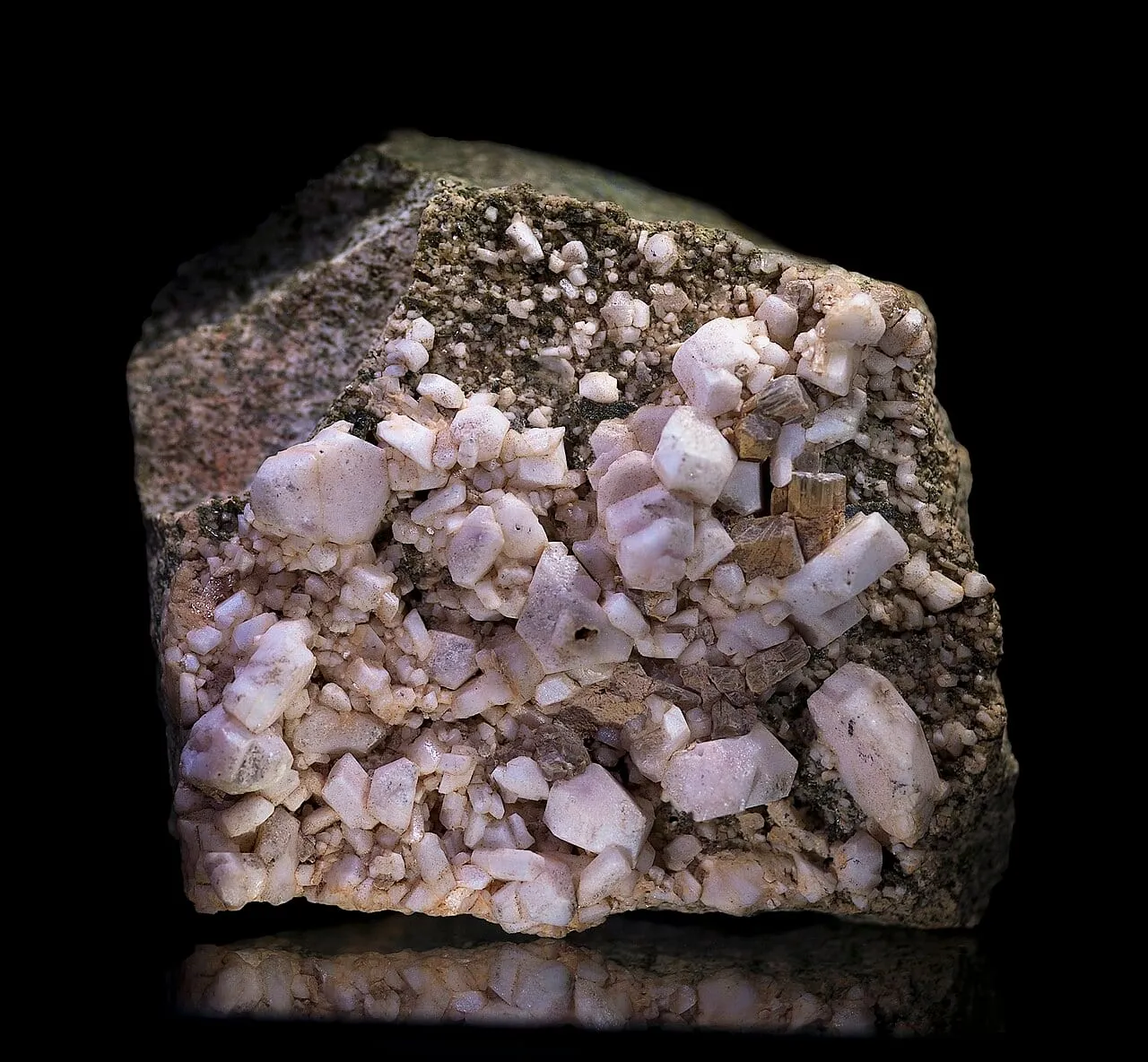
Albite
The white, sodium end of the feldspars: with its deposits at Çine–Milas, a glass and ceramics raw material that makes Türkiye one of the world’s main feldspar producers.
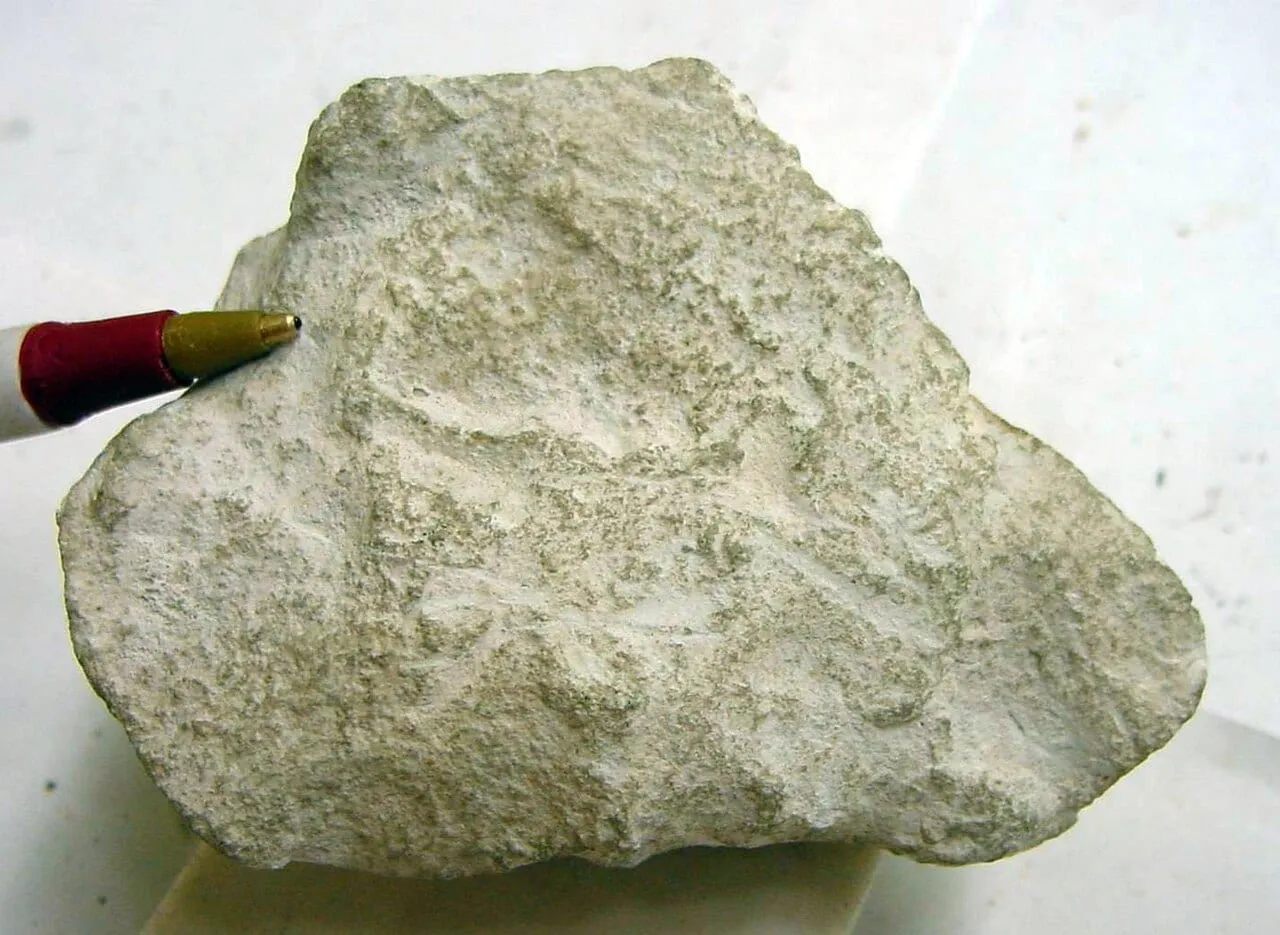
Alunite
The “alum stone” from which alum was made for centuries. Foça, Şaphane in Kütahya and Şebinkarahisar are Türkiye's old alum homelands.
Anhydrite
Gypsum without its water: a calcium sulfate mineral, whose blue-grey Peruvian form is sold as “angelite”.