Rock
Fossiliferous limestone
Fosilli kireçtaşı
Limestone showing the shells of sea creatures millions of years old; Küfeki stone, which carries Istanbul's historic buildings, is one of them.
Also known as: Shell limestone · Biosparite · Crinoidal limestone · Coralline limestone
- Popularly: Natural stone (building and decor)

In short
Fossiliferous limestone is limestone containing enough fossils or fossil traces to notice, by eye or under the microscope. The fossils are often crinoid stems, brachiopods, gastropods and other hard-shelled molluscs; where one kind dominates, names such as “crinoidal” or “coralline limestone” are used. In Türkiye the best-known example is Küfeki stone, quarried from Istanbul's Bakırköy Formation and used in Roman, Byzantine and Ottoman buildings.
Photos

How does it form?
Fossiliferous limestone forms when the calcium carbonate shells and skeletons of creatures living in shallow, warm seas pile up on the sea floor. The shell fragments are covered by fine lime mud, compacted over time and cemented with calcite into stone. Microscopic fossils can survive inside the rock too, and siliceous diatom shells may turn into opal and chert over time.
Fossils show where and when the rock was laid down. Index fossils, which lived during a particular span of time, help date rock layers.
What is it used for?
- Building stone: Indiana limestone was used for 35 of the 50 US state capitols, the Empire State Building and the Pentagon. In Istanbul, Küfeki stone went into city walls, mosques and baths.
- Cladding and paving: Polished into slabs or tiles, stone with visible fossils is used for façades and floors.
- Ornament and jewellery: It is carved as an ornamental stone and used in jewellery making.
- Science: Fossils are studied to understand the seas, climates and life of the past.
Where is it found?
Fossiliferous limestone occurs in many parts of the world. In England, Wren’s Nest in Dudley is famous for its Silurian coral-reef fossils. In the US, Devonian fossil beds are exposed at the Falls of the Ohio in Indiana; Indiana limestone is quarried around Bedford, and “Tennessee marble” in East Tennessee.
In Türkiye
Türkiye’s most famous fossiliferous limestone is Küfeki stone (Bakırköy stone). It is a limestone rich in mussel and other shell fossils, laid down in the Late Miocene (Sarmatian) in an arm of the Paratethys sea, and is widespread in the Bakırköy Formation between Davutpaşa and Küçükçekmece on Istanbul’s European side. It is light beige to white, fine-grained and porous.
Quarries around Bakırköy, Zeytinburnu, Sefaköy, Yeşilköy and Haznedar supplied Istanbul’s monumental buildings for centuries. They closed as the city grew. Today Küfeki stone is quarried in Çatalca, in the Süloğlu district of Edirne and in the Pınarhisar district of Kırklareli. In 2026, stone from Süloğlu was used for the first time in restoring the Bayezid II minaret of Hagia Sophia.
What determines its value?
As a building stone its value depends on workability, durability, evenness of colour and texture, and the size of blocks the quarry can yield. Kinds whose fossils show when polished are worth more as cladding, flooring and ornamental stone. For Küfeki stone, matching the original material in the restoration of historic buildings also matters.
This information is educational, not buying, selling or investment advice. Value varies enormously with quality and treatment.
How to recognise it
- 1
Shapes of shells, crinoid stems, corals or snails can be picked out on its surface; some only show with a hand lens.
- 2
Being limestone, it fizzes in dilute acid and is scratched by a steel knife.
- 3
Usually light beige, cream or grey, sometimes with small gaps between the shell fragments.
Myths and misconceptions
MythIf a polished fossil stone is sold as “marble”, it is marble.
FactIn the stone trade almost any polishable stone may be called “marble”. “Tennessee marble”, for example, is really an unmetamorphosed fossiliferous limestone. True marble is a metamorphic rock formed when limestone recrystallises under heat and pressure.
Did you know?
Küfeki stone is soft and easy to shape when it comes out of the quarry, and hardens as it is exposed to the air. That is why it was used in buildings meant to last for centuries.
More than 700 kinds of fossil have been found at Wren's Nest in Dudley. Its trilobite Calymene blumenbachii is known as the “Dudley bug”.
The pinkish-grey stone sold in the US as “Tennessee marble” is actually a fossiliferous limestone; it was used in the National Gallery of Art in Washington.
Where is it found?
Loading map…
- Bakırköy and Küçükçekmece, Istanbul · Major depositThe main deposit of Küfeki stone: the Bakırköy Formation (Late Miocene) between Davutpaşa and Küçükçekmece. Quarries around Bakırköy, Zeytinburnu, Sefaköy, Yeşilköy and Haznedar supplied Istanbul's historic buildings; dense urban growth has since closed them.
- Süloğlu, Edirne · Known localityQuarries that produce Küfeki stone today; in 2026 stone from here was used for the first time in restoring the Bayezid II minaret of Hagia Sophia.
- Pınarhisar, Kırklareli · Known localityOne of the places in Thrace where Küfeki stone is quarried.
- Wren's Nest, Dudley, England · Major depositA nature reserve famous for the coral-reef fossils in its Silurian Wenlock limestone (about 420–425 million years old). More than 700 kinds of fossil have been found, 86 of them unique to the site.
- Falls of the Ohio, Clarksville, Indiana, USA · Major depositExposed fossil beds of the Devonian Jeffersonville Limestone on the banks of the Ohio River.
- Bedford, Indiana, USA · Known localityQuarries of “Indiana limestone” (the Salem Limestone), built from marine fossils that settled on the floor of a shallow inland sea in the Carboniferous. It was used for the Empire State Building and the Pentagon.
- Around Knoxville, East Tennessee, USA · Known localitySold as “Tennessee marble” but actually an Ordovician (about 460 million years old) fossiliferous limestone; bryozoan and crinoid fossils show even on its polished surface.
Locations are approximate to protect sites. Red dots mark places in Türkiye. Open in the big map →
Frequently asked questions
What is fossiliferous limestone?
Fossiliferous limestone is limestone containing enough fossils or fossil traces to notice, by eye or under the microscope. The fossils are often crinoid stems, brachiopods, gastropods and other hard-shelled molluscs; where one kind dominates, names such as “crinoidal” or “coralline limestone” are used. In Türkiye the best-known example is Küfeki stone, quarried from Istanbul's Bakırköy Formation and used in Roman, Byzantine and Ottoman buildings.
Why was Küfeki stone used so much in Istanbul?
Küfeki stone was quarried just west of the city, around Bakırköy, Zeytinburnu and Küçükçekmece. Soft when it left the quarry, it was easy to cut and shape, and it hardened and gained strength as it was exposed to the air. It went into city walls, mosques, baths and caravanserais in Roman, Byzantine and Ottoman times, and appears often in the buildings of the architect Sinan.
What is fossiliferous limestone used for?
Building stone: Indiana limestone was used for 35 of the 50 US state capitols, the Empire State Building and the Pentagon. In Istanbul, Küfeki stone went into city walls, mosques and baths. Cladding and paving: Polished into slabs or tiles, stone with visible fossils is used for façades and floors. Ornament and jewellery: It is carved as an ornamental stone and used in jewellery making. Science: Fossils are studied to understand the seas, climates and life of the past.
How hard is fossiliferous limestone?
It has a hardness of 3–4 on the Mohs scale. A fingernail cannot scratch it, but a steel knife can. Its specific gravity is 2.3–2.7 g/cm³.
Where is fossiliferous limestone found?
Its best-known localities: Bakırköy and Küçükçekmece, Istanbul; Wren's Nest, Dudley, England; Falls of the Ohio, Clarksville, Indiana, USA; Süloğlu, Edirne; Pınarhisar, Kırklareli.
Where is fossiliferous limestone found in Türkiye?
Known localities in Türkiye: Bakırköy and Küçükçekmece, Istanbul; Süloğlu, Edirne; Pınarhisar, Kırklareli.
How can you tell if fossiliferous limestone is real?
Shapes of shells, crinoid stems, corals or snails can be picked out on its surface; some only show with a hand lens. Being limestone, it fizzes in dilute acid and is scratched by a steel knife. Usually light beige, cream or grey, sometimes with small gaps between the shell fragments.
Is fossiliferous limestone valuable?
On the “street to diamond” value ladder it sits on step 3 of nine: Building and industrial stone. As a building stone its value depends on workability, durability, evenness of colour and texture, and the size of blocks the quarry can yield. Kinds whose fossils show when polished are worth more as cladding, flooring and ornamental stone. For Küfeki stone, matching the original material in the restoration of historic buildings also matters.
Sources
- Fossiliferous limestone · Wikipedia
- Küfeki taşı · Vikipedi
- Küfeki taşı · Küre Ansiklopedi
- Edirne'den çıkan küfeki taşı ilk kez Ayasofya restorasyonunda kullanılıyor · Habertürk, 2026
- Wren's Nest · Wikipedia
- Falls of the Ohio State Park · Wikipedia
- Indiana limestone · Wikipedia
- Tennessee marble · Wikipedia
- Limestone · Encyclopaedia Britannica
External links
Draft: awaiting expert reviewReport an error
On the same step
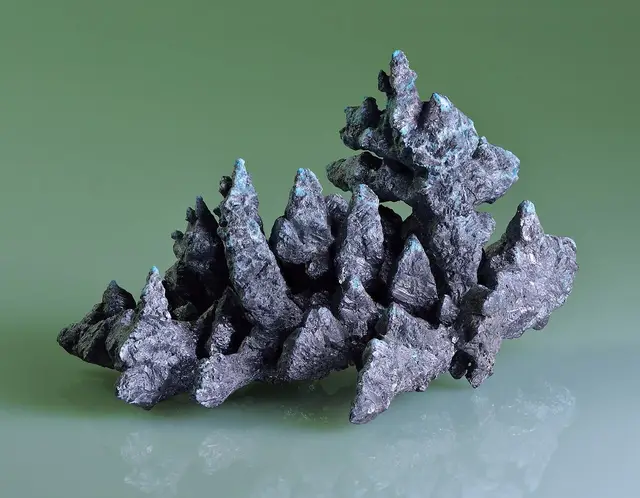
Acanthite
Silver's black sulfide: one of the world's main silver ores and the mineral that coats tarnished native silver.
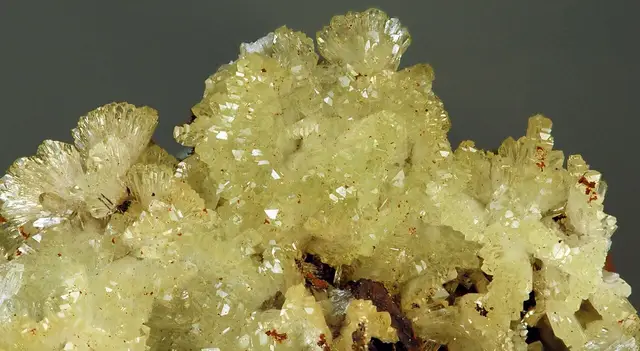
Adamite
Zinc arsenate in fan-shaped crystals from honey yellow to green: some specimens glow under ultraviolet light.

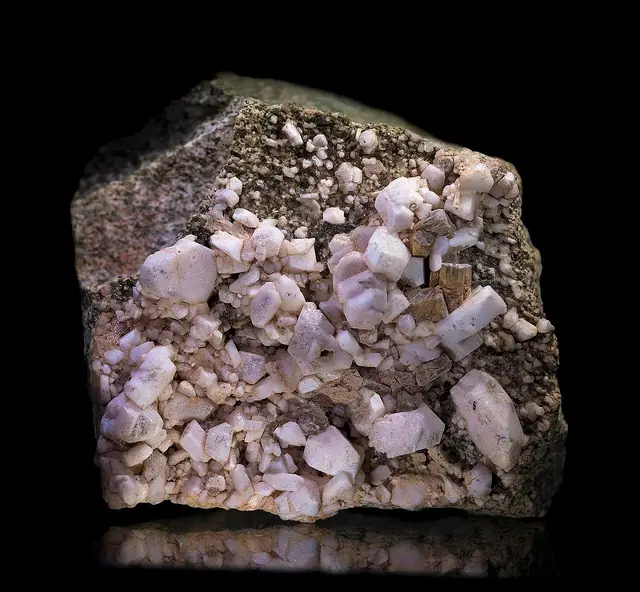
Albite
The white, sodium end of the feldspars: with its deposits at Çine–Milas, a glass and ceramics raw material that makes Türkiye one of the world’s main feldspar producers.