Rock
Conglomerate
Konglomera
A fossilised gravel bed: rounded pebbles from ancient rivers and beaches held together by natural cement.
Also known as: Puddingstone (some varieties)
_30.jpg)
In short
Conglomerate forms when the rounded pebbles you see in a riverbed or on a beach get stuck together by sand and natural cement and turn into rock. That is why it looks like pebbles set in concrete. The round shape of the pebbles shows that water carried and wore them for a long time.
How does it form?
Conglomerate is made from gravel. As fast-flowing rivers carry broken rock away from mountains, the pieces grind against each other and the riverbed; their corners wear off and they become rounded. The pebbles collect in river channels, in alluvial fans at the foot of mountains and on beaches churned by waves. Buried under newer sediment, they are compacted, and water moving through the gaps leaves behind silica, calcite or iron oxide that cements them together.
Rounded pebbles are the mark of a long journey. If the fragments are still angular, the rock is called breccia instead. Geologists use the difference to work out how far the sediment travelled. The size of the clasts also reveals the power of the water that moved them: large boulders can only be carried by very strong currents such as floods.
What is it used for?
Because it breaks unevenly, conglomerate is not a common building stone; it is mostly crushed for fill. Some hard, silica-cemented varieties are polished as decorative stone.
Its real value is scientific: the pebbles reveal what long-vanished mountains were made of. Some conglomerates, as in South Africa’s Witwatersrand basin, host rich gold deposits laid down by ancient rivers.
How to recognise it
- 1
It contains rounded pebbles larger than 2 mm that are easy to see, set in a finer-grained matrix.
- 2
The pebbles often come from different rocks, so one piece can hold grains of many colours and textures.
- 3
When it breaks, the crack usually runs around the pebbles, which may pop out and leave sockets behind.
- 4
If the cement is calcite it fizzes in dilute acid; silica-cemented conglomerate does not fizz and is much harder.
Fakes and imitations
What shops usually don’t tell you:
- Breccia is also made of large fragments, but they are angular, whereas the pebbles in conglomerate are rounded. The two are often mixed up in the trade.
- Pebble concrete and aggregate-look paving resemble conglomerate closely; in concrete the paste between the pebbles is uniformly grey and often contains small air-bubble holes.
- Terrazzo (flooring made of marble chips) can look similar, but its chips are evenly spread and the surface is polished perfectly flat.
Did you know?
The giant domes of Kata Tjuta in Australia are conglomerate, while nearby Uluru is arkose, a kind of sandstone.
Johannesburg in South Africa grew out of the gold rush that began in 1886 with the discovery of gold-bearing conglomerate beds in the Witwatersrand.
Where is it found?
Loading map…
- Kata Tjuta, Northern Territory, Australia · Major depositThe great domes are conglomerate: pebbles and boulders, mostly of granite and basalt, cemented by sand and mud. Uluṟu-Kata Tjuṯa National Park was inscribed on the UNESCO World Heritage List in 1987.
- Montserrat, Catalonia, Spain · Known localityThe famous saw-toothed mountain is built of thick conglomerate beds laid down on a fan delta in the Middle Eocene.
- Witwatersrand, South Africa · Major depositGold-bearing conglomerate beds (“reefs”) were discovered in 1886; Johannesburg grew up on the strength of the find.
Locations are approximate to protect sites. Red dots mark places in Türkiye. Open in the big map →
Sources
- Conglomerate · Encyclopaedia Britannica
- Geology — Uluṟu-Kata Tjuṯa National Park · Parks Australia
- Uluṟu-Kata Tjuṯa National Park · UNESCO World Heritage Centre
- Witwatersrand · Encyclopaedia Britannica
- Tectonic and climatic controls on the development of foreland fan deltas: Montserrat and Sant Llorenç del Munt systems (Middle Eocene, Ebro Basin, NE Spain) (López-Blanco et al.) · Sedimentary Geology, 2000
External links
Draft: awaiting expert reviewReport an error ↗
On the same step
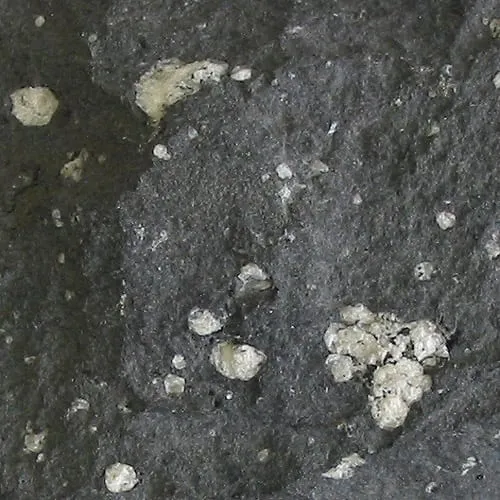
Andesite
The rock of volcanic arcs, named after the Andes — and the pink-grey stone of Ankara Castle.
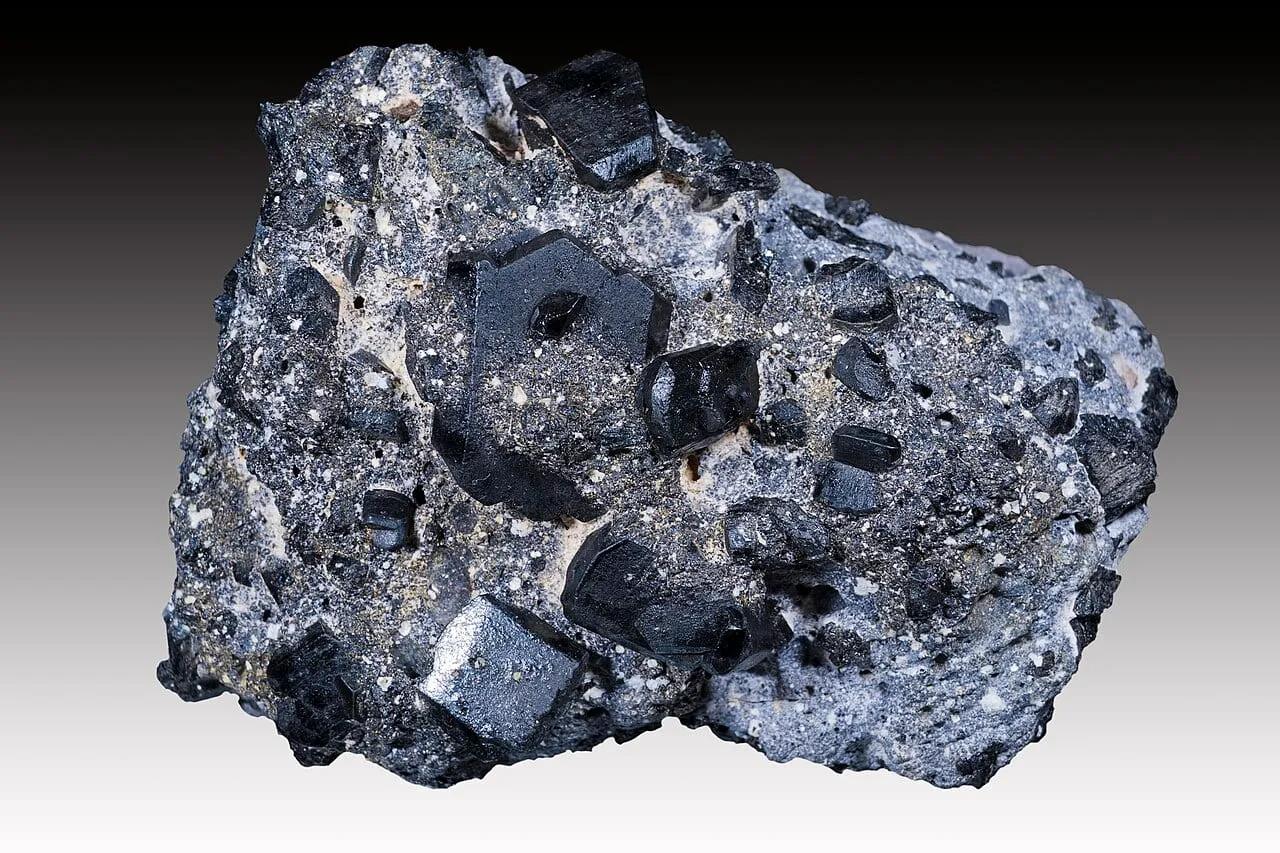
Augite (pyroxene)
The most common pyroxene, which darkens basalt and gabbro: inconspicuous, yet one of the key building blocks of Earth’s crust.
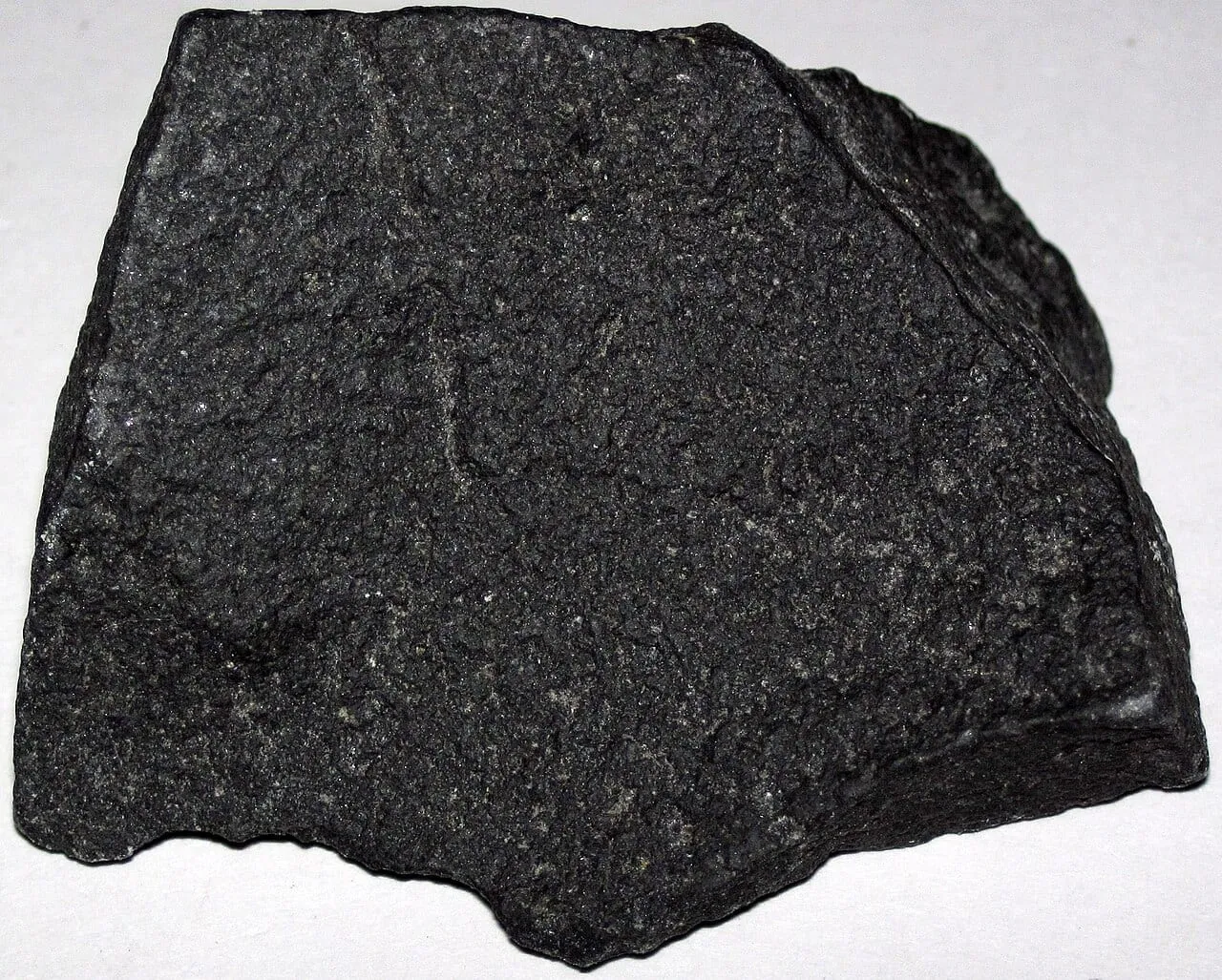
Basalt
The rock of the ocean floors and the Moon’s dark plains — the most common volcanic rock on Earth.