Mineral
Chalcanthite
CuSO₄·5H₂OKalkantit
Copper sulfate as nature makes it: a sky-blue, water-soluble and toxic mineral.
Also known as: Blue vitriol
- Popularly: Ore and raw material

In short
Chalcanthite is the natural mineral form of copper sulfate with five water molecules bound into its structure (CuSO₄·5H₂O). It is deep blue or sky blue. It forms in the parts of copper sulfide deposits exposed to air, often after a mine has been opened, building up as crusts and stalactites on tunnel walls. It dissolves in water and turns it blue. The same compound is known as “blue vitriol”; the copper sulfate used in vineyards is made in factories. Its name comes from the old Latin chalcanthum, “flowers of copper”.
Photos

How does it form?
Chalcanthite is a secondary mineral: it forms in the parts of copper sulfide deposits near the surface, exposed to air and water. As copper sulfides react with air and break down, the copper and sulfate released dissolve in water; when the water evaporates, chalcanthite crystallises. It therefore builds up mostly in dry regions, and often forms after a mine has been opened, on the tunnel walls. Rarely it also occurs at volcanic vents (fumaroles). It is found with soluble or secondary minerals such as melanterite, epsomite, brochantite and gypsum.
What is it used for?
- Copper ore: As a copper mineral, it can be used as an ore of copper.
- Farming: The same compound, mixed with lime, makes Bordeaux mixture, used in vineyards against fungal diseases; the copper sulfate used for this is made in factories.
- Crystal growing: Despite its toxicity, copper sulfate is often used to grow blue crystals in schools; these artificial crystals are not natural chalcanthite.
What determines its value?
Chalcanthite can be used as an ore of copper; according to the Handbook of Mineralogy, commercial deposits may occur in arid regions. Its value to collectors is low, because large crystals are easy to grow artificially and natural specimens slowly deteriorate. Specimens proven to be natural, with distinct crystals and in good condition, are more sought after.
This information is educational, not buying, selling or investment advice. Value varies enormously with quality and treatment.
How to recognise it
- 1
Deep blue, sky blue or greenish blue; usually found as stalactites, kidney-shaped crusts or fibrous veins, and rarely as short crystals.
- 2
It dissolves in water and turns it blue, and has a metallic taste. Never taste it.
- 3
Very soft (Mohs 2.5) and light (specific gravity about 2.3).
- 4
It loses water and breaks down in dry air, and takes up water in humid air.
Fakes and imitations
What shops usually don’t tell you:
- Most of the large, well-formed, deep blue chalcanthite crystals seen for sale are grown in the lab; because such crystals are easy to grow, there are concerns that synthetic specimens are sold as natural.
- Azurite and lazurite are also deep blue, but they do not dissolve in water; chalcanthite does.
Safety
Chalcanthite (copper sulfate) is toxic: swallowing it can cause dangerous copper poisoning. It irritates the eyes and skin, and copper ions are extremely toxic to fish. Because it dissolves so easily in water, never put it in your mouth, in drinking water or in an aquarium. Wash your hands after handling it and keep specimens out of reach of children.
Myths and misconceptions
MythThe large, deep blue chalcanthite crystals sold in mineral shops formed naturally.
FactMost of these crystals are grown in the lab. Natural chalcanthite usually occurs as crusts, stalactites or fibrous veins; large, well-formed crystals are rare in nature.
MythOnce crystallised, chalcanthite is permanent and can simply be left on a shelf.
FactChalcanthite loses water in dry air and takes it up in humid air, which slowly breaks down its crystal structure. Specimens must be protected from both humidity and excessive dryness.
Did you know?
It often forms after mining: water seeping through opened tunnels dissolves copper minerals and leaves them again on the walls as blue crusts and stalactites.
Because chalcanthite both loses water and takes it up, its crystal structure slowly falls apart; collectors must protect it from both humidity and very dry air.
Bordeaux mixture, a blend of copper sulfate and lime, is used especially in vineyards against fungal diseases.
Where is it found?
Loading map…
- Minas de Riotinto, Huelva, Spain · Major depositAbundant at the Rio Tinto mines, according to the Handbook of Mineralogy
- Chuquicamata, Antofagasta, Chile · Known localityThe world's largest open-pit copper mine by excavated volume; chalcanthite occurs here too
- Vesuvius, Campania, Italy · Known localityAn example of the volcanic vent (fumarole) settings where chalcanthite rarely forms
Locations are approximate to protect sites. Red dots mark places in Türkiye. Open in the big map →
Frequently asked questions
What is chalcanthite?
Chalcanthite is the natural mineral form of copper sulfate with five water molecules bound into its structure (CuSO₄·5H₂O). It is deep blue or sky blue. It forms in the parts of copper sulfide deposits exposed to air, often after a mine has been opened, building up as crusts and stalactites on tunnel walls. It dissolves in water and turns it blue. The same compound is known as “blue vitriol”; the copper sulfate used in vineyards is made in factories. Its name comes from the old Latin chalcanthum, “flowers of copper”.
Is the copper sulfate used in vineyards the same as chalcanthite?
Chemically it is the same compound: copper(II) sulfate with five bound water molecules. The copper sulfate used to make Bordeaux mixture in vineyards is made in factories; chalcanthite is the mineral form of the same compound that forms naturally in copper deposits. Both are toxic.
What is chalcanthite used for?
Copper ore: As a copper mineral, it can be used as an ore of copper. Farming: The same compound, mixed with lime, makes Bordeaux mixture, used in vineyards against fungal diseases; the copper sulfate used for this is made in factories. Crystal growing: Despite its toxicity, copper sulfate is often used to grow blue crystals in schools; these artificial crystals are not natural chalcanthite.
How hard is chalcanthite?
It has a hardness of 2.5 on the Mohs scale. It is soft enough to scratch with a fingernail. Its specific gravity is 2.28–2.29 g/cm³.
Where is chalcanthite found?
Its best-known localities: Minas de Riotinto, Huelva, Spain; Chuquicamata, Antofagasta, Chile; Vesuvius, Campania, Italy.
How can you tell if chalcanthite is real?
Deep blue, sky blue or greenish blue; usually found as stalactites, kidney-shaped crusts or fibrous veins, and rarely as short crystals. It dissolves in water and turns it blue, and has a metallic taste. Never taste it. Very soft (Mohs 2.5) and light (specific gravity about 2.3). Most of the large, well-formed, deep blue chalcanthite crystals seen for sale are grown in the lab; because such crystals are easy to grow, there are concerns that synthetic specimens are sold as natural.
Is chalcanthite valuable?
On the “street to diamond” value ladder it sits on step 2 of nine: Raw material by the tonne. Chalcanthite can be used as an ore of copper; according to the Handbook of Mineralogy, commercial deposits may occur in arid regions. Its value to collectors is low, because large crystals are easy to grow artificially and natural specimens slowly deteriorate. Specimens proven to be natural, with distinct crystals and in good condition, are more sought after.
Is chalcanthite dangerous?
Chalcanthite (copper sulfate) is toxic: swallowing it can cause dangerous copper poisoning. It irritates the eyes and skin, and copper ions are extremely toxic to fish. Because it dissolves so easily in water, never put it in your mouth, in drinking water or in an aquarium. Wash your hands after handling it and keep specimens out of reach of children.
Sources
- Chalcanthite · Wikipedia
- Handbook of Mineralogy: Chalcanthite · Mineralogical Society of America
- Bakır(II) sülfat · Vikipedi
- Copper(II) sulfate · Wikipedia
- Chuquicamata · Wikipedia
External links
ReviewedLast checked: 4 October 2026
On the same step
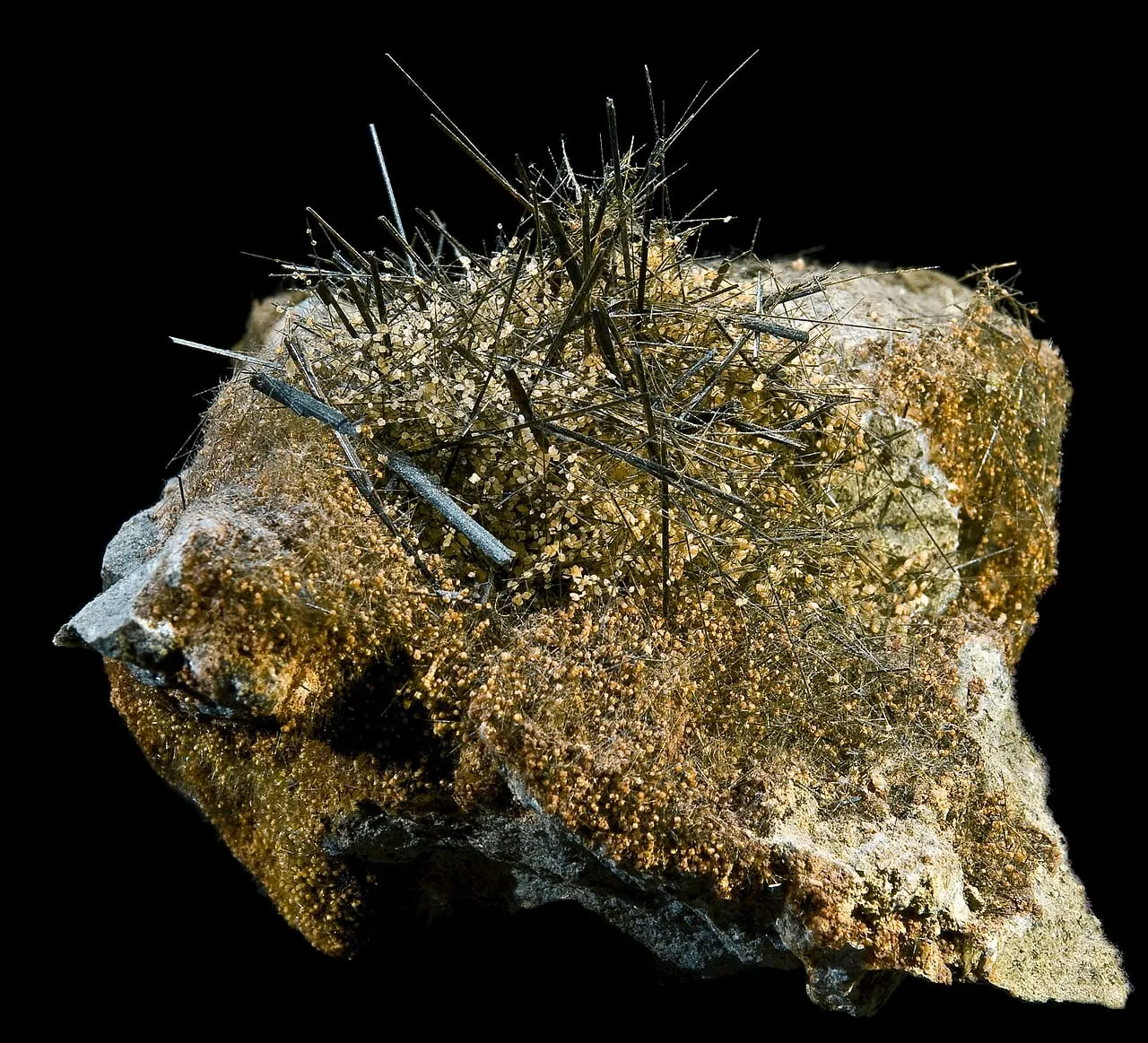
Actinolite
A green amphibole that grows like rays: a raw material of nephrite jade and cat's-eye stones; its fibrous form is asbestos.
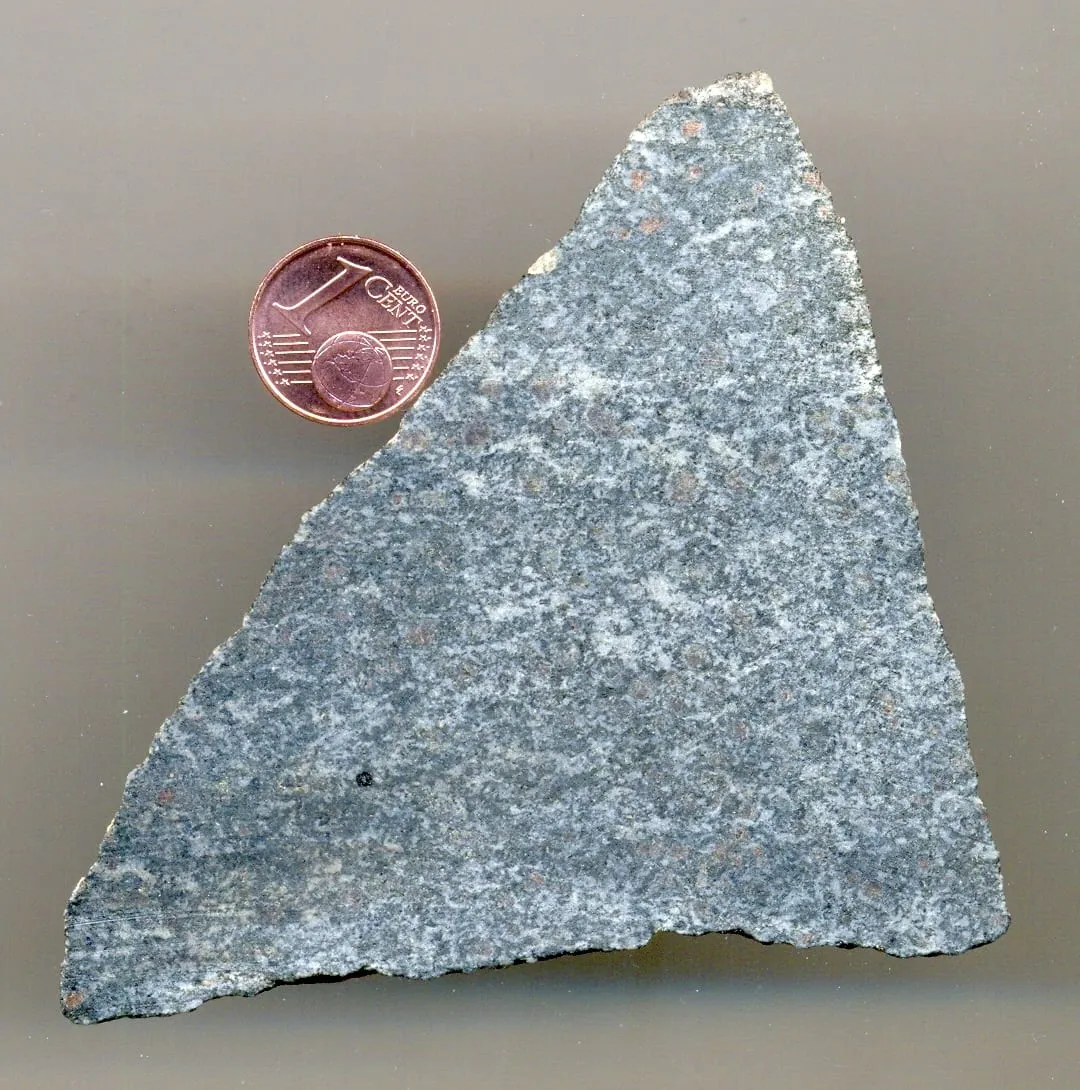
Amphibolite
A dark, heavy, salt-and-pepper metamorphic rock: basalt or gabbro transformed at depth; the stone of Neolithic axes.
Anatase
Rutile's sibling in titanium dioxide: its sharp, stretched double pyramids turn into rutile when heated.