Rock
Soapstone
Sabuntaşı
A rock soft enough to scratch with a fingernail that holds heat for a long time and feels like soap: carved into pots, statues and stoves for thousands of years.
Also known as: Steatite · Soaprock
- Popularly: Natural stone (building and decor)
_-_several_colored_samples.jpg)
In short
Soapstone (steatite) is a soft, easily carved metamorphic rock made largely of the mineral talc. It gets its name from feeling soapy to the touch. Because it holds heat better than clay or metal vessels, it has been used for thousands of years for pots, pans and stoves, and because it is easy to work, for statues and carvings. The outer surface of the Christ the Redeemer statue in Rio de Janeiro is covered with a soapstone mosaic.
Photos
.jpg)
How does it form?
Soapstone forms when magnesium-rich ultramafic rocks are transformed. In subduction zones, high pressure and temperature (dynamothermal metamorphism) and substances brought in by hot fluids moving through the rock (metasomatism) turn the minerals of these rocks into talc. The result is a metamorphic rock of the talc-schist kind.
What is it used for?
- Kitchen and heat: Because it holds heat better than clay or metal vessels, bowls and cooking slabs were made from it in North America’s Archaic period (8000–1000 BC). Today it is still used for pots, pans, kitchen worktops and heat-storing stone stoves.
- Sculpture and carving: Easy to carve, it has been a sculpture material for thousands of years: Indus (Harappan) seals, Egyptian scarabs and Inuit sculptures are among the examples.
- Laboratory benches: Acid-resistant grades have been used for laboratory, hospital and school benchtops.
- Building: It is also used for bathroom tiling; in Brazil’s old towns, streets are paved with soapstone.
What determines its value?
Soapstone is a cheap stone sold by the tonne or by the slab. For worktops and cladding, large blocks without cracks and with even colour and texture are sought; for carving, easy-working grades with a high talc content are preferred. Being free of asbestos minerals matters. For handmade sculptures and objects, the workmanship and the artist set the value.
This information is educational, not buying, selling or investment advice. Value varies enormously with quality and treatment.
How to recognise it
- 1
It feels slippery, as if soaped or oiled.
- 2
It is very soft: a fingernail or pocket knife scratches it easily, leaving a whitish mark.
- 3
Usually grey, greenish grey or bluish grey; dense and fine-grained.
- 4
It keeps its heat for a long time; once warmed by the sun or a stove, it cools slowly.
Fakes and imitations
What shops usually don’t tell you:
- Soapstone can be confused with other greenish carving stones such as serpentinite; soapstone scratches with a fingernail and feels slippery, while serpentinite is harder.
- Talc on its own is a mineral; soapstone is a rock rich in talc that can also contain chlorite, magnesite, tremolite and quartz.
Safety
Do not breathe the dust produced when cutting, sanding or carving soapstone. The stone can contain tremolite (an asbestos mineral) and crystalline silica; long exposure to these dusts can cause asbestosis, silicosis, mesothelioma and lung cancer. Workshops should use wet cutting, ventilation and a suitable mask.
Myths and misconceptions
MythSoapstone is named that because it is used to make soap.
FactIt is named for the soapy feel of the talc it contains; it has nothing to do with soap.
MythThe Christ the Redeemer statue is carved entirely from soapstone.
FactThe statue is built of reinforced concrete; the soapstone is only the mosaic of thousands of small triangular tiles covering its surface.
Did you know?
The Christ the Redeemer statue in Rio de Janeiro (1922–1931) is built of reinforced concrete, but its surface is covered by a mosaic of thousands of small triangular soapstone tiles.
Soapstone was used to build Nidaros Cathedral in Norway, which took 230 years to build, from 1070 to 1300.
The Inuit made oil lamps (qulliq) from soapstone, and today it is one of the best-known materials of Inuit sculpture.
Where is it found?
Loading map…
- Ouro Preto, Minas Gerais, Brazil · Major depositMinas Gerais has abundant soapstone quarries; local artisans make pots, pans, statues and vases. Some streets of Congonhas, Tiradentes and Ouro Preto are still paved with soapstone from colonial times.
- Schuyler and Alberene, Virginia, USA · Historic sourceAcid-resistant soapstone from the Alberene Stone Company quarries was cut into laboratory, hospital and school benchtops in the late 19th and early 20th centuries. A soapstone company still works in the area today.
- Beaverhead County, Montana, USA · Known localityThe Treasure and Regal mines worked by Barretts Minerals are here; the point marks the centre of the county.
- South of Quebec City, Canada · Known localityOne of the soapstone mines still working in North America lies south of Quebec City; the point marks the city.
Locations are approximate to protect sites. Red dots mark places in Türkiye. Open in the big map →
Frequently asked questions
What is soapstone?
Soapstone (steatite) is a soft, easily carved metamorphic rock made largely of the mineral talc. It gets its name from feeling soapy to the touch. Because it holds heat better than clay or metal vessels, it has been used for thousands of years for pots, pans and stoves, and because it is easy to work, for statues and carvings. The outer surface of the Christ the Redeemer statue in Rio de Janeiro is covered with a soapstone mosaic.
What is soapstone used for?
Kitchen and heat: Because it holds heat better than clay or metal vessels, bowls and cooking slabs were made from it in North America’s Archaic period (8000–1000 BC). Today it is still used for pots, pans, kitchen worktops and heat-storing stone stoves. Sculpture and carving: Easy to carve, it has been a sculpture material for thousands of years: Indus (Harappan) seals, Egyptian scarabs and Inuit sculptures are among the examples. Laboratory benches: Acid-resistant grades have been used for laboratory, hospital and school benchtops.
How hard is soapstone?
It has a hardness of 1 on the Mohs scale. It is soft enough to scratch with a fingernail. Its specific gravity is 2.6–2.8 g/cm³.
Where is soapstone found?
Its best-known localities: Ouro Preto, Minas Gerais, Brazil; Schuyler and Alberene, Virginia, USA; Beaverhead County, Montana, USA; South of Quebec City, Canada.
How can you tell if soapstone is real?
It feels slippery, as if soaped or oiled. It is very soft: a fingernail or pocket knife scratches it easily, leaving a whitish mark. Usually grey, greenish grey or bluish grey; dense and fine-grained. Soapstone can be confused with other greenish carving stones such as serpentinite; soapstone scratches with a fingernail and feels slippery, while serpentinite is harder.
Is soapstone valuable?
On the “street to diamond” value ladder it sits on step 2 of nine: Raw material by the tonne. Soapstone is a cheap stone sold by the tonne or by the slab. For worktops and cladding, large blocks without cracks and with even colour and texture are sought; for carving, easy-working grades with a high talc content are preferred. Being free of asbestos minerals matters. For handmade sculptures and objects, the workmanship and the artist set the value.
Is soapstone dangerous?
Do not breathe the dust produced when cutting, sanding or carving soapstone. The stone can contain tremolite (an asbestos mineral) and crystalline silica; long exposure to these dusts can cause asbestosis, silicosis, mesothelioma and lung cancer. Workshops should use wet cutting, ventilation and a suitable mask.
Sources
- Soapstone · Wikipedia
- Pedra-sabão · Wikipedia (Portekizce)
- Density of Solids · The Engineering ToolBox
- Schuyler, Virginia · Wikipedia
- Beaverhead County, Montana · Wikipedia
- Quebec City · Wikipedia
- Nidaros Cathedral · Wikipedia
External links
Draft: awaiting expert reviewReport an error ↗
On the same step
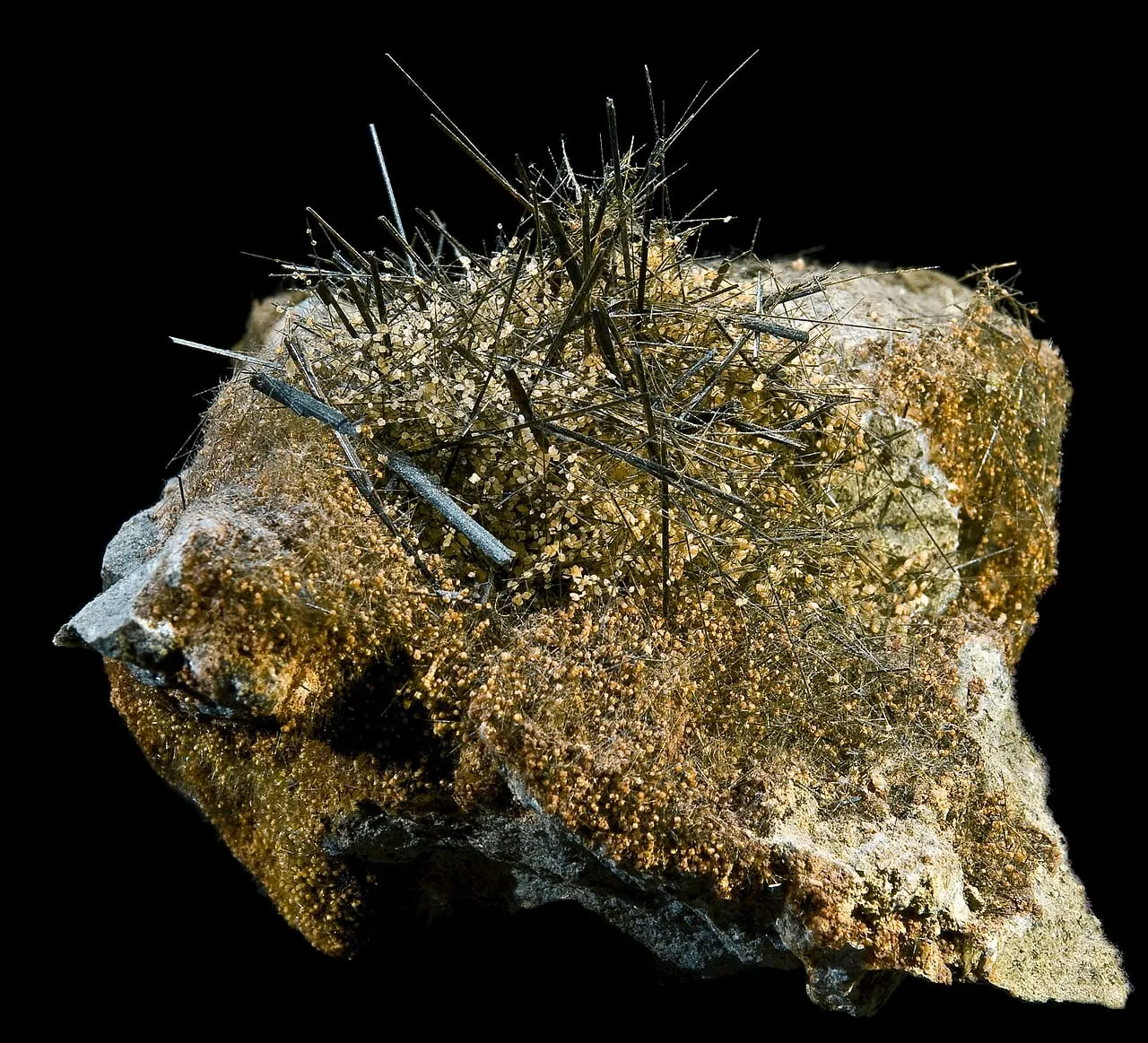
Actinolite
A green amphibole that grows like rays: a raw material of nephrite jade and cat's-eye stones; its fibrous form is asbestos.
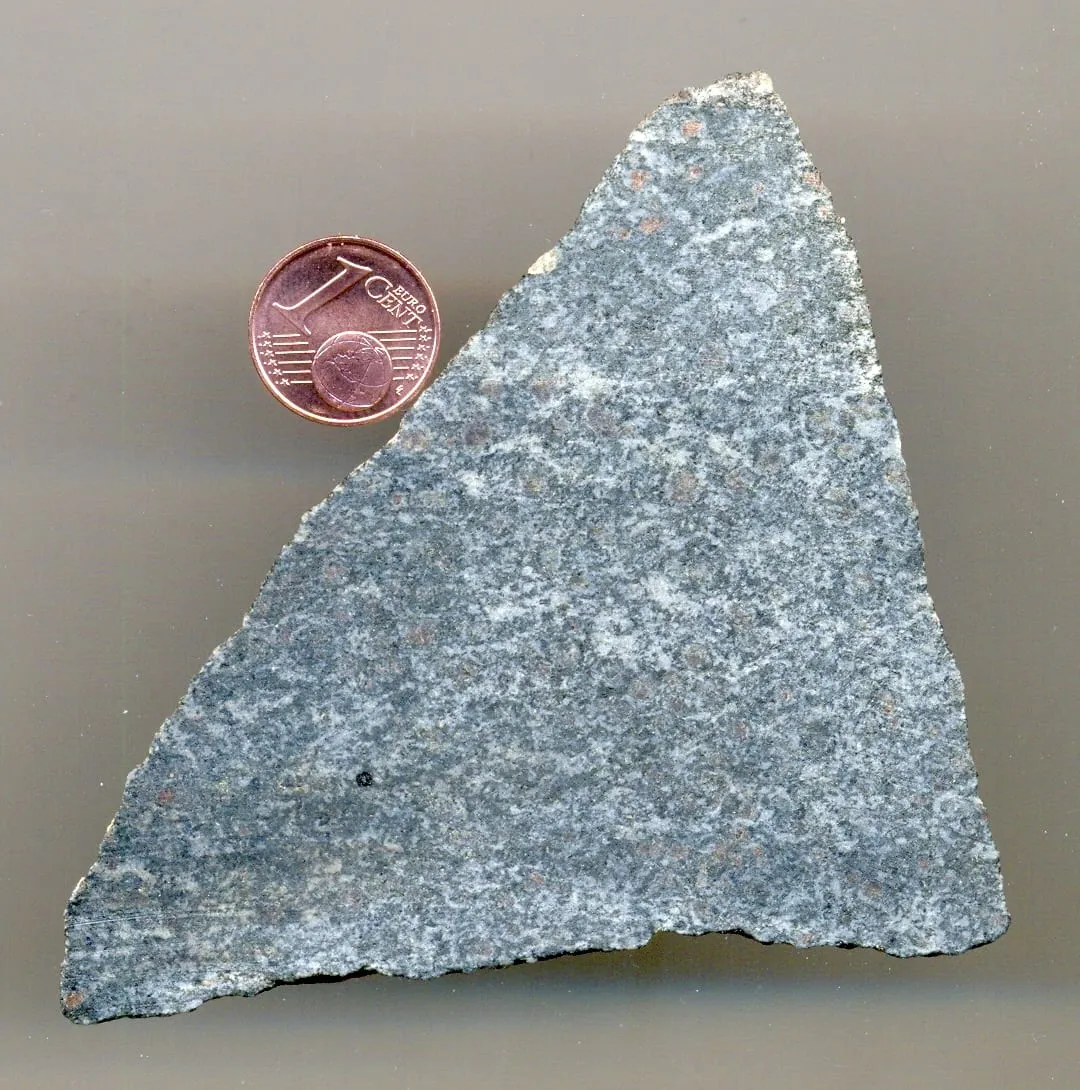
Amphibolite
A dark, heavy, salt-and-pepper metamorphic rock: basalt or gabbro transformed at depth; the stone of Neolithic axes.
Andesite
The rock of volcanic arcs, named after the Andes — and the pink-grey stone of Ankara Castle.