Rock
Slate
Arduvaz
The stone that splits into sheets: for centuries it has roofed houses and become blackboards and billiard-table beds.
- Building stone
_3_(23140002749).jpg)
In short
Slate is a rock formed when mud-based sedimentary rocks such as shale are changed by pressure and heat inside Earth's crust. Its key feature is that it splits into thin but strong sheets. It keeps out water and lasts a very long time, so it is used for roofs, and school blackboards used to be made of it.
How does it form?
Slate starts out as clay-rich sedimentary rock such as shale or mudstone. When these rocks are squeezed and heated during mountain building, their clay minerals turn into very fine-grained mica and chlorite. The flat minerals line up at right angles to the squeezing force, and the rock becomes easy to split in that direction. This is called slaty cleavage, and the cleavage planes often cut across the original sedimentary layers at an angle.
Slate is a low-grade metamorphic rock. With more heat and pressure it turns first into silky phyllite and then into schist, whose mica flakes are visible to the eye.
What is it used for?
- Roofing: Its thin, waterproof sheets can last for centuries.
- Flooring and cladding: It is durable and resists water.
- Blackboards and billiard tables: Its flat, smooth surface made it the material for school blackboards and pupils’ writing slates, and it is still used in billiard tables.
The slate quarries of northwest Wales shipped roofing slate around the world during the Industrial Revolution and were inscribed on the UNESCO World Heritage List in 2021. Today the world’s leading producer of roofing slate is Spain, with its main deposits in Galicia and León.
How to recognise it
- 1
It splits into thin, flat, strong sheets with smooth surfaces.
- 2
It is very fine-grained: no minerals are visible, though the surface may have a faint silky sheen.
- 3
A sound slate gives a clear ring when tapped lightly, while shale sounds dull and crumbles easily.
- 4
It does not soften or fall apart in water, which sets it apart from shale and claystone.
Fakes and imitations
What shops usually don’t tell you:
- Fibre-cement and plastic-based artificial slates are common on roofs; they are all the same thickness and pattern, and their edges show no natural layering.
- In the trade, “slate” may also be used for other rocks that split into sheets, such as phyllite, shale, fine sandstone, mica schist and quartzite.
- Pyrite grains in poor-quality slate can rust over time, leaving stains and holes. In Europe the quality of roofing slate is tested for such defects under the EN 12326 standard.
Did you know?
The perfectly flat playing surface of a billiard table usually sits on thick slabs of slate.
In the 19th century, slate from northwest Wales roofed buildings around the world, from London to Melbourne.
Where is it found?
Loading map…
- Slate Landscape of Northwest Wales, Gwynedd, Wales · Historic sourceQuarries and mines that sent roofing slate around the world during the Industrial Revolution (1780–1914); inscribed on the UNESCO World Heritage List in 2021.
- Valdeorras, Ourense, Galicia, Spain · Major depositSpain is today the world's leading producer of roofing slate; its most important deposits are in Galicia (Ourense) and León.
- La Cabrera, León, Spain · Major depositWith Ourense, one of Spain's main roofing-slate districts.
Locations are approximate to protect sites. Red dots mark places in Türkiye. Open in the big map →
Sources
- The Slate Landscape of Northwest Wales · UNESCO World Heritage Centre
- Petrografía y mineralogía de las pizarras para cubiertas de la Península Ibérica en relación con su calidad (Cárdenes et al.) · Trabajos de Geología, Universidad de Oviedo, 2010
- The Slate Landscape of Northwest Wales World Heritage Site · Gwynedd Council
External links
Draft: awaiting expert reviewReport an error ↗
On the same step
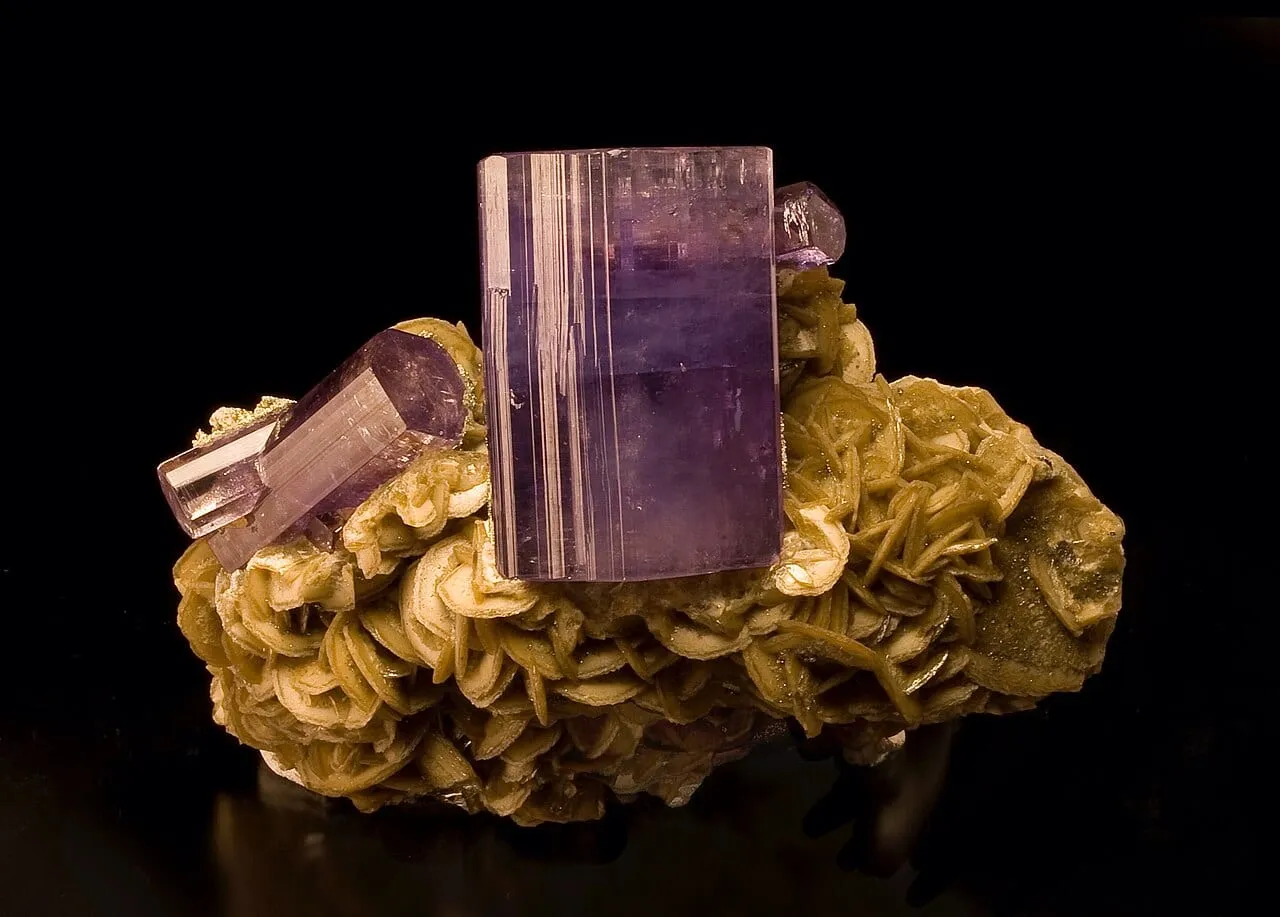
Apatite
A mineral cousin of our teeth and bones, the source of the phosphorus in fertilisers, and number 5 on the Mohs scale.
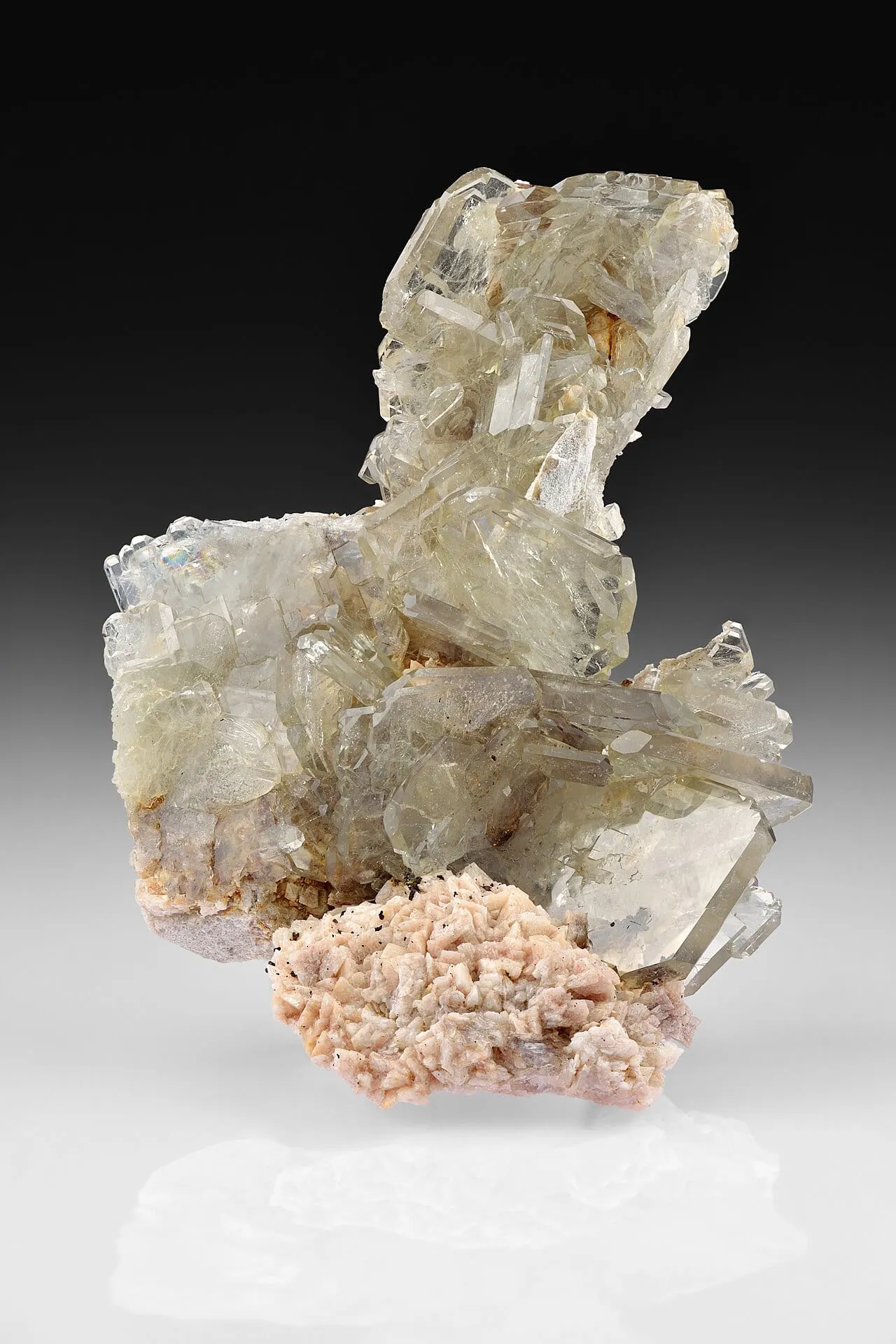
Baryte
A pale barium mineral that feels surprisingly heavy in the hand; even its name comes from the Greek word for heavy.
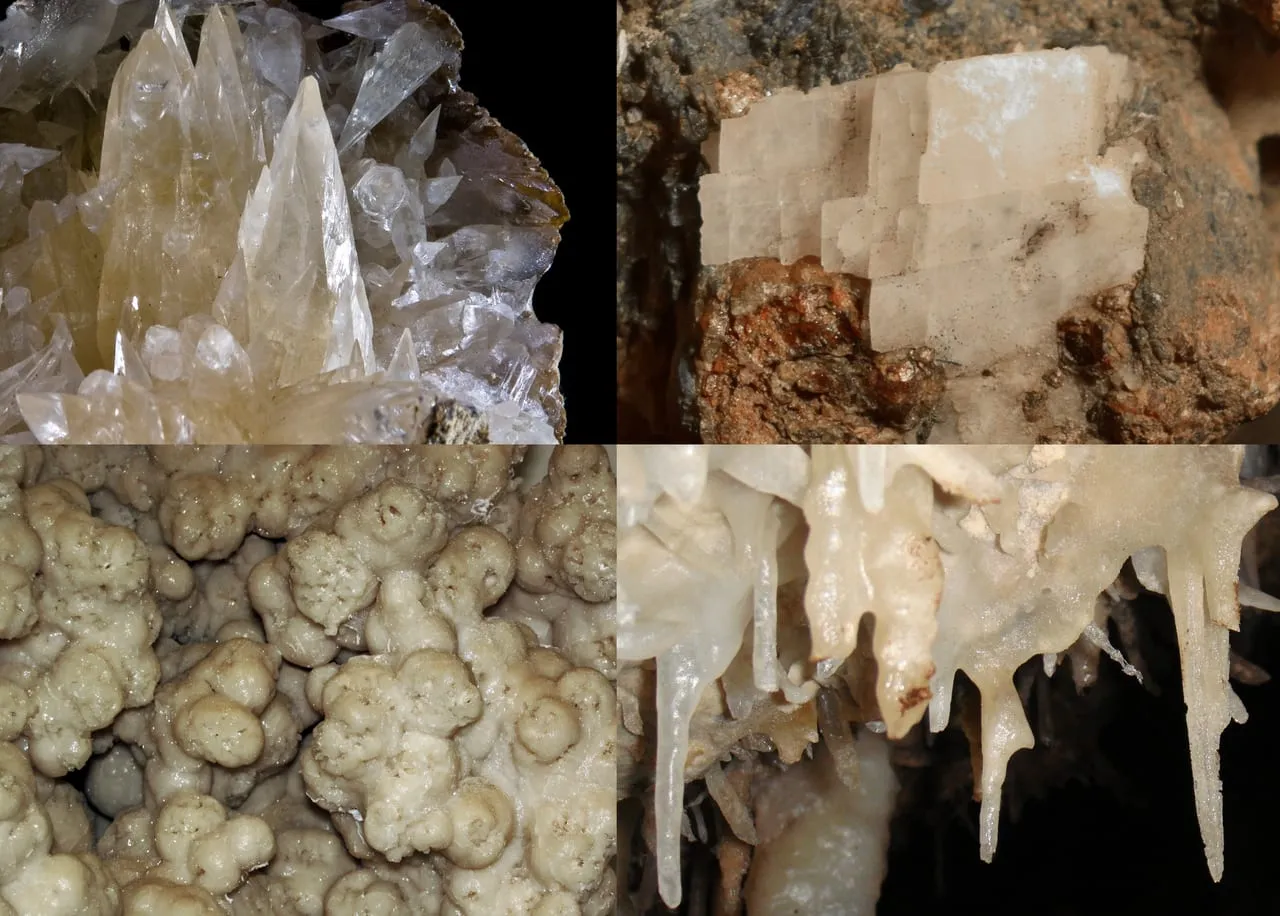
Calcite
The main mineral of limestone, marble and cave stalactites: it fizzes in acid, and its clear crystals show everything double.