Rock
Shale
Şeyl
Earth's most common sedimentary rock: hardened mud that splits into sheets and can hold fossils, oil and natural gas.
- Industrial

In short
Shale forms when very fine mud that settled in still water is squeezed and hardened over millions of years. It is known for splitting into thin layers, like the pages of a book. Some shales hold beautifully preserved fossils, and those rich in organic matter are a source of oil and natural gas.
How does it form?
Rivers carry very fine clay and silt into seas and lakes. These particles settle only where the water is almost still, such as on the deep sea floor, in lagoons and on lake beds. As the mud piles up, water is squeezed out and the flat clay minerals line up parallel to each other. This alignment is why shale splits into thin sheets, a property called fissility.
In still bottom water with little oxygen, the remains of dead organisms are buried before they rot. That is why black shales are rich in organic matter, which can generate oil and natural gas as they are heated deep underground. Under enough heat and pressure, shale turns into slate.
What is it used for?
- Bricks, tiles and ceramics: Ground and fired shale can be used like clay.
- Cement: It is a raw material for cement, together with limestone.
- Energy: Organic-rich oil shales yield oil when heated, and natural gas (shale gas) is produced from some shale layers by horizontal drilling and hydraulic fracturing.
Shale in Türkiye
According to studies by MTA, Türkiye’s geological survey, oil shale occurs in many places, notably around Beypazarı (Ankara), Seyitömer (Kütahya) and Bolu, but these resources are still largely untapped.
How to recognise it
- 1
It is very fine-grained: no grains are visible even with a hand lens, and the surface looks smooth and dull.
- 2
It splits easily into thin, flat sheets, and its edges crumble readily.
- 3
A knife scratches it easily; it cannot scratch glass.
- 4
Breathe on it and it gives off a damp, earthy smell; pieces left in water or out in the weather may soften and fall apart.
Fakes and imitations
What shops usually don’t tell you:
- Shale is sometimes sold as “slate”. True slate is a metamorphic rock: much stronger, it splits into thin sheets and does not soften in water.
- Some fossils on shale are fake: trilobites in particular are often resin casts, painted, or assembled from pieces. When buying fossils, choose documented specimens from a known source.
- “Oil shale” is a common and useful name, but older terms such as “bituminous schist” are misleading: these rocks are not metamorphic schist but organic-rich sedimentary rocks.
Did you know?
The Burgess Shale in Canada preserves even the soft tissues of animals that lived about 505 million years ago, giving a rare view of early animal evolution.
Shale makes up about 70% of the sedimentary rocks in Earth's crust.
Where is it found?
Loading map…
- Burgess Shale, Yoho National Park, British Columbia, Canada · Known localityShale about 505 million years old (Cambrian) with extraordinary fossils that preserve even soft tissues. Discovered by Charles Walcott in 1909; part of the Canadian Rocky Mountain Parks World Heritage Site.
- Messel Pit, Hesse, Germany · Known localityA former oil-shale quarry of Eocene age whose superbly preserved fossils, including mammals, birds and insects, earned it a place on the UNESCO World Heritage List in 1995.
- Bolu area (Hatıldağ, Himmetoğlu, Mengen), Türkiye · Known localityAmong the oil-shale fields studied by MTA, Türkiye's geological survey. Attempts were made with German partners to produce oil from shales in this area, but they were never completed.
Locations are approximate to protect sites. Red dots mark places in Türkiye. Open in the big map →
Sources
- Shale · Encyclopaedia Britannica
- Canadian Rocky Mountain Parks · UNESCO World Heritage Centre
- Messel Pit Fossil Site · UNESCO World Heritage Centre
- Ülkemizde yeni belirlenen petrollü şeyl potansiyel rezervi ve yerinde şeyl petrolü üretiminin araştırılması (A. Murat) · MTA Doğal Kaynaklar ve Ekonomi Bülteni
External links
Draft: awaiting expert reviewReport an error ↗
On the same step
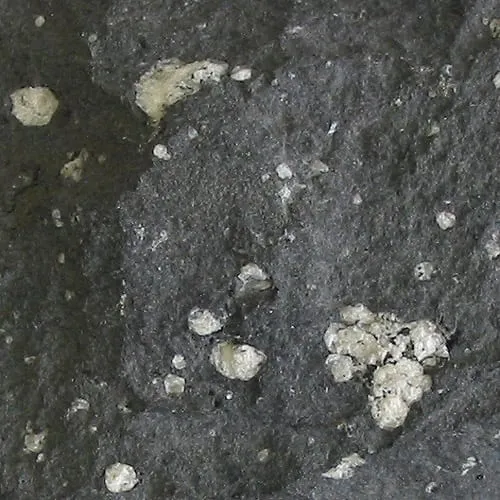
Andesite
The rock of volcanic arcs, named after the Andes — and the pink-grey stone of Ankara Castle.
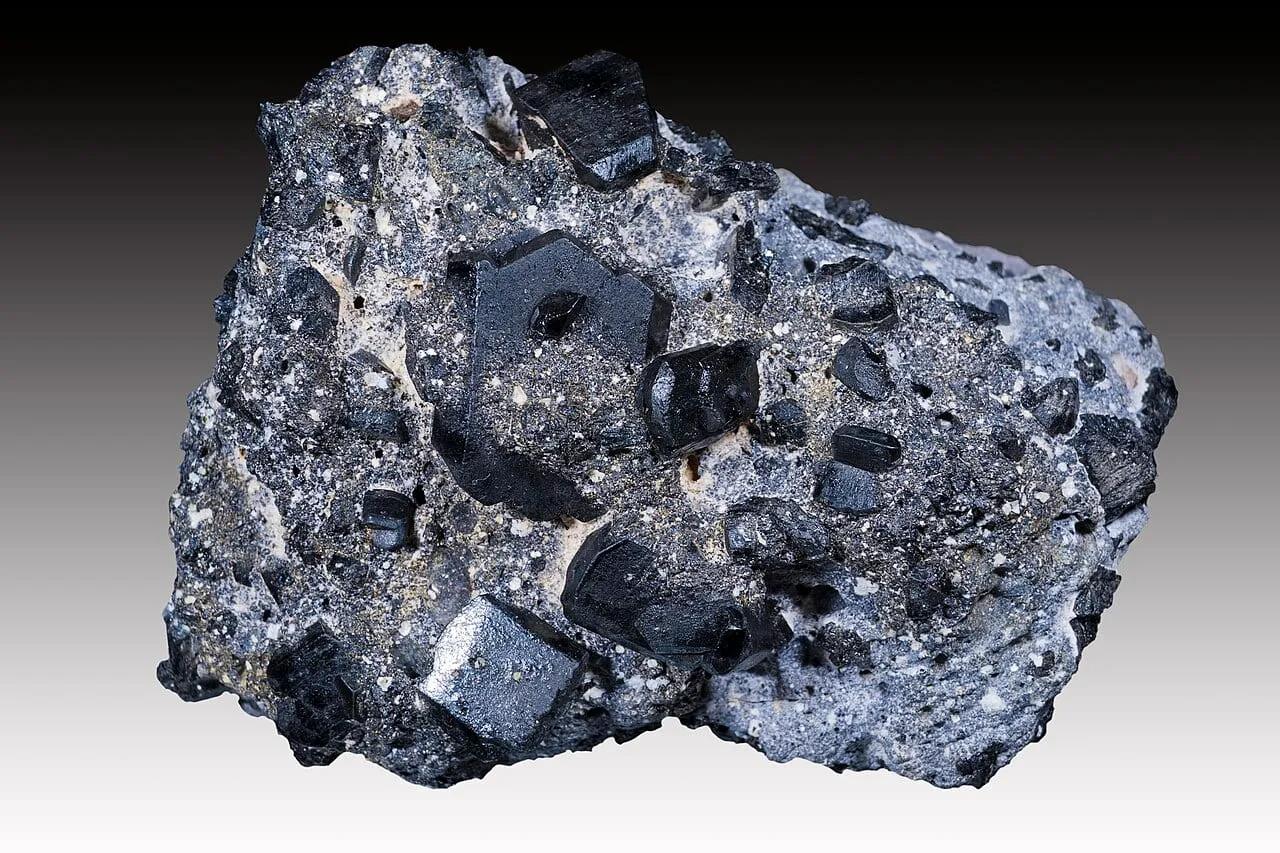
Augite (pyroxene)
The most common pyroxene, which darkens basalt and gabbro: inconspicuous, yet one of the key building blocks of Earth’s crust.
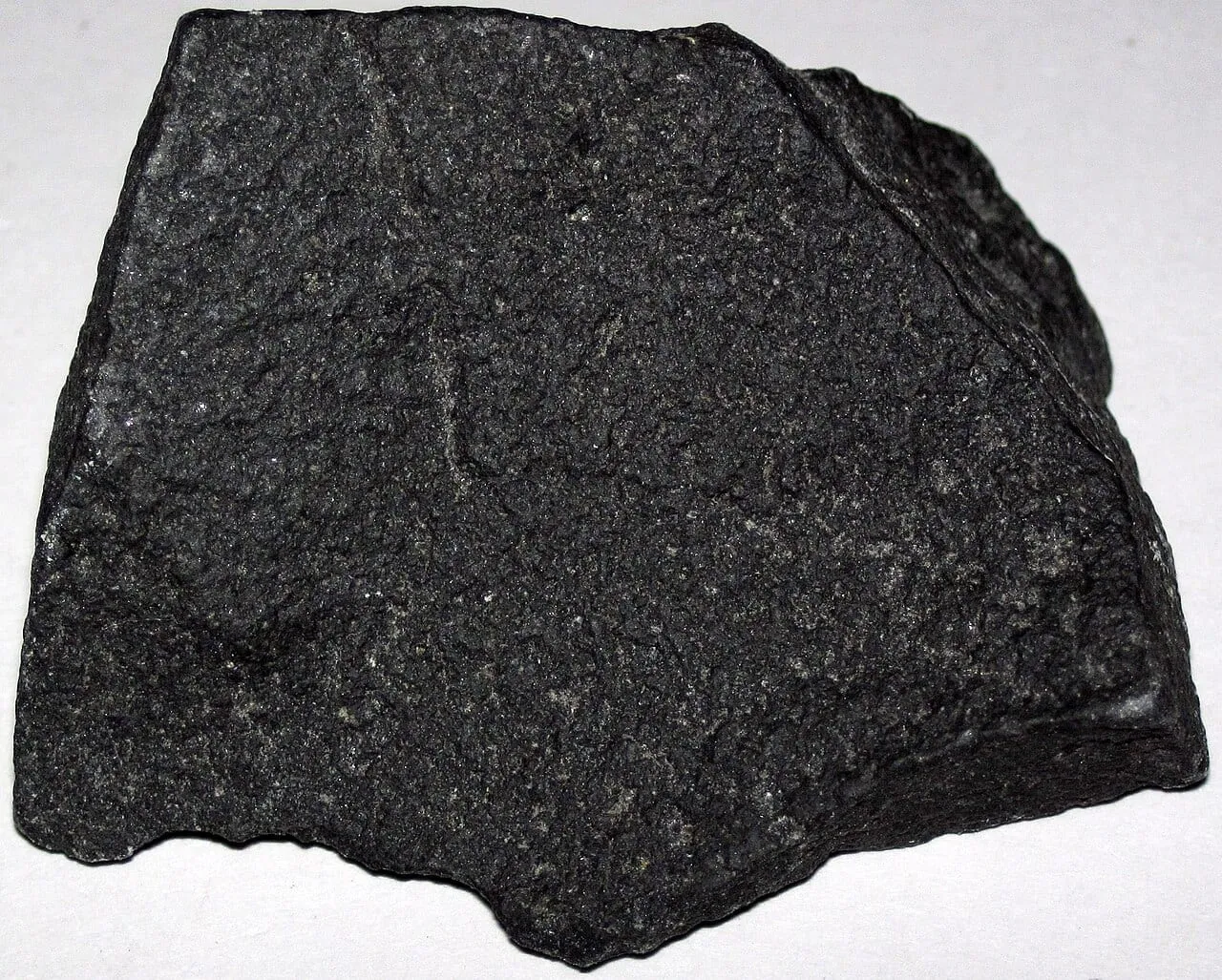
Basalt
The rock of the ocean floors and the Moon’s dark plains — the most common volcanic rock on Earth.