Rock
Pietra serena
Pietra serena
The grey-blue stone of the Renaissance: the sandstone behind Brunelleschi's columns, Michelangelo's staircase and the streets of Florence.
Also known as: Macigno · Pietra serena di Firenzuola · Pietra del fossato
- Popularly: Natural stone (building and decor)

In short
Pietra serena (Italian for “serene stone”) is a bluish-grey, fine-grained sandstone quarried in the hills around Florence. It has been used since Etruscan times, but won its fame in the Renaissance, when Brunelleschi, Donatello, Michelangelo and Vasari used it for columns, arches, door frames and sculpture. Its grey-blue and ochre tones shaped the visual identity of Florence. In 2019 the International Union of Geological Sciences (IUGS) named it a Global Heritage Stone.
Photos

How does it form?
Pietra serena formed between the Late Oligocene and the Early Miocene, in the sea that then covered the area of today’s Northern Apennines. Sand worn from igneous and metamorphic rocks was carried into deep parts of the sea by underwater avalanches (turbidity currents) and settled in thick beds. Each current left coarser sand at the bottom and finer mud on top, which is why thin mudstone layers lie between the sandstone beds.
Scientifically it is a lithic arkose: it is made of quartz, feldspar, mica (muscovite and biotite), chlorite and rock fragments, held together by clay matrix and calcite cement. Florence’s historic pietra serena belongs to the rock units geologists call the Macigno and Monte Modino formations. The stone keeps its bluish colour while fresh; in the open air, iron released from biotite and chlorite oxidises and the surface turns yellowish or reddish brown.
What is it used for?
- Etruscan and Roman times: The Etruscan walls of Fiesole are made of this stone, which has been in use since the Archaic period.
- Renaissance architecture: Filippo Brunelleschi was the first architect to use pietra serena, the “grigio-azzurro” (grey-blue), widely for columns, cornices, arches and doorways. The Foundling Hospital (Spedale degli Innocenti) and the Pazzi Chapel are its most famous examples. Michelangelo used a fine-grained kind in the Medici Chapel and in the stair hall of the Laurentian Library.
- The fabric of the city: In Florence, the bluish tones of colonnades and street paving and the ochre tones of palaces and government buildings come from this stone. It is also used for household features such as fireplaces, stairs, balconies and doorways.
- Today: It is used for restoring historic buildings, for flooring and cladding, and for design objects. The stone is fairly easy to work but of limited durability; kinds with more calcite cement weather better.
Where is it found?
Historic pietra serena was quarried in the hills of Fiesole, Monte Ceceri, Maiano and Settignano, north of Florence; the best stone is considered to come from Fiesole. These quarries are no longer worked. Today the stone is mainly quarried in the Mugello area around Firenzuola, a town with a strong tradition of stonecutters (scalpellini). Quarries producing grey sandstone under the name “pietra serena” are also found at Vellano in the province of Pistoia and at Verghereto and Sarsina in the Romagna Apennines.
What determines its value?
As a building and ornamental stone, its value depends on the evenness of the colour, the fineness and uniformity of the grain, whether large, crack-free blocks can be extracted, and its durability. Kinds with more calcite cement stand up better to the weather and keep their colour longer. Because the historic Fiesole quarries are no longer worked, finding suitable stone for repairing Renaissance buildings matters.
This information is educational, not buying, selling or investment advice. Value varies enormously with quality and treatment.
How to recognise it
- 1
A freshly cut surface is bluish grey, a grey verging on sky blue; in the open air it can gradually take on yellowish-brown tones.
- 2
It is fine- to medium-grained; held to the light, small mica flakes glint on its surface.
- 3
Being a sandstone, its surface feels slightly rough; under a hand lens, grains of quartz and feldspar can be seen.
- 4
On old buildings exposed to the weather, the surface may be seen flaking or turning powdery.
Fakes and imitations
What shops usually don’t tell you:
- The stone quarried at Firenzuola, north-east of Florence, and sold today as “Pietra serena di Firenzuola”, looks very similar but comes from a different rock unit (the Marnoso-arenacea Formation). Similar stones such as Santa Brigida stone are also used to repair historic buildings.
Myths and misconceptions
MythThe stone sold today as “pietra serena” comes from the same quarries as the stone of Renaissance Florence.
FactThe historic quarries were around Fiesole, Monte Ceceri and Settignano and are no longer worked. Grey sandstones sold under the same name today mostly come from Firenzuola and the Romagna Apennines, from a different rock unit; they look alike but are not the same stone.
MythPietra serena never changes colour; it always stays blue-grey.
FactIn the open air, biotite and chlorite in the stone release iron and the surface turns reddish brown. Kinds whose pores are filled with calcite cement resist this change better and keep their grey colour.
Did you know?
Michelangelo spent his childhood in Settignano, where his father owned a stone quarry; the village produced Renaissance sculptors such as Desiderio da Settignano and the Rossellino brothers.
Monte Ceceri, site of pietra serena quarries, is also famous for the legend that Leonardo da Vinci tested his flying machine there in 1506; however, no document confirms the event.
In 2002 Apple began using pietra serena from the Casone quarry at Firenzuola for the floors of its stores; Steve Jobs is said to have admired the stone in the pavements of Florence.
The lower floor of the fortress at Firenzuola houses a pietra serena museum, and every October the town holds a festival of stone and wood crafts.
Where is it found?
Loading map…
- Fiesole and Monte Ceceri, Florence, Italy · Type localityThe quarries in the hills of Fiesole, Monte Ceceri and Maiano have yielded stone since antiquity, and the Etruscan walls of Fiesole are built of it. The best stone is considered to come from here; the quarries are no longer worked.
- Settignano and the Mensola valley, Florence, Italy · Historic sourceThe stone-working village that produced Renaissance sculptors such as Desiderio da Settignano and the Rossellino brothers. The fine-grained “pietra del fossato” Michelangelo used in the Laurentian Library came from the nearby Mensola valley.
- Firenzuola (Brento Sanico), Florence, Italy · Major depositThe stone sold today as “Pietra serena di Firenzuola” is quarried here from the Marnoso-arenacea Formation; the town's fortress houses a pietra serena museum.
- Vellano (Cava Nardini), Pescia, Pistoia, Italy · Known localityA quarry from which blocks of pietra serena are extracted.
- Verghereto and Sarsina, Forlì-Cesena, Italy · Known localityQuarries in the Romagna Apennines producing stone sold as “pietra serena” from the Galeata Member of the Marnoso-arenacea Formation.
Locations are approximate to protect sites. Red dots mark places in Türkiye. Open in the big map →
Frequently asked questions
What is pietra serena?
Pietra serena (Italian for “serene stone”) is a bluish-grey, fine-grained sandstone quarried in the hills around Florence. It has been used since Etruscan times, but won its fame in the Renaissance, when Brunelleschi, Donatello, Michelangelo and Vasari used it for columns, arches, door frames and sculpture. Its grey-blue and ochre tones shaped the visual identity of Florence. In 2019 the International Union of Geological Sciences (IUGS) named it a Global Heritage Stone.
What is pietra serena used for?
Etruscan and Roman times: The Etruscan walls of Fiesole are made of this stone, which has been in use since the Archaic period. Renaissance architecture: Filippo Brunelleschi was the first architect to use pietra serena, the “grigio-azzurro” (grey-blue), widely for columns, cornices, arches and doorways. The Foundling Hospital (Spedale degli Innocenti) and the Pazzi Chapel are its most famous examples. Michelangelo used a fine-grained kind in the Medici Chapel and in the stair hall of the Laurentian Library.
How hard is pietra serena?
It has a hardness of 3–4 on the Mohs scale. A fingernail cannot scratch it, but a steel knife can. Its specific gravity is 2.45–2.55 g/cm³.
Where is pietra serena found?
Its best-known localities: Fiesole and Monte Ceceri, Florence, Italy; Firenzuola (Brento Sanico), Florence, Italy; Settignano and the Mensola valley, Florence, Italy; Vellano (Cava Nardini), Pescia, Pistoia, Italy; Verghereto and Sarsina, Forlì-Cesena, Italy.
How can you tell if pietra serena is real?
A freshly cut surface is bluish grey, a grey verging on sky blue; in the open air it can gradually take on yellowish-brown tones. It is fine- to medium-grained; held to the light, small mica flakes glint on its surface. Being a sandstone, its surface feels slightly rough; under a hand lens, grains of quartz and feldspar can be seen. The stone quarried at Firenzuola, north-east of Florence, and sold today as “Pietra serena di Firenzuola”, looks very similar but comes from a different rock unit (the Marnoso-arenacea Formation). Similar stones such as Santa Brigida stone are also used to repair historic buildings.
Is pietra serena valuable?
On the “street to diamond” value ladder it sits on step 4 of nine: Fine dimension stone and ore. As a building and ornamental stone, its value depends on the evenness of the colour, the fineness and uniformity of the grain, whether large, crack-free blocks can be extracted, and its durability. Kinds with more calcite cement stand up better to the weather and keep their colour longer. Because the historic Fiesole quarries are no longer worked, finding suitable stone for repairing Renaissance buildings matters.
Sources
- Pietra serena · Wikipedia
- Pietra Serena (Global Heritage Stone, 2019) · IUGS Geoheritage
- Eurolithos: Pietra Serena (Le Vaglie), M. T. De Nardo · EuroGeoSurveys, European Geological Data Infrastructure, 2021
- EPD: Rivestimento in Pietra Serena di Firenzuola (Casone Group) · EPDItaly
- Chromatism and the chromatic alteration of the florentine sandstone in Pietra Serena (Pecchioni, Fratini, Cantisani, Vettori, Ricci) · Rendiconti Online della Società Geologica Italiana, 2015
- Making pietra serena · Visit Tuscany (Regione Toscana)
- How to Identify Sandstone: Types, Hardness, Field Tests & Uses · Rockhounding.org
- Monte Ceceri · Wikipedia
- Settignano · Wikipedia
- Firenzuola · Wikipedia
External links
Draft: awaiting expert reviewReport an error
On the same step
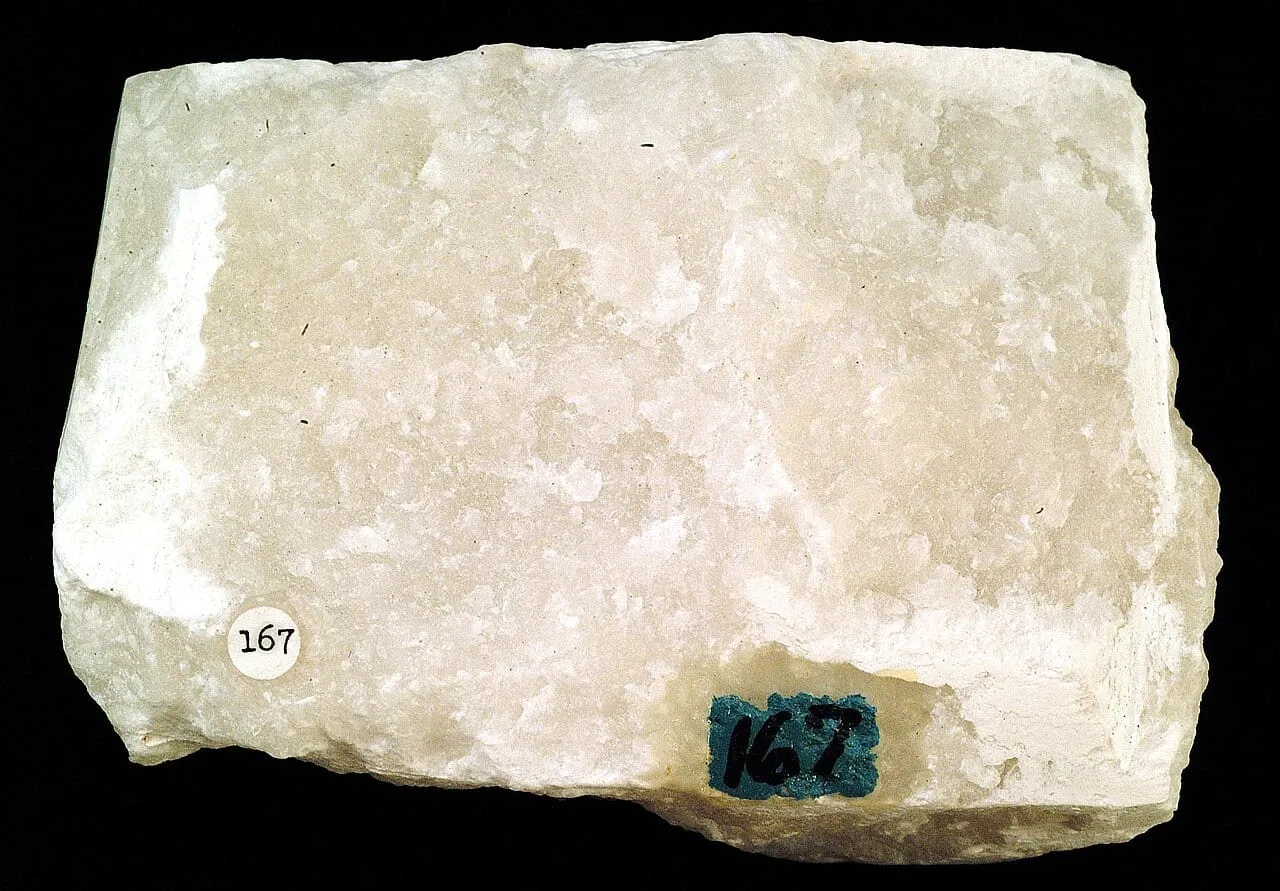
Alabaster
The fine-grained, translucent form of gypsum: a white stone soft enough to scratch with a fingernail, carved into statues, vessels and lamps for thousands of years.
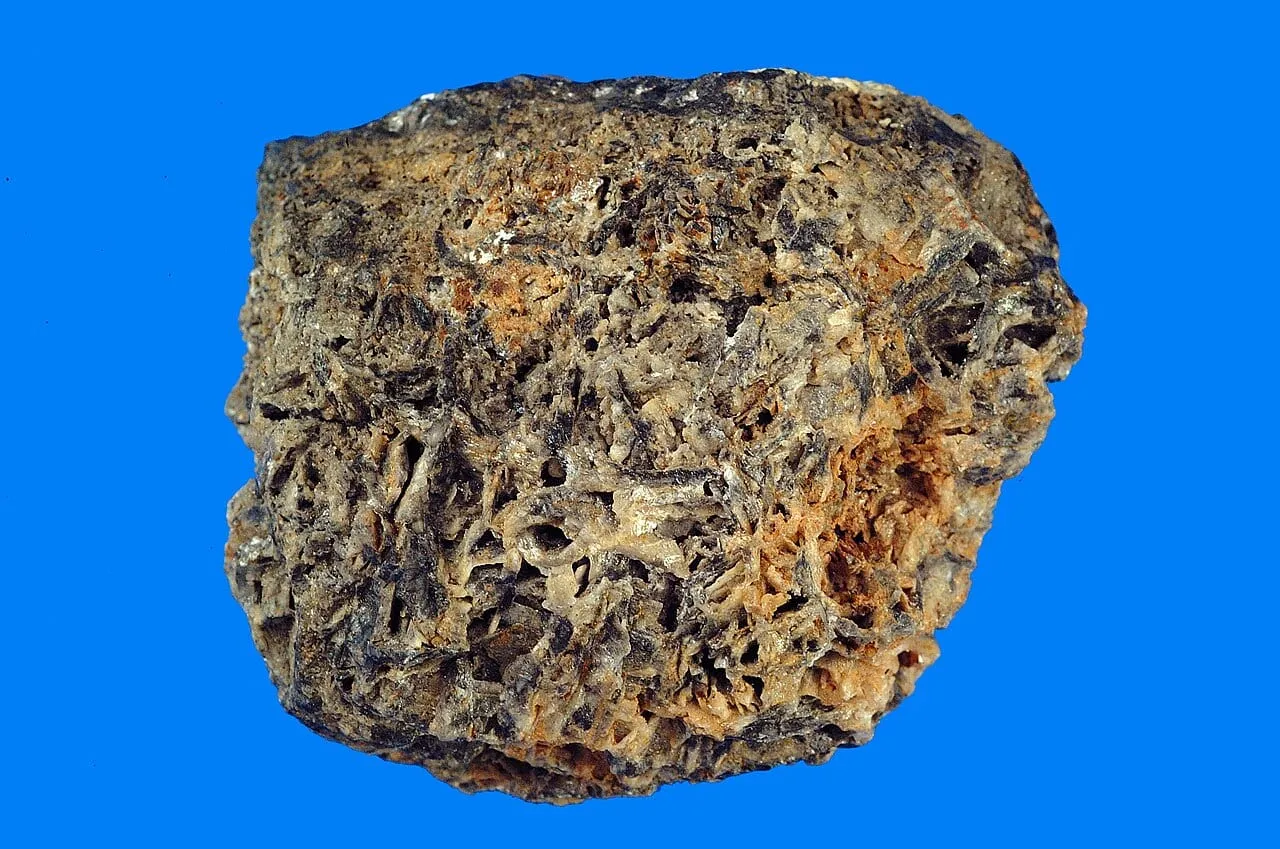
Anglesite
A heavy lead sulfate mineral with a diamond-like shine that grows as a crust around galena; it is named after the island of Anglesey in Wales.
Arsenopyrite
A widespread silvery-grey sulfide containing arsenic: it smells of garlic when struck and is poisonous.