Rock
Greywacke
Grovak
The dark, hard sandstone brought down by underwater avalanches: the stone of pharaohs’ statues and palettes, of New Zealand’s Alps and of railway ballast.
Also known as: Graywacke
- Popularly: Natural stone (building and decor)
- Building stone
.jpg)
In short
Greywacke is a hard kind of sandstone in which poorly sorted, angular sand grains and small rock fragments sit embedded in a dark, fine-grained clay matrix. Its name comes from the German Grauwacke, meaning “grey, earthy rock”. It builds up in deep seas, where muddy currents rush down steep slopes like avalanches (turbidity currents). Ancient Egypt used it for statues and vessels; today it is used as railway ballast and paving stone.
Photos

How does it form?
Greywacke is the work of underwater avalanches and strong turbidity currents. Muddy sediment at the edge of a continental shelf or at the foot of a mountain slides like an avalanche down into ocean trenches and onto the deep sea floor; in this fast-settling mixture, sand, gravel and clay are stirred together. Because the grains are not carried far or rolled, they stay angular and sit scattered in the fine matrix. That is why greywacke is a texturally “immature” rock.
Greywacke beds are usually accompanied by black shales of deep-sea origin. Very old examples (Palaeozoic and older) may have been slightly metamorphosed as they were buried; the slaty greywackes of Germany’s Harz Mountains are an example.
What is it used for?
- Railway ballast and roads: In Germany, crushed greywacke is widely used as the base stone of railway tracks; there are more than 20 quarries in the region.
- Paving and walling: It is used as paving stone and as walling stone in water structures such as dam walls.
- Sculpture and vessels: In ancient Egypt and later in the Roman world it was used for statues and vessels, because its fine grain and compact structure allow detailed carving. Its dark colour resembles bronze.
In Türkiye
In the Istanbul Zone, which takes in Istanbul and Thrace, the Early Carboniferous Trakya Formation is a turbiditic sequence of alternating sandstone and shale more than 1,500 m thick. Its sandstones are feldspathic and lithic greywackes and subgreywackes; their grains have been found to be roughly equal parts quartz, feldspar and rock fragments, most of the rock fragments coming from volcanic rocks of intermediate composition. The formation is the topmost unit of the Istanbul Palaeozoic.
What determines its value?
Greywacke is mostly a cheap raw material, used as crushed stone for railway ballast, road building and concrete. Its value depends on its hardness and resistance to impact, how few cracks and how little weathering it has, and how far the quarry is from the railway or building site. If it is to be cut into blocks for paving or walling, even bedding and block size also matter. The kinds sought by ancient Egypt as sculpture stone have historical value.
This information is educational, not buying, selling or investment advice. Value varies enormously with quality and treatment.
How to recognise it
- 1
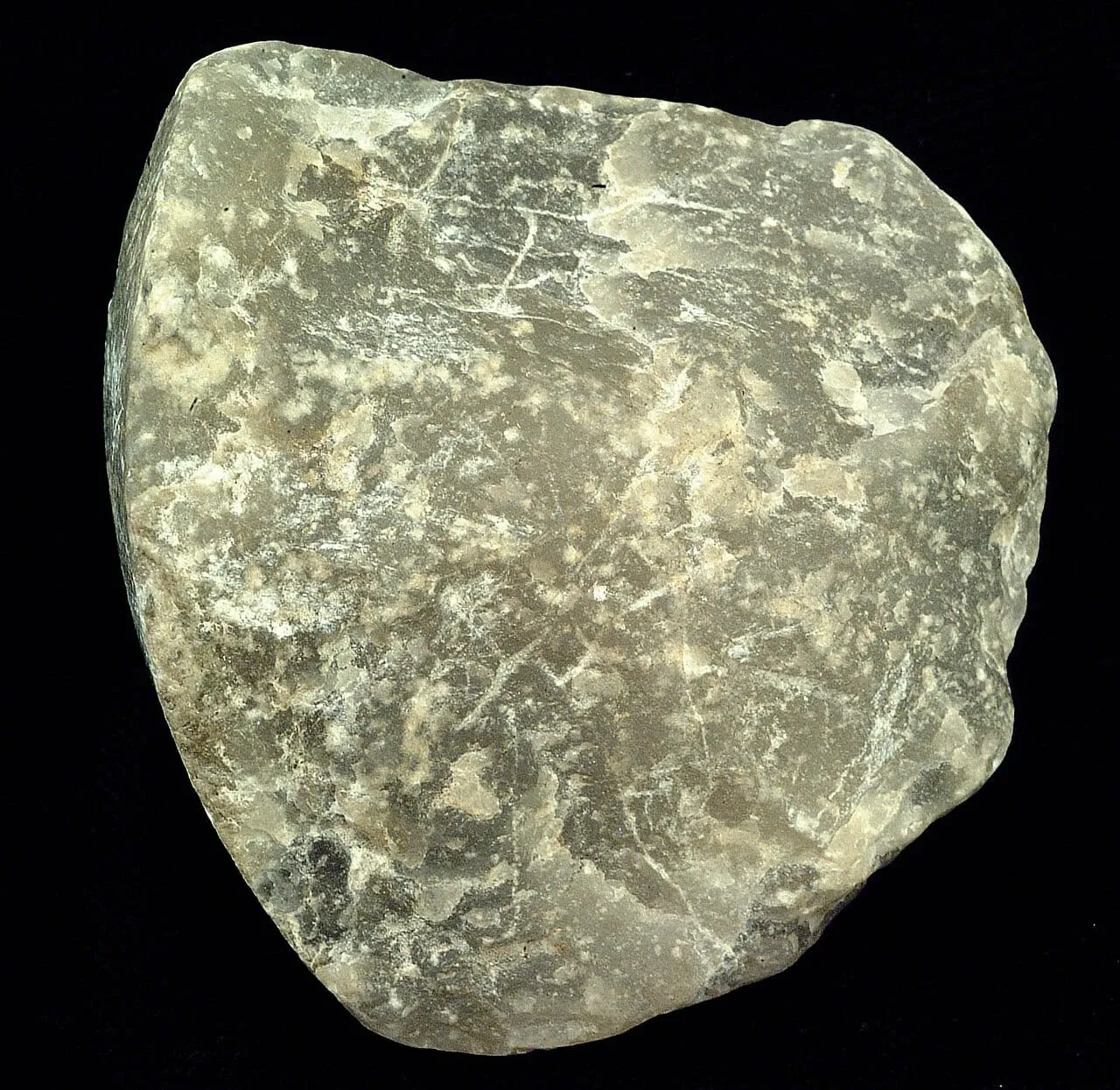
Dark grey or greenish grey, hard and compact; the grains look “dirty”, set in a dark matrix.
- 2
The grains are angular and poorly sorted: they vary a lot in size, and there are no clean, rounded sand grains.
- 3
It is very hard; a steel knife does not scratch it.
- 4
It is usually thick-bedded, with thin layers of shale or mudstone between the beds.
Fakes and imitations
What shops usually don’t tell you:
- Arkose can look dirty too, but arkose is set apart by containing at least 25 per cent feldspar, while greywacke is set apart by a dark clay matrix making up more than 15 per cent of its volume.
- It looks like sandstone, but it differs from mature sandstones, whose grains are well sorted, rounded and pale; in greywacke the grains are angular and the matrix is dark.
Myths and misconceptions
MythGreywacke, as its name says, means “grey stone”: any grey sandstone is greywacke.
FactThe name comes from the German word for “grey”, but greywacke is defined by its make-up, not its colour: it needs angular grains and a fine matrix making up more than 15 per cent of its volume. A grey sandstone that is clean and has no matrix is not greywacke.
MythAncient Egyptian statues and palettes were made of slate.
FactThe stone of works such as the Narmer Palette has often been taken for slate or schist, but it is greywacke from Wadi Hammamat: a fine-grained, hard kind of sandstone that does not flake.
Did you know?
Egypt’s famous Narmer Palette (about the 31st century BCE, 63 cm tall) was carved from dark grey-green greywacke quarried at Wadi Hammamat; the stone has often been misidentified in the past as slate or schist.
The word Grauwacke comes from the language of the miners of Germany’s Harz Mountains and has been on record since at least 1780.
Because it looks natural and can be finely carved, greywacke has also been used in traditional film miniatures built at scales from 1:1 to 1:600.
Where is it found?
Loading map…
- Harz Mountains, Lower Saxony–Saxony-Anhalt, Germany · Historic sourceThe word Grauwacke comes from the mining language of the Harz region and is documented since at least 1780. The commonest rocks at the surface of the mountains are slaty greywackes, clay shales and granite intrusions.
- Wadi Hammamat, Eastern Desert, Egypt · Historic sourceAncient Egypt's greywacke, called “bekhen stone”, was quarried in this valley from Predynastic to Roman times. The Narmer Palette (about the 31st century BCE) was carved from stone from this quarry.
- Southern Alps, New Zealand · Major depositMost of the Southern Alps is greywacke. The Torlesse greywacke is made of sediment left by submarine avalanches (turbidity currents) from the Late Carboniferous to the Middle Cretaceous (about 320–130 million years ago).
- Southern Uplands, Scotland · Known localityMost of the rocks are weakly metamorphosed coarse greywacke. These Silurian sediments, laid down in the Iapetus Ocean about 420 million years ago, were thrust up in the Caledonian mountain building.
- Lake District, Cumbria, England · Known localityWikipedia lists the Lake District among the places in Britain where greywacke occurs.
- Istanbul Zone (Istanbul and surroundings), Türkiye · Known localityThe Early Carboniferous Trakya Formation is a turbiditic sandstone–shale sequence more than 1,500 m thick; its sandstones are feldspathic and lithic greywackes and subgreywackes.
Locations are approximate to protect sites. Red dots mark places in Türkiye. Open in the big map →
Frequently asked questions
What is greywacke?
Greywacke is a hard kind of sandstone in which poorly sorted, angular sand grains and small rock fragments sit embedded in a dark, fine-grained clay matrix. Its name comes from the German Grauwacke, meaning “grey, earthy rock”. It builds up in deep seas, where muddy currents rush down steep slopes like avalanches (turbidity currents). Ancient Egypt used it for statues and vessels; today it is used as railway ballast and paving stone.
What is greywacke used for?
Railway ballast and roads: In Germany, crushed greywacke is widely used as the base stone of railway tracks; there are more than 20 quarries in the region. Paving and walling: It is used as paving stone and as walling stone in water structures such as dam walls. Sculpture and vessels: In ancient Egypt and later in the Roman world it was used for statues and vessels, because its fine grain and compact structure allow detailed carving. Its dark colour resembles bronze.
How hard is greywacke?
It has a hardness of 6–7 on the Mohs scale. It can scratch glass; a steel knife scratches it only with difficulty. Its specific gravity is 2.5–2.8 g/cm³.
Where is greywacke found?
Its best-known localities: Southern Alps, New Zealand; Harz Mountains, Lower Saxony–Saxony-Anhalt, Germany; Wadi Hammamat, Eastern Desert, Egypt; Southern Uplands, Scotland; Lake District, Cumbria, England.
Where is greywacke found in Türkiye?
Known localities in Türkiye: Istanbul Zone (Istanbul and surroundings), Türkiye.
How can you tell if greywacke is real?
Dark grey or greenish grey, hard and compact; the grains look “dirty”, set in a dark matrix. The grains are angular and poorly sorted: they vary a lot in size, and there are no clean, rounded sand grains. It is very hard; a steel knife does not scratch it. Arkose can look dirty too, but arkose is set apart by containing at least 25 per cent feldspar, while greywacke is set apart by a dark clay matrix making up more than 15 per cent of its volume.
Is greywacke valuable?
On the “street to diamond” value ladder it sits on step 3 of nine: Building and industrial stone. Greywacke is mostly a cheap raw material, used as crushed stone for railway ballast, road building and concrete. Its value depends on its hardness and resistance to impact, how few cracks and how little weathering it has, and how far the quarry is from the railway or building site. If it is to be cut into blocks for paving or walling, even bedding and block size also matter. The kinds sought by ancient Egypt as sculpture stone have historical value.
Sources
- Greywacke · Wikipedia
- Grauwacke · Wikipedia (Almanca)
- Torlesse Composite Terrane · Wikipedia
- Southern Uplands · Wikipedia
- Harz · Wikipedia
- Wadi Hammamat · Wikipedia
- Narmer Palette · Wikipedia
- Rock Density Tables (after Tenzer et al. 2011, A digital rock density map of New Zealand, Computers & Geosciences 37: 1181–1191) · Rocscience, RocFall2 documentation
- Constructing a missing provenance: Sandstone petrography and detrital zircon-rutile geochronology of the Carboniferous flysch of the Istanbul Zone, Pontides (N. Okay, T. Zack, A. I. Okay) · Jeoloji Mühendisleri Odası (JMO), özet metni
- Palaeozoic to Lower Tertiary stratigraphy of the Istanbul region (N. Özgül) · Jeoloji Mühendisleri Odası (JMO), özet metni
External links
Draft: awaiting expert reviewReport an error ↗
On the same step
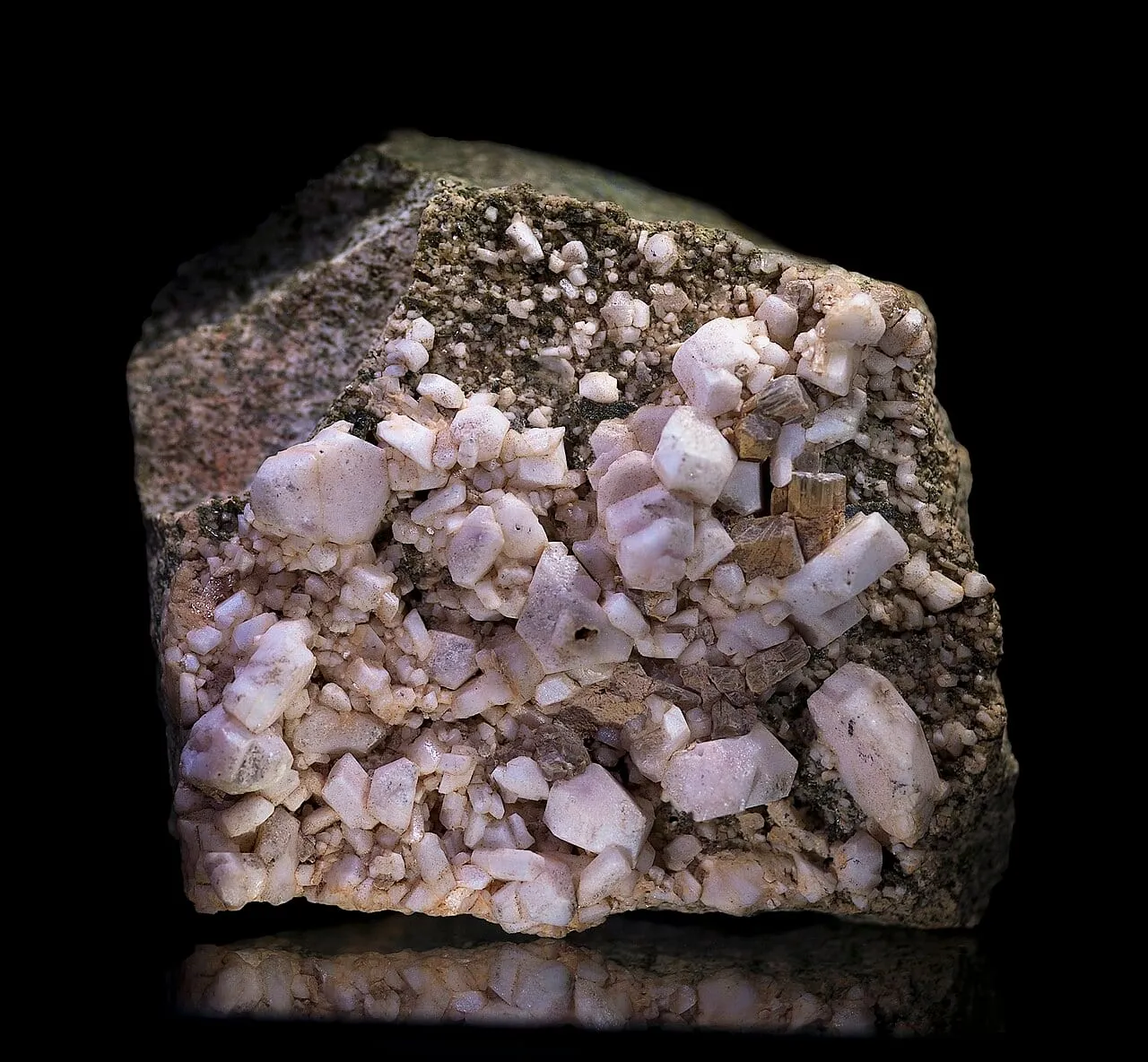
Albite
The white, sodium end of the feldspars: with its deposits at Çine–Milas, a glass and ceramics raw material that makes Türkiye one of the world’s main feldspar producers.
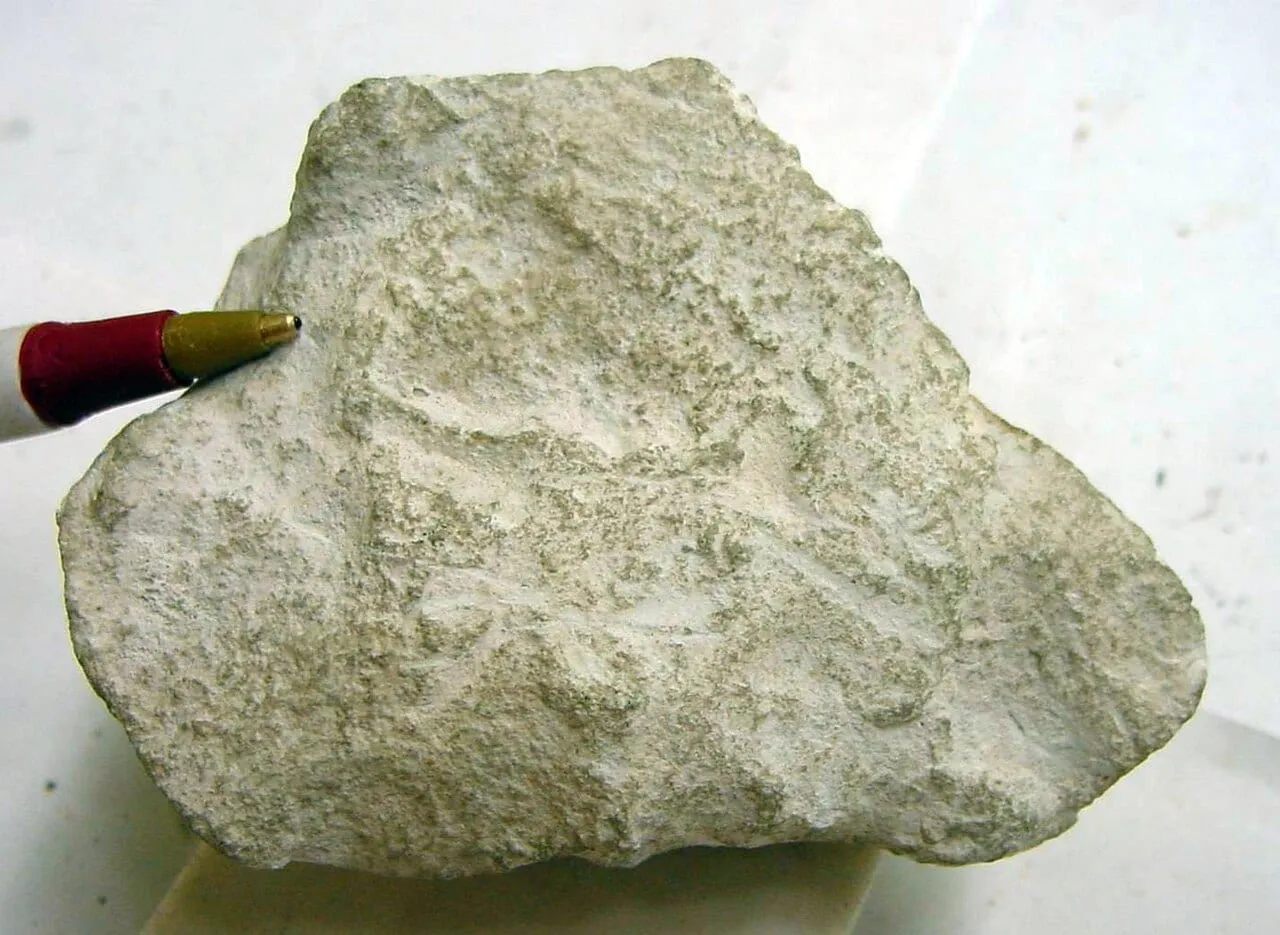
Alunite
The “alum stone” from which alum was made for centuries. Foça, Şaphane in Kütahya and Şebinkarahisar are Türkiye's old alum homelands.
Anhydrite
Gypsum without its water: a calcium sulfate mineral, whose blue-grey Peruvian form is sold as “angelite”.