Rock
Diorite
Diyorit
A black-and-white, “salt-and-pepper” plutonic rock whose make-up sits halfway between granite and gabbro.
- Building stone
- Ornamental
In short
Diorite is a coarse-grained rock that forms when magma cools slowly deep underground. Its white feldspar and black hornblende grains are mixed together, so its surface looks like salt sprinkled with black pepper. It resembles granite, but it contains almost no quartz and is usually darker.
How does it form?
Diorite is an intrusive (plutonic) igneous rock that forms when magma of intermediate silica content cools and solidifies slowly deep in Earth’s crust. Such magmas are produced mainly at subduction zones, where one oceanic plate sinks beneath another. If the same magma erupts and cools quickly at the surface, it forms fine-grained andesite; diorite is andesite’s plutonic equivalent.
Diorite is a transitional rock between granite and gabbro: it has far less quartz than granite and more sodium-rich plagioclase than gabbro. In the large igneous intrusions of mountain belts it usually occurs together with granite and granodiorite.
What is it used for?
- Building and cladding stone: Hard and able to take a good polish, it is used for floors, steps and monuments; in the stone trade it is usually called “granite”.
- Setts and crushed stone: Resistant to wear, it is quarried for paving setts and aggregate.
- Sculpture: In Mesopotamia diorite was used for statues showing rulers and high officials in attitudes of prayer. Because it is so hard, carving these statues took great skill and effort.
How to recognise it
- 1
It has a clear “salt-and-pepper” look, made of roughly equal amounts of white (plagioclase) and black or dark green (hornblende) grains.
- 2
Unlike granite, it shows almost no glassy grey quartz and no pink feldspar.
- 3
It is usually paler than gabbro, which has more dark minerals and often grey to blackish feldspar.
- 4
It is hard: a steel knife cannot scratch its feldspar grains. It does not fizz in vinegar or dilute acid.
Fakes and imitations
What shops usually don’t tell you:
- In the stone trade diorite is often sold as “granite” or “black-and-white granite”; this is a commercial name, not a geological one.
- Not every object described as “diorite” really is: the Louvre catalogues the famous stele of the Code of Hammurabi as basalt.
- On speckled porcelain tiles and composite worktops the pattern is only on the surface and repeats every few pieces.
Did you know?
Many of the statues of the Sumerian ruler Gudea (22nd century BC) in the Louvre are carved from diorite, a stone that is very hard to work.
The name diorite comes from the Greek diorizein, “to distinguish”; it was given by the French mineralogist René Just Haüy.
Where is it found?
Loading map…
- Corsica, France · Known localityKnown for its orbicular diorite, with concentric rings of plagioclase and amphibole, formerly called “corsite”.
- Leicestershire, England · Known localityOne of Britain's known diorite sources; old igneous intrusions in the county have long been quarried for crushed stone.
- Guernsey, Channel Islands · Known localityKnown for old streets paved with diorite setts.
Locations are approximate to protect sites. Red dots mark places in Türkiye. Open in the big map →
Sources
- Diorite · Encyclopaedia Britannica
- Fragment de statue de Gudea (AO 26648), diorite, Girsu · Musée du Louvre
- Code de Hammurabi (SB 8), basalte · Musée du Louvre
External links
Draft: awaiting expert reviewReport an error ↗
On the same step
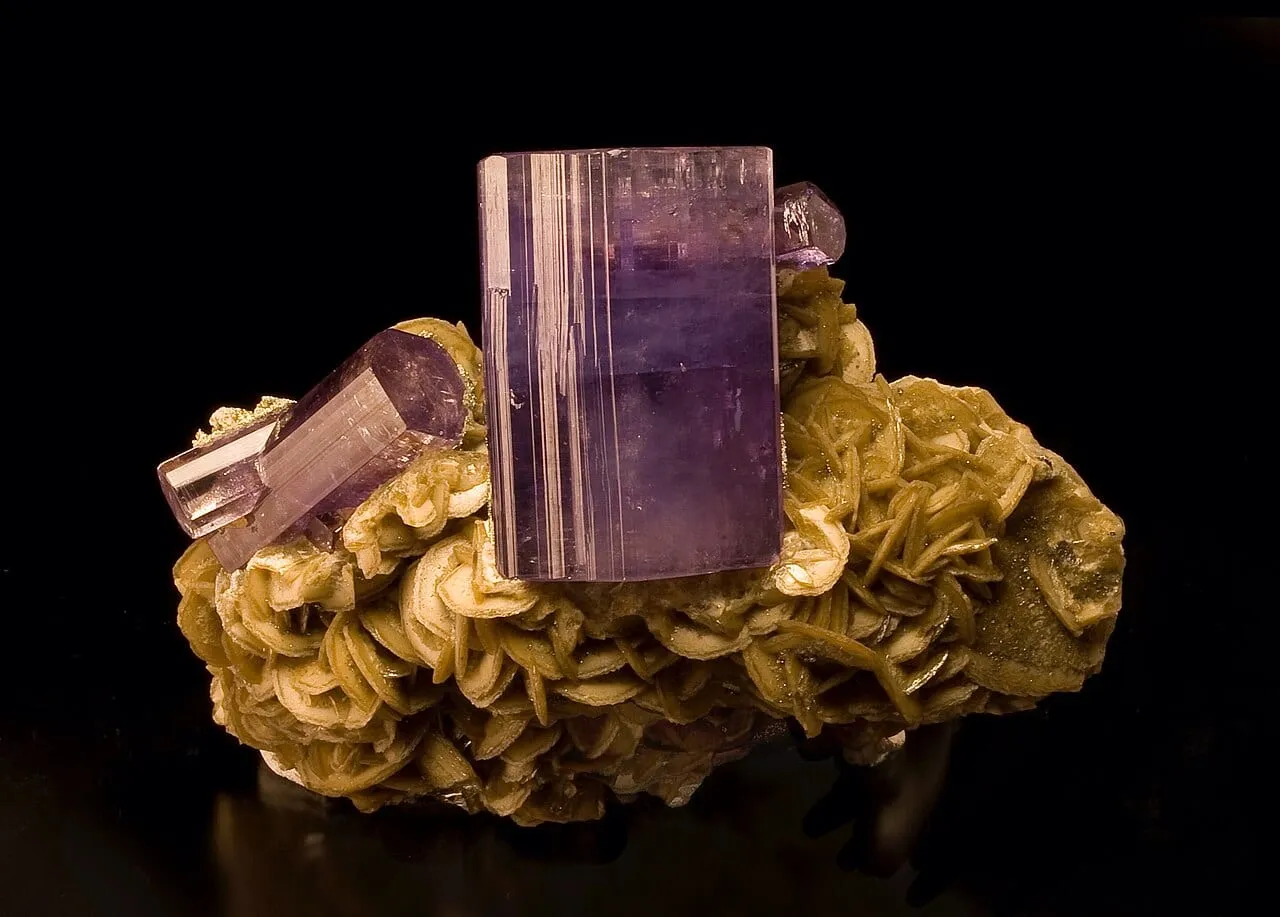
Apatite
A mineral cousin of our teeth and bones, the source of the phosphorus in fertilisers, and number 5 on the Mohs scale.
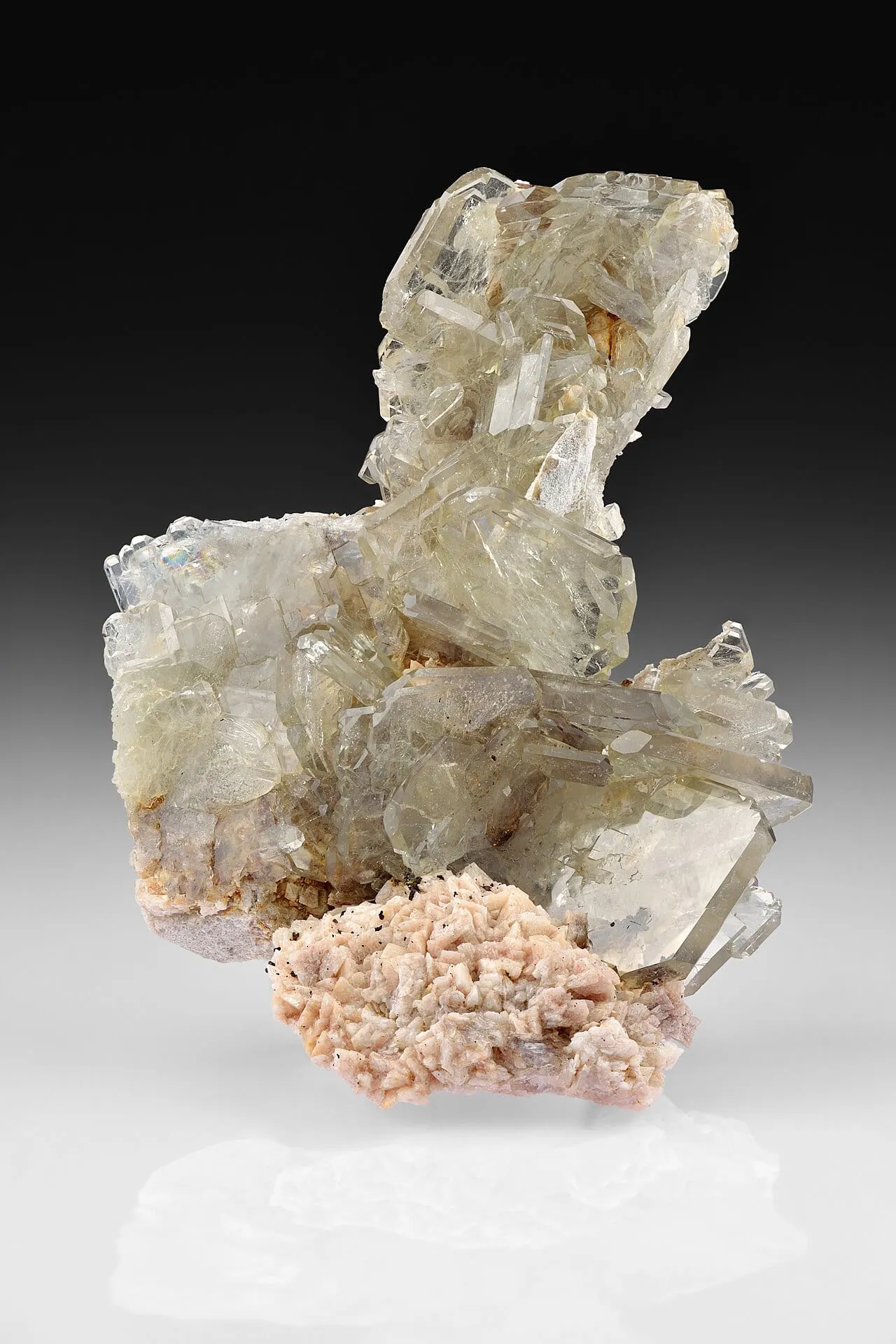
Baryte
A pale barium mineral that feels surprisingly heavy in the hand; even its name comes from the Greek word for heavy.
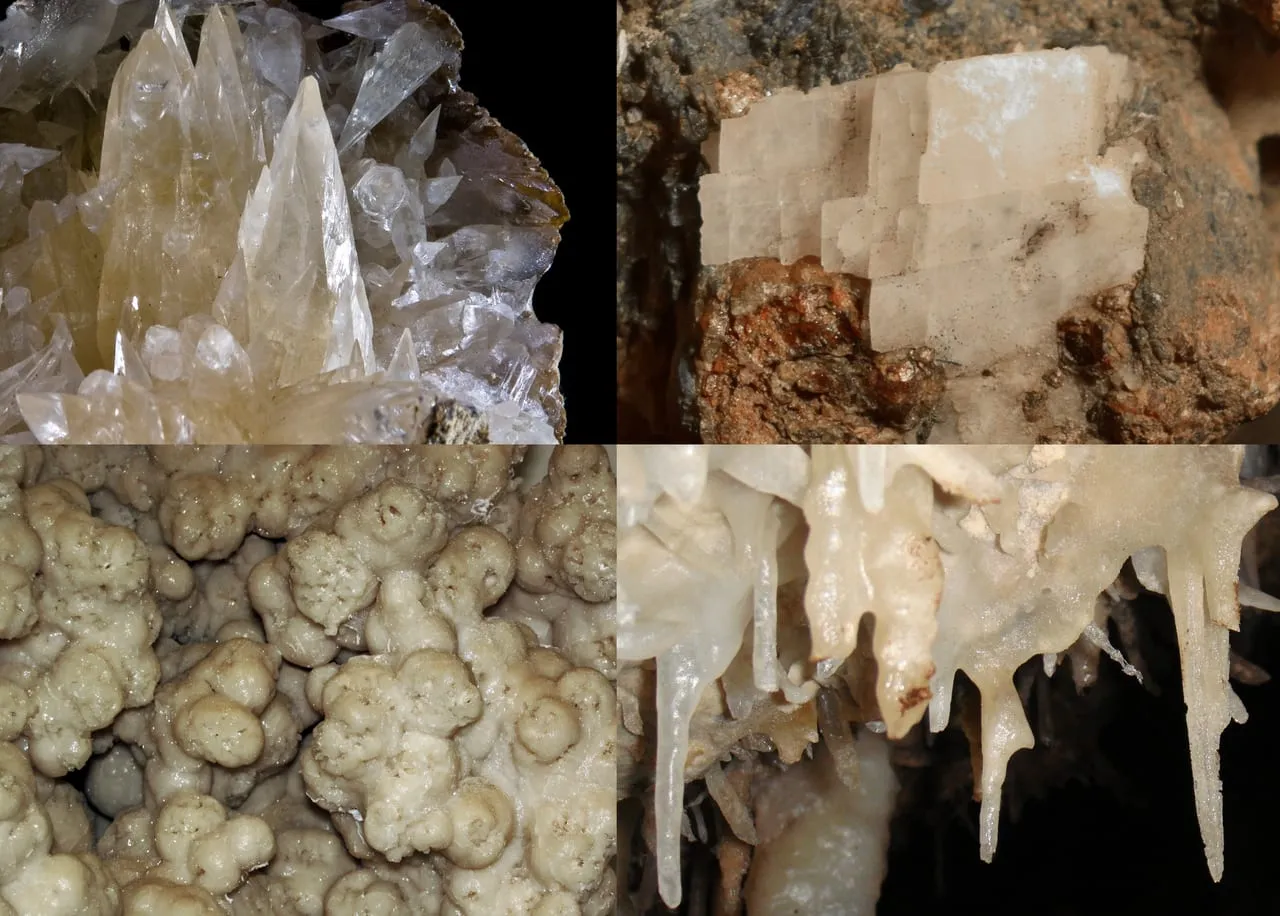
Calcite
The main mineral of limestone, marble and cave stalactites: it fizzes in acid, and its clear crystals show everything double.