Mineral
Bastnäsite
(Ce,La,Y)CO₃FBastnazit
One of the main ore minerals of the “rare earth” elements such as cerium, lanthanum and neodymium; a raw material for magnets and electronics.
Also known as: Bastnasite · Bastnäsite-(Ce) (the cerium-dominant species)
- Popularly: Ore and raw material
- Ore
- Industrial
- Important in Türkiye
-284046.jpg)
In short
Bastnäsite is a carbonate-fluoride mineral, honey-yellow to reddish brown, that contains rare earth elements such as cerium, lanthanum and yttrium. It mostly forms in carbonatites, a rare kind of igneous rock. Together with monazite it is one of the two largest sources of cerium and the other light rare earth elements. In Türkiye it occurs at the Kızılcaören deposit in Beylikova, Eskişehir.
Photos

How does it form?
Bastnäsite mostly forms in carbonatites: rare igneous rocks made not of silicates but of carbonate minerals such as calcite and dolomite. It also occurs in alkaline granites, syenites and pegmatites, and in veins left in cracks around them by hot fluids.
In most deposits bastnäsite does not occur alone; it is found with fluorite, baryte, calcite, monazite and niobium minerals such as pyrochlore.
What is it used for?
Bastnäsite itself is not used as a material; it is an ore of the rare earth elements. The ore is processed and the elements are separated one by one:
- Magnets: Strong permanent magnets containing neodymium and praseodymium are used in electric-vehicle motors and wind turbines. According to the USGS, magnets are now the largest use of rare earths worldwide.
- Catalysts: According to the USGS, catalysts are the largest use of rare earths in the USA.
- Polishing and light: They are used in polishing powders, in display phosphors (europium, for example) and in lasers.
World production of rare earths is concentrated in a few countries. According to the USGS, of the roughly 390,000 tonnes (oxide equivalent) produced worldwide in 2025, 270,000 came from China and 51,000 from the USA; in the USA bastnäsite is mined at Mountain Pass.
In Türkiye
The best-known bastnäsite deposit in Türkiye is Kızılcaören in Beylikova, Eskişehir; the 2017 MTA report names it as Türkiye’s most important rare earth deposit. The ore consists of veins containing bastnäsite together with fluorite and baryte. The veins lie in Triassic metasandstones and Oligocene–Miocene pyroclastic rocks (Gültekin and others, 2003). The deposit formed about 25–24 million years ago together with a complex of phonolite and trachyte stocks and carbonatites (Nikiforov and others, 2014). Besides bastnäsite, the ore contains small amounts of minerals such as monazite, and thorium.
What is known and what is uncertain?
- The older figure (MTA, 2017): The MTA report presents Kızılcaören as a bastnäsite–fluorite–baryte deposit with an average grade of 3% and about 4 million tonnes of reserves.
- The 2022 announcement: On 1 July 2022 the Minister of Energy and Natural Resources, Fatih Dönmez, announced that 694 million tonnes of ore had been identified at Beylikova. According to the minister, 125,193 metres of drilling and 59,121 samples were completed over six years; the field contains 17 rare earth elements, of which 10 could be produced. The announcement compared the figure with an 800-million-tonne field in China and presented it as “the world’s second-largest reserve field”.
- Points to watch: 694 million tonnes is the weight of the ore rock, not of the rare earth elements; news reports give their total share as 0.2–0.3%. The reserve table in the USGS 2026 report is given in rare earth oxide equivalent (44 million tonnes for China, for example) and does not list Türkiye on a separate line, so the 2022 “second largest” comparison does not appear in the USGS’s own table. We also found no detailed reserve report supporting the announcement.
- Production status: Eti Maden’s pilot plant at Beylikova was completed in 2023, with an annual capacity of 1,200 tonnes of ore. Minister Alparslan Bayraktar said in April 2026 that the pilot plant was operating and that the aim is industrial-scale production. The plant announced in 2022 was planned to process about 570,000 tonnes of ore a year and yield about 10,000 tonnes of rare earth oxides, 72,000 tonnes of baryte, 70,000 tonnes of fluorite and 250 tonnes of thorium; we found no information that this plant has started production.
What determines its value?
Bastnäsite is an ore, and its value depends on the proportion of rare earth oxides it contains (the grade). Which elements are present matters too: magnet elements such as neodymium and praseodymium are far more expensive than cerium and lanthanum. The difficulty and cost of separating rare earth elements that are so alike, the handling of radioactive elements such as thorium in the ore, the size of the deposit and demand also count. Collectors look for transparent, well-formed crystals such as those from Zagi Mountain.
This information is educational, not buying, selling or investment advice. Value varies enormously with quality and treatment.
How to recognise it
- 1
It is honey-yellow to reddish brown, with a glassy or greasy lustre, usually as tabular or short hexagonal crystals; the streak is white.
- 2
Its hardness is 4–5 (a steel knife scratches it, but it cannot scratch quartz). With a specific gravity of about 5 it feels distinctly heavier than a piece of calcite or fluorite of the same size.
- 3
It is hard to tell by eye: it is easily confused with other rare earth carbonate minerals, and a sure identification needs laboratory analysis.
- 4
At mines it is usually found together with fluorite, baryte and calcite.
Fakes and imitations
What shops usually don’t tell you:
- Bastnäsite has no common imitation. Its honey-coloured crystals can be mistaken for other minerals of similar colour; analysis is needed for a sure identification.
- The most sought-after collector specimens are the transparent honey-coloured crystals from Zagi Mountain in Pakistan; ask the seller to document where a crystal comes from.
Safety
Bastnäsite can be radioactive when it contains thorium and uranium. Do not grind collection specimens, do not breathe the dust, and wash your hands before eating. Safe storage of the thorium-bearing waste produced when the ore is processed is an environmental issue of its own.
Myths and misconceptions
MythRare earth elements are called “rare” because there is very little of them in the Earth's crust.
FactMost of them are actually plentiful: cerium is the 25th most abundant element in the crust and is more common than copper. They are called “rare” because they are scattered thinly through rocks, deposits of workable concentration are few, and they are hard to separate from one another.
Myth694 million tonnes of rare earth elements were found in Eskişehir.
Fact694 million tonnes is the tonnage of ore rock announced in July 2022; the share of rare earths in it is far below one per cent (news reports give 0.2–0.3%). If that figure is right, the amount of rare earths is a few million tonnes, not hundreds of millions, and how much of it could be mined economically is a separate question that has to be worked out.
MythRare earth elements are elements found in “earth”, meaning soil.
FactHere “earth” is the old chemical name for oxides. These elements are not found in farm soil but in rocks, in minerals such as bastnäsite and monazite.
Did you know?
The element cerium was found in 1803 in a mineral from the Bastnäs mine in Sweden, which gave bastnäsite its name; lanthanum was discovered in minerals from the same mine in 1839.
The Mountain Pass deposit in the USA was found in 1949 when prospectors searching for uranium noticed unusually high radioactivity; the main ore mineral was bastnäsite.
About 0.1% of the rare earth oxides in Mountain Pass ore was europium oxide; this element was needed to make the red phosphor in colour television tubes.
Where is it found?
Loading map…
- Bastnäs mine, Riddarhyttan, Västmanland, Sweden · Type localityThe mineral is named after this old iron and copper mine; the element cerium was found in minerals from here in 1803 and lanthanum in 1839. Bastnäsite was first described in 1838 by the Swedish chemist Wilhelm Hisinger.
- Mountain Pass, California, USA · Major depositA carbonatite about 1.4 billion years old whose main ore mineral is bastnäsite. It was found in 1949 during a search for uranium and was the world's main source of lanthanides from the 1960s to the 1980s.
- Bayan Obo, Inner Mongolia, China · Major depositA huge iron, rare earth and niobium deposit containing bastnäsite and monazite; found in 1927 as an iron deposit, its rare earth minerals were recognised in 1936.
- Fen Complex, Telemark, Norway · Known localityA carbonatite complex about 539 million years old (Cambrian); Wikipedia lists it among bastnäsite occurrences.
- Gakara, Bujumbura, Burundi · Known localityAbout 20 km south-southeast of Bujumbura; narrow veins in the Kibaran fold belt hold mostly bastnäsite with some monazite. Mining was suspended in 2021.
- Zagi Mountain, Peshawar–Khyber area, Pakistan · Known localityA collectors' locality famous for transparent honey-coloured bastnäsite crystals, which have appeared on the mineral market since the late 1990s.
- Kızılcaören, Beylikova, Eskişehir, Türkiye · Major depositOre veins of bastnäsite, fluorite and baryte associated with a carbonatite-bearing complex that formed about 25–24 million years ago. It is Türkiye's main rare earth deposit; for the size claimed in the 2022 announcement, see the Türkiye section on this page.
Locations are approximate to protect sites. Red dots mark places in Türkiye. Open in the big map →
Frequently asked questions
What is bastnäsite?
Bastnäsite is a carbonate-fluoride mineral, honey-yellow to reddish brown, that contains rare earth elements such as cerium, lanthanum and yttrium. It mostly forms in carbonatites, a rare kind of igneous rock. Together with monazite it is one of the two largest sources of cerium and the other light rare earth elements. In Türkiye it occurs at the Kızılcaören deposit in Beylikova, Eskişehir.
What is bastnäsite used for?
Bastnäsite itself is not used as a material; it is an ore of the rare earth elements. The ore is processed and the elements are separated one by one: Magnets: Strong permanent magnets containing neodymium and praseodymium are used in electric-vehicle motors and wind turbines. According to the USGS, magnets are now the largest use of rare earths worldwide. Catalysts: According to the USGS, catalysts are the largest use of rare earths in the USA. Polishing and light: They are used in polishing powders, in display phosphors (europium, for example) and in lasers.
How hard is bastnäsite?
It has a hardness of 4–5 on the Mohs scale. A fingernail cannot scratch it, but a steel knife can. Its specific gravity is 4.95–5 g/cm³.
Where is bastnäsite found?
Its best-known localities: Bastnäs mine, Riddarhyttan, Västmanland, Sweden; Mountain Pass, California, USA; Bayan Obo, Inner Mongolia, China; Kızılcaören, Beylikova, Eskişehir, Türkiye; Fen Complex, Telemark, Norway.
Where is bastnäsite found in Türkiye?
Known localities in Türkiye: Kızılcaören, Beylikova, Eskişehir, Türkiye.
How can you tell if bastnäsite is real?
It is honey-yellow to reddish brown, with a glassy or greasy lustre, usually as tabular or short hexagonal crystals; the streak is white. Its hardness is 4–5 (a steel knife scratches it, but it cannot scratch quartz). With a specific gravity of about 5 it feels distinctly heavier than a piece of calcite or fluorite of the same size. It is hard to tell by eye: it is easily confused with other rare earth carbonate minerals, and a sure identification needs laboratory analysis. Bastnäsite has no common imitation. Its honey-coloured crystals can be mistaken for other minerals of similar colour; analysis is needed for a sure identification.
Is bastnäsite valuable?
On the “street to diamond” value ladder it sits on step 4 of nine: Fine dimension stone and ore. Bastnäsite is an ore, and its value depends on the proportion of rare earth oxides it contains (the grade). Which elements are present matters too: magnet elements such as neodymium and praseodymium are far more expensive than cerium and lanthanum. The difficulty and cost of separating rare earth elements that are so alike, the handling of radioactive elements such as thorium in the ore, the size of the deposit and demand also count. Collectors look for transparent, well-formed crystals such as those from Zagi Mountain.
Is bastnäsite dangerous?
Bastnäsite can be radioactive when it contains thorium and uranium. Do not grind collection specimens, do not breathe the dust, and wash your hands before eating. Safe storage of the thorium-bearing waste produced when the ore is processed is an environmental issue of its own.
Sources
- Bastnäsite · Wikipedia
- Rare-earth element · Wikipedia
- Mineral Commodity Summaries 2026: Rare Earths · U.S. Geological Survey, 2026
- Dünyada ve Türkiye'de Nadir Toprak Elementleri (NTE) · MTA Genel Müdürlüğü, Fizibilite Etütleri Daire Başkanlığı, 2017
- Geology, mineralogy and fluid inclusion data of the Kızılcaören fluorite–barite–REE deposit, Eskişehir, Turkey (Gültekin, Örgün & Suner), Journal of Asian Earth Sciences 21(4): 365–376 · Elsevier, 2003
- Kizilcaoren ore-bearing complex with carbonatites (northwestern Anatolia, Turkey): formation time and mineralogy of rocks (Nikiforov, Öztürk, Altuncu & Lebedev), Geology of Ore Deposits 56(1): 35–60 · Pleiades Publishing, 2014
- Bakan Dönmez, dünyanın ikinci büyük rezerv keşfinin detaylarını duyurdu · Milliyet, 2022
- Eskişehir'de 694 milyon tonluk nadir toprak elementi rezervi bulundu · Habertürk, 2022
- Türkiye'nin Nadir Toprak Elementleri Politikası · Küre Ansiklopedi
- Nadir toprak elementi soruları yanıtsız kaldı · BirGün, 2025
- Dünyanın gözü Beylikova'da! Bakan Bayraktar: Dünyadaki en büyüklerinden biri · Posta, 2026
- Mountain Pass Rare Earth Mine · Wikipedia
- Bayan Obo Mining District · Wikipedia
- Bastnäs · Wikipedia
- Fen Complex · Wikipedia
- Rainbow Mining Burundi · Wikipedia
- Beylikova · Wikipedia
External links
Draft: awaiting expert reviewReport an error ↗
On the same step
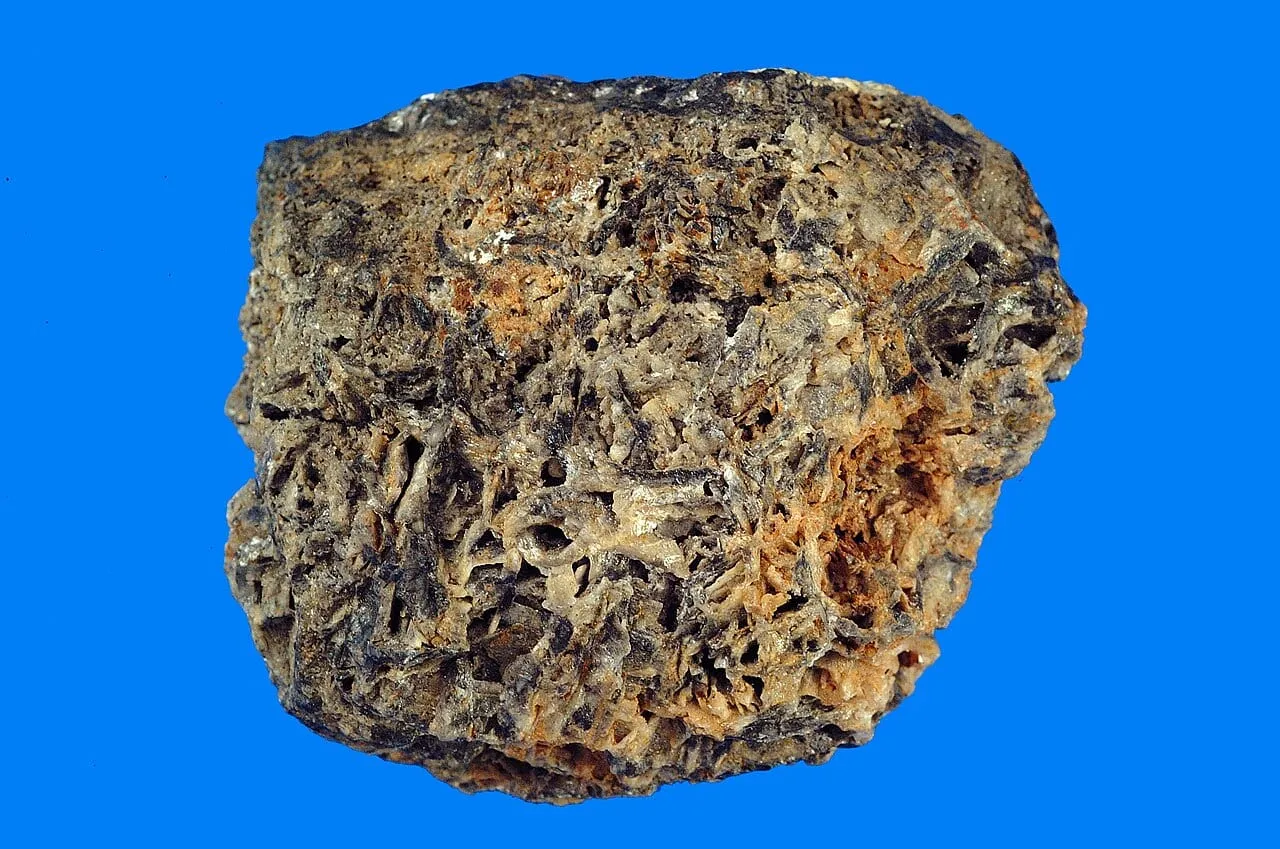
Anglesite
A heavy lead sulfate mineral with a diamond-like shine that grows as a crust around galena; it is named after the island of Anglesey in Wales.
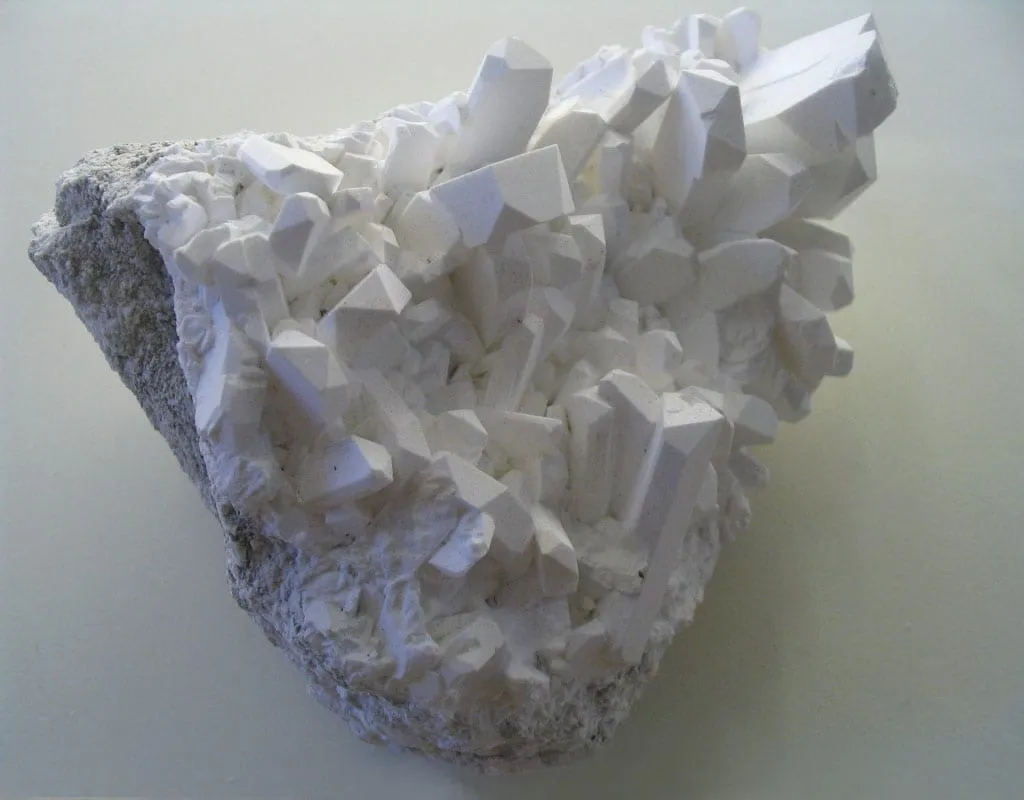
Borax (tincal)
A sodium borate that dissolves in water and crumbles to white powder in dry air; one of the world’s key tincal deposits is at Kırka in Eskişehir.
Cassiterite
The main ore of tin: the heavy, dark mineral that has given us bronze, tinplate and electronic solder since the Bronze Age.