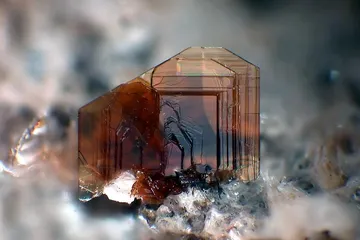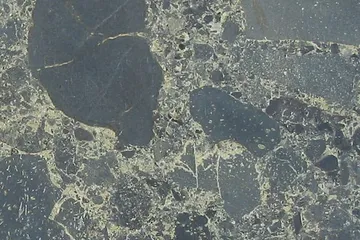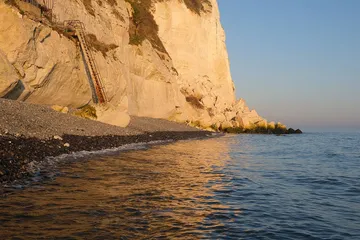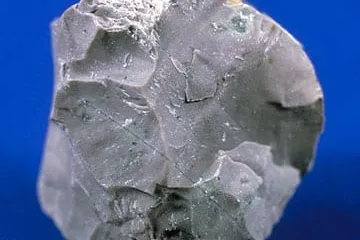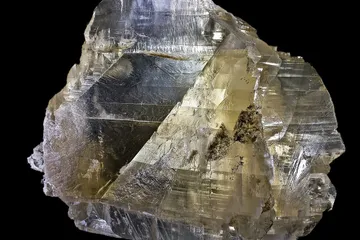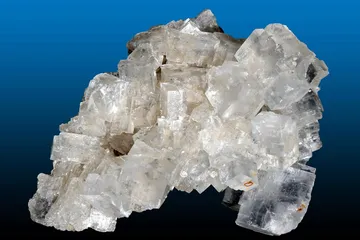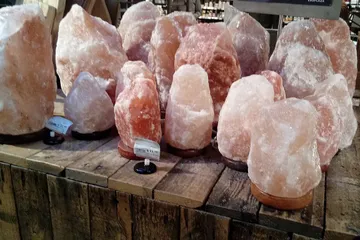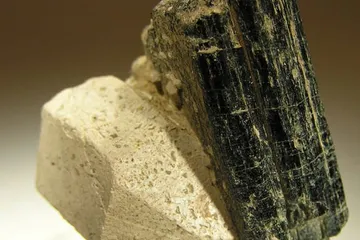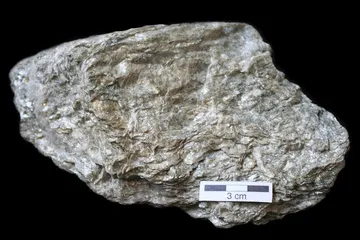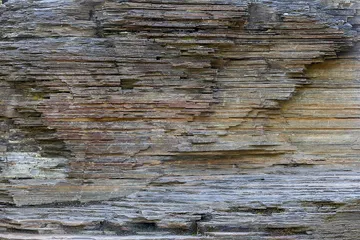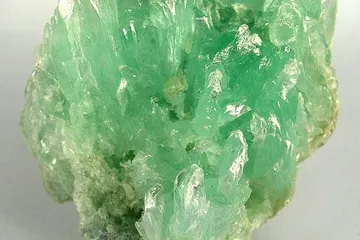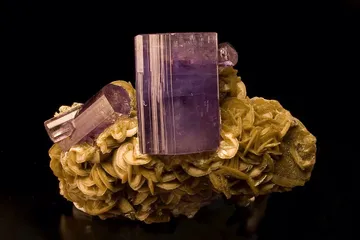
Printable stone cards

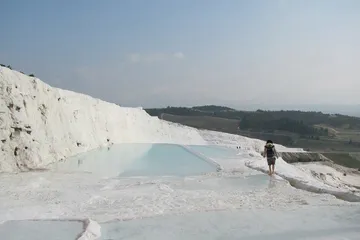
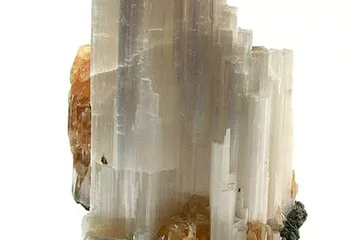
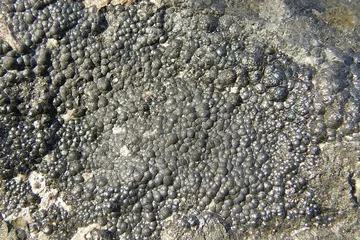
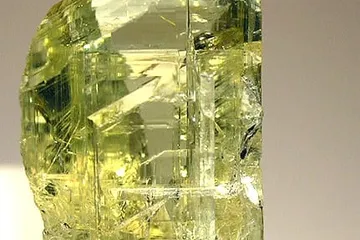
One card per stone: its name, photo, ID facts and how to recognise it. Four cards fit on an A4 page. Pick a set, then print.

123 cards · Tip: turn on “Background graphics” in the print dialog to print colours too. Cards are CC BY-SA 4.0; use them freely in class.

Everyday name

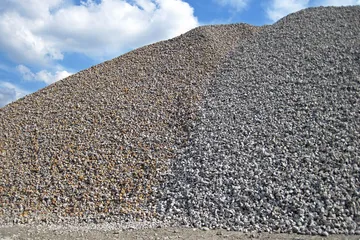
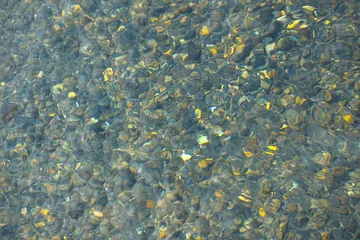
Gravel and river pebbles Çakıl ve dere taşı

Gravel is rock fragments over 2 millimetres, rounded by rivers and waves; a river stone is not a kind of rock but any hard stone worn smooth by water.

Value ladder
1/9

How to recognise it: Stones with worn edges, a rounded shape and a smooth surface have been carried by water. Crushed stone, by contrast, is sharply angular with freshly broken faces. Wetting a pebble brings out its colour and texture: quartzite has sugary, glittering grains; chert has a waxy shine and breaks like a seashell; granite is speckled; basalt is dark grey and very fine-grained.

taslar.bumba.tr/en/stones/gravel/

ADARSHluck · CC BY-SA 4.0
Everyday name

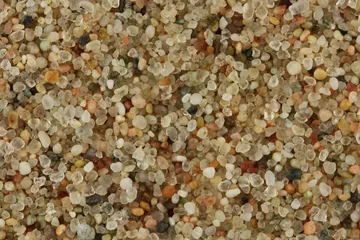
Sand Kum

Sand is not a kind of stone but a size: grains between 0.06 and 2 millimetres, mostly quartz, sometimes shell fragments or black magnetite.

Value ladder
1/9

How to recognise it: You can see the individual grains with the naked eye and they feel gritty between your fingers. Silt and clay are too fine to see grain by grain and feel smooth like flour or dough. Under a magnifying glass, glassy, colourless or milky grains are usually quartz. White, opaque grains that look like broken shell are calcium carbonate and fizz when a drop of vinegar is added.

taslar.bumba.tr/en/stones/sand/

Siim Sepp · CC BY-SA 3.0

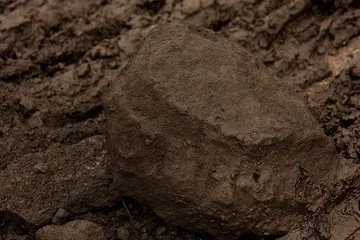
Everyday name

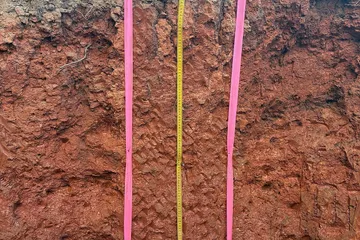
Soil Toprak

Soil is not a stone: it is sand, silt and clay from crumbled rock, mixed with rotted plants, water, air and living things.

Value ladder
1/9

How to recognise it: It crumbles in the hand: not a single hard piece but a mixture of loose grains and bits of roots and plants. Feel test: knead some moist soil in your palm and try to push it out between thumb and forefinger into a ribbon. Sandy soil feels gritty and falls apart; silty soil feels smooth like flour; clay soil is sticky and forms a long ribbon that does not break.

taslar.bumba.tr/en/stones/soil/

Cjrufe · CC0

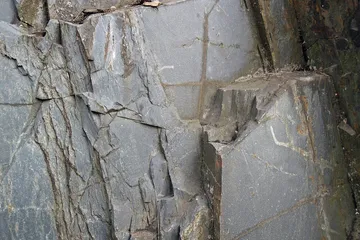
Rock

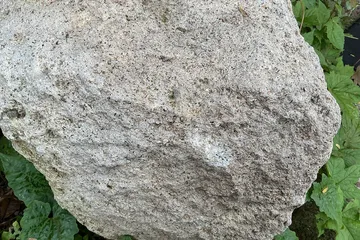
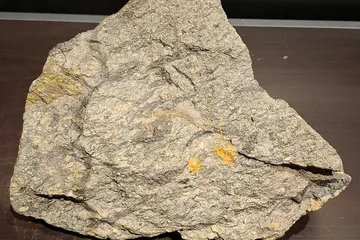
Andesite Andezit

The rock of volcanic arcs, named after the Andes — and the pink-grey stone of Ankara Castle.

Hardness (Mohs)
5.5–6.5
Specific gravity
2.4–2.8 g/cm³
Value ladder
2/9

How to recognise it: Visible white feldspar and black, rod-shaped hornblende or pyroxene crystals sit in a fine-grained grey, pink or brownish groundmass. It is usually paler than basalt, although dark andesites may be impossible to tell from basalt by eye.

taslar.bumba.tr/en/stones/andesite/

Siim Sepp · CC BY-SA 3.0

Mineral

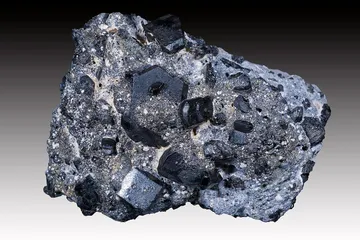
Augite (pyroxene) Ojit (piroksen)

The most common pyroxene, which darkens basalt and gabbro: inconspicuous, yet one of the key building blocks of Earth’s crust.

Chemical formula
(Ca,Na)(Mg,Fe,Al,Ti)(Si,Al)₂O₆
Hardness (Mohs)
5.5–6
Specific gravity
3.19–3.56 g/cm³
Streak
Greyish green
Lustre
Vitreous (glassy), Resinous, Dull
Value ladder
2/9

How to recognise it: It forms short, stubby, dark green, brown or black prisms whose cross-sections look square or eight-sided. Its two cleavage planes meet almost at right angles (about 87° and 93°); in hornblende these angles are about 56° and 124°.

taslar.bumba.tr/en/stones/augite/

Didier Descouens · CC BY-SA 4.0

Rock

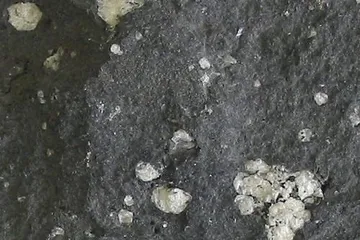
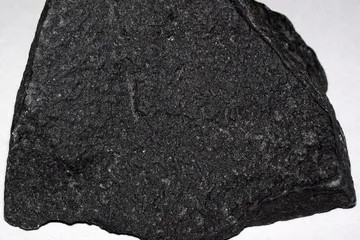
Basalt Bazalt

The rock of the ocean floors and the Moon’s dark plains — the most common volcanic rock on Earth.

Hardness (Mohs)
5.5–6.5
Specific gravity
2.8–3 g/cm³
Value ladder
2/9

How to recognise it: It is dark grey to black and feels heavy for its size. Its grains are very fine; even with a magnifying glass the crystals are hard to make out. Sometimes it contains green grains of olivine.

taslar.bumba.tr/en/stones/basalt/

James St. John · CC BY 2.0

Mineral

Biotite Biyotit

The shiny black flakes in granite: a dark mica that peels into thin sheets and can glitter like gold as it weathers.

Chemical formula
K(Mg,Fe)₃AlSi₃O₁₀(OH,F)₂
Hardness (Mohs)
2.5–3
Specific gravity
2.7–3.3 g/cm³
Streak
White
Lustre
Vitreous (glassy), Pearly, Submetallic
Value ladder
2/9

How to recognise it: It forms black or dark brown, shiny flakes that a needle can split into thin sheets. A very thin sheet held up to the light looks brownish and semi-transparent. Its sheets are flexible and spring back after bending, which tells it apart from dark minerals that do not flake, such as hornblende.

taslar.bumba.tr/en/stones/biotite/

Fred Kruijen · CC BY-SA 3.0 nl

Rock

Breccia Breş

A rock broken and glued back together: its sharp, angular pieces tell of landslides, faults, volcanoes and asteroid impacts.

Hardness (Mohs)
3–7
Specific gravity
1.54–3 g/cm³
Value ladder
2/9

How to recognise it: It is made of sharp-edged, angular fragments you can see, usually of very different sizes. The fragments and the matrix between them are often different colours, giving the rock a mosaic look.

taslar.bumba.tr/en/stones/breccia/

Siim · CC BY-SA 3.0

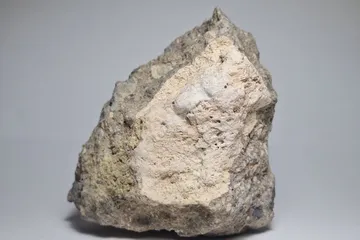
Everyday name

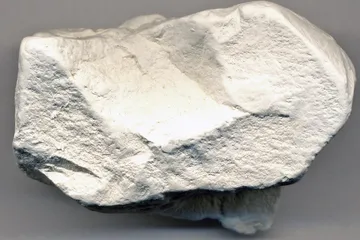
Chalk Tebeşir

Natural chalk is a soft, white limestone made of the shells of microscopic sea creatures; classroom chalk, however, is often gypsum.

Value ladder
2/9

How to recognise it: Natural chalk is very soft: it can be scraped with a fingernail and leaves a white mark on hands and dark surfaces. Vinegar test: a drop of vinegar or dilute acid makes natural chalk fizz vigorously, because it is calcium carbonate. Classroom chalk made of gypsum does not fizz.

taslar.bumba.tr/en/stones/chalk/

kallerna · CC BY-SA 4.0

Rock

Chert and flint Çakmaktaşı (çört)

The steel of the Stone Age: a hard silica rock that breaks into razor-sharp edges and throws sparks when struck with steel.

Hardness (Mohs)
6.5–7
Specific gravity
2.4–2.7 g/cm³
Lustre
Waxy, Dull
Value ladder
2/9

How to recognise it: It breaks with curved, shell-like (conchoidal) surfaces and very sharp edges. It is very hard: it scratches glass and steel, and a knife cannot scratch it.

taslar.bumba.tr/en/stones/chert/

Unknown author · Public domain

Mineral

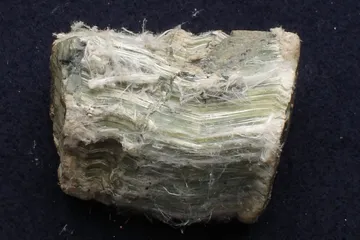
Chrysotile (white asbestos) Krizotil (beyaz asbest)

White asbestos: its heat-resistant fibres were used everywhere for a century, but when inhaled they cause cancer; it is now banned in many countries.

Chemical formula
Mg₃Si₂O₅(OH)₄
Hardness (Mohs)
2.5–3
Specific gravity
2.53–2.61 g/cm³
Streak
White
Lustre
Silky
Value ladder
2/9

How to recognise it: It appears as silky, white or pale green fibres lined up across veins in cracks of dark green serpentine rock. Its fibres are curly and flexible, while those of amphibole asbestos such as tremolite are straighter and stiffer. This difference can only be seen safely under a microscope.

taslar.bumba.tr/en/stones/chrysotile/

Eurico Zimbres · CC BY-SA 2.5

Rock

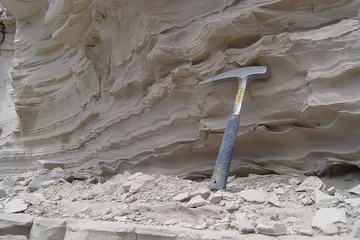
Claystone Kiltaşı

Clay turned to stone: a raw material for bricks, studied as a home for radioactive waste because water barely passes through it.

Hardness (Mohs)
2–3
Specific gravity
1.8–2.4 g/cm³
Value ladder
2/9

How to recognise it: It is very fine-grained: the surface is smooth and dull, and no grains are visible even with a hand lens. It is soft: a knife scratches it easily, and weathered pieces can even be scratched with a fingernail.

taslar.bumba.tr/en/stones/claystone/

Matt Affolter · CC BY-SA 3.0

Rock

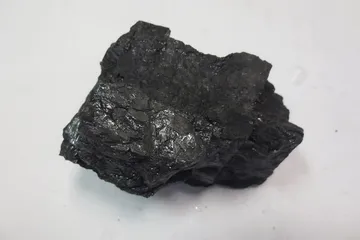
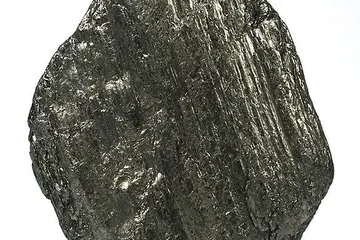
Coal Kömür

Swamp forests turned to stone: the fuel of the Industrial Revolution, still burnt today for electricity and steel.

Hardness (Mohs)
1–3
Specific gravity
1.2–1.8 g/cm³
Value ladder
2/9

How to recognise it: It is black or dark brown and surprisingly light for its size. Rubbed on unglazed porcelain it leaves a black or brown streak, and many kinds blacken your hands.

taslar.bumba.tr/en/stones/coal/

Amcyrus2012 · CC BY 4.0

Rock

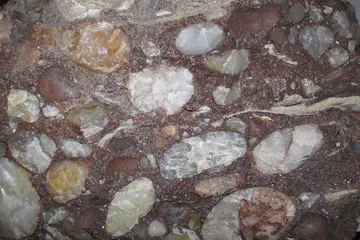
Conglomerate Konglomera

A fossilised gravel bed: rounded pebbles from ancient rivers and beaches held together by natural cement.

Hardness (Mohs)
3–7
Specific gravity
2.4–2.7 g/cm³
Value ladder
2/9

How to recognise it: It contains rounded pebbles larger than 2 mm that are easy to see, set in a finer-grained matrix. The pebbles often come from different rocks, so one piece can hold grains of many colours and textures.

taslar.bumba.tr/en/stones/conglomerate/

James St. John · CC BY 2.0

Everyday name

Crushed stone Mıcır (kırma taş)

Crushed stone is angular rock made by breaking and screening quarried rock in machines; it is mostly limestone, basalt or andesite.

Value ladder
2/9

How to recognise it: The pieces are angular and sharp-edged, with fresh-looking broken faces. River gravel, by contrast, is rounded and smooth. The pieces in one heap are all about the same size, because they have been screened. They are often coated with fine rock dust.

taslar.bumba.tr/en/stones/crushed-stone/

James St. John · CC BY 2.0

Rock

Dacite Dasit

Between andesite and rhyolite: a quartz-bearing volcanic rock that builds lava domes and drives explosive eruptions.

Hardness (Mohs)
6–6.5
Specific gravity
2.4–2.8 g/cm³
Value ladder
2/9

How to recognise it: White feldspar and black biotite or hornblende crystals sit in a light grey, pale brown or pinkish groundmass. Unlike andesite it sometimes contains glassy, rounded quartz grains, but the two are often hard to tell apart by eye.

taslar.bumba.tr/en/stones/dacite/

ScoriaPumice · CC0

Mineral

Dolomite Dolomit

Calcite’s magnesium-bearing sibling: a carbonate mineral that builds whole mountain ranges yet barely fizzes in acid.

Chemical formula
CaMg(CO₃)₂
Hardness (Mohs)
3.5–4
Specific gravity
2.84–2.86 g/cm³
Streak
White
Lustre
Vitreous (glassy), Pearly
Value ladder
2/9

How to recognise it: In cold, dilute hydrochloric acid it fizzes weakly or not at all; powdered, or in warm acid, it fizzes clearly. Calcite fizzes at once in cold acid. Its hardness is 3.5–4: slightly harder than calcite, but still scratched by a steel knife.

taslar.bumba.tr/en/stones/dolomite/

Didier Descouens · CC BY-SA 4.0

Everyday name

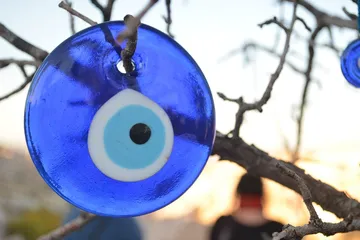
Evil eye bead Nazar boncuğu

The evil eye bead is not a stone but glass: an eye-shaped amulet built up from coloured layers of glass, still handmade in traditional workshops near İzmir.

Value ladder
2/9

How to recognise it: Being glass, it feels cold and fairly heavy in the hand, and small air bubbles may be visible inside. Plastic imitations are light, feel warm and often show a mould seam. In handmade beads every eye is slightly different; the rings are not perfectly round and the glass layers stand slightly proud at the edge. Factory-made or printed ones are identical to one another.

taslar.bumba.tr/en/stones/evil-eye-bead/

Alev Akın · CC BY-SA 4.0

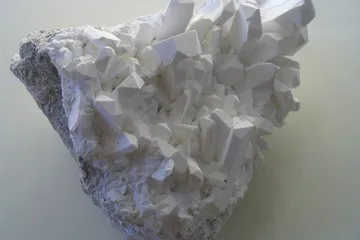
Mineral

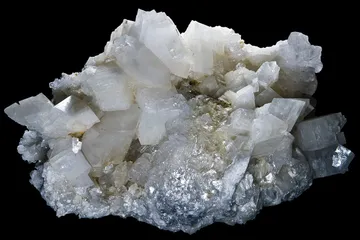
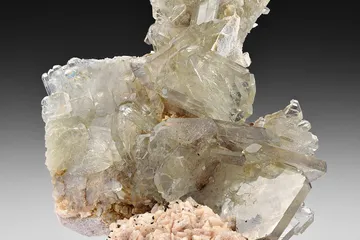
Gypsum Jips (alçıtaşı)

So soft a fingernail scratches it: the mineral behind plaster and plasterboard, which grows 11-metre giant crystals at Naica.

Chemical formula
CaSO₄·2H₂O
Hardness (Mohs)
1.5–2
Specific gravity
2.31–2.33 g/cm³
Streak
White
Lustre
Vitreous (glassy), Pearly, Silky
Value ladder
2/9

How to recognise it: A fingernail scratches it (hardness 2); it is the reference mineral for 2 on the Mohs scale. It has a perfect cleavage in one direction: transparent crystals (selenite) split into thin sheets that bend but do not spring back.

taslar.bumba.tr/en/stones/gypsum/

Didier Descouens · CC BY-SA 4.0

Mineral

Halite (rock salt) Halit (kaya tuzu)

Table salt as a mineral: soft, soluble in water, breaking into cubes and lying underground in thick layers.

Chemical formula
NaCl
Hardness (Mohs)
2–2.5
Specific gravity
2.16–2.17 g/cm³
Streak
White
Lustre
Vitreous (glassy)
Value ladder
2/9

How to recognise it: It has perfect cleavage in three directions at right angles, so it breaks into little cubes. It dissolves in water: a small piece dropped into a glass of water slowly disappears. This easily separates it from similar-looking calcite and fluorite.

taslar.bumba.tr/en/stones/halite/

Lech Darski · CC BY-SA 4.0

Everyday name

Himalayan salt and salt lamps Himalaya tuzu ve tuz lambası

Himalayan salt is pink rock salt, the mineral halite, mined in Pakistan’s Salt Range; a salt lamp is a hollowed-out block of it.

Value ladder
2/9

How to recognise it: Real rock salt tastes salty and dissolves in water; in humid air its surface slowly becomes wet. When broken, it tends to split into cube-shaped pieces, because halite cleaves in three directions at right angles.

taslar.bumba.tr/en/stones/himalayan-salt-and-salt-lamps/

Donald Trung Quoc Don (Chữ Hán: 徵國單) · CC BY-SA 4.0

Mineral

Hornblende (amphibole) Hornblend (amfibol)

Behind most of the black grains in granite and the dark rods in andesite: the most common dark amphibole in rocks.

Chemical formula
Ca₂(Mg,Fe)₄Al(Si₇Al)O₂₂(OH)₂
Hardness (Mohs)
5–6
Specific gravity
3.1–3.3 g/cm³
Streak
Greyish white
Lustre
Vitreous (glassy), Dull
Value ladder
2/9

How to recognise it: It forms long, prismatic, black or dark green crystals whose cross-sections look like a hexagon or a diamond. It has perfect cleavage in two directions, and the cleavage planes meet at about 56° and 124°; in augite they meet almost at right angles.

taslar.bumba.tr/en/stones/hornblende/

Robert M. Lavinsky · CC BY-SA 3.0

Everyday name

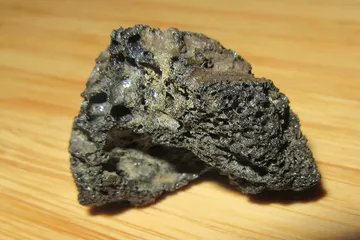
Lava stone Lav taşı (volkan taşı)

The “lava stone” in bead bracelets is a basaltic volcanic rock riddled with gas bubbles; it is often dyed black.

Value ladder
2/9

How to recognise it: Its surface is full of small and large holes and feels rough, like sandpaper. Its natural colour is dark grey, blackish, brown, or reddish brown where iron has oxidised.

taslar.bumba.tr/en/stones/lava-stone/

ScoriaPumice · CC0

Everyday name

Lignite, hard coal and coke Linyit, taşkömürü ve kok

The coals people know: brown, moist, low-heat lignite; hard, jet-black hard coal; and grey, porous coke, which is made from hard coal in ovens.

Value ladder
2/9

How to recognise it: Lignite is brown or brownish black and looks dull; it cracks and crumbles as it dries, and a woody texture can sometimes be seen in it. Rubbed on unglazed porcelain, it leaves a brown streak. Hard coal is black with shiny and dull bands, harder than lignite, and blackens your hands; it leaves a black streak on porcelain.

taslar.bumba.tr/en/stones/lignite-hard-coal-and-coke/

Prissantenbär · CC BY-SA 3.0

Everyday name

Lime Kireç

Lime is not a stone but a caustic substance made by burning limestone in a kiln: quicklime is calcium oxide, slaked lime is calcium hydroxide.

Value ladder
2/9

How to recognise it: Quicklime comes as white or greyish lumps or powder. In contact with water it heats up, gives off steam and falls apart into powder, so it must never be tested with bare hands or without eye protection. Slaked lime is a fine white powder, or a paste mixed with water (lime putty).

taslar.bumba.tr/en/stones/lime/

Leiem · CC BY-SA 4.0

Rock

Limestone Kireçtaşı

A stone built from sea shells: the shared source of pyramids, caves and cement.

Hardness (Mohs)
3–4
Specific gravity
2.3–2.7 g/cm³
Value ladder
2/9

How to recognise it: It fizzes straight away when a drop of dilute hydrochloric acid is added, and more slowly and weakly in vinegar. A steel knife or nail scratches it easily, but it cannot scratch glass.

taslar.bumba.tr/en/stones/limestone/

Fernando Domínguez Cerejido · CC BY-SA 4.0

Everyday name

Paving stone Kaldırım taşı

The stone of the street: cobbles and setts are mostly andesite, basalt or granite, while today’s pavers are usually concrete.

Value ladder
2/9

How to recognise it: Natural stone shows its own texture on a broken or cut face: large, mottled mineral grains in granite; a dark grey, very fine-grained surface in basalt; small crystals in a grey, pink or brown groundmass in andesite. Concrete pavers are identical to one another: made in the same mould, they share exactly the same size, bevelled edges and interlocking teeth. A broken piece shows grains of sand and gravel glued together by cement.

taslar.bumba.tr/en/stones/paving-stone/

Frankie Fouganthin · CC BY-SA 4.0

Rock

Peridotite Peridotit

The real stuff far beneath our feet: the green, olivine-rich rock that makes up Earth’s upper mantle.

Hardness (Mohs)
5.5–7
Specific gravity
3.1–3.4 g/cm³
Value ladder
2/9

How to recognise it: It is made of glassy, olive-green olivine grains and dark pyroxenes; there are no white feldspar grains. It is very heavy for its size, noticeably denser than common rocks such as granite and basalt.

taslar.bumba.tr/en/stones/peridotite/

Shannon Heinle · CC0

Rock

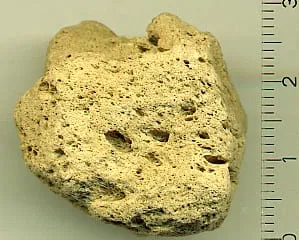
Pumice Pomza

The stone that floats: volcanic glass frothed up by gas in an eruption and frozen full of holes.

Hardness (Mohs)
5–6
Specific gravity
0.25–1 g/cm³
Value ladder
2/9

How to recognise it: It is surprisingly light for its size; most pieces float when dropped in water. It is white, cream or light grey; under a magnifying glass you can see countless bubbles separated by thin glass walls.

taslar.bumba.tr/en/stones/pumice/

MPF · CC BY-SA 3.0

Rock

Rhyolite Riyolit

Granite’s volcanic twin: a silica-rich rock born from sticky lava, often pink and banded.

Hardness (Mohs)
6–6.5
Specific gravity
2.4–2.7 g/cm³
Value ladder
2/9

How to recognise it: It is pale: pink, light grey, white or reddish brown, often with thin, wavy colour bands. Glassy quartz and white or pink feldspar crystals may be visible in the fine-grained groundmass.

taslar.bumba.tr/en/stones/rhyolite/

Benhoff · CC BY-SA 3.0

Rock

Schist Şist

A glittering, flaky metamorphic rock: its mica flakes catch the light, and red garnets often stud its surface.

Hardness (Mohs)
3–5
Specific gravity
2.5–2.9 g/cm³
Value ladder
2/9

How to recognise it: Visible, parallel flakes of mica give the surface a glittering, silky or silvery look. It tends to split along wavy, flaky surfaces, but not into sheets as thin and even as slate.

taslar.bumba.tr/en/stones/schist/

Michael C. Rygel · CC BY-SA 3.0

Rock

Shale Şeyl

Earth's most common sedimentary rock: hardened mud that splits into sheets and can hold fossils, oil and natural gas.

Hardness (Mohs)
2–4
Specific gravity
2.4–2.8 g/cm³
Value ladder
2/9

How to recognise it: It is very fine-grained: no grains are visible even with a hand lens, and the surface looks smooth and dull. It splits easily into thin, flat sheets, and its edges crumble readily.

taslar.bumba.tr/en/stones/shale/

Chris Woodrich · CC BY-SA 4.0

Mineral

Talc Talk

The softest mineral on the Mohs scale: scratched by a fingernail, soapy to the touch and used in everything from plastics to ceramics.

Chemical formula
Mg₃Si₄O₁₀(OH)₂
Hardness (Mohs)
1
Specific gravity
2.58–2.83 g/cm³
Streak
White
Lustre
Pearly, Greasy, Dull
Value ladder
2/9

How to recognise it: A fingernail scratches it easily (hardness 1), and it feels slippery, as if coated with soap or grease. It is usually white, light green or grey, with a pearly or greasy shine.

taslar.bumba.tr/en/stones/talc/

Robert M. Lavinsky · CC BY-SA 3.0

Mineral

Apatite Apatit

A mineral cousin of our teeth and bones, the source of the phosphorus in fertilisers, and number 5 on the Mohs scale.

Chemical formula
Ca₅(PO₄)₃(F,Cl,OH)
Hardness (Mohs)
5
Specific gravity
3.1–3.25 g/cm³
Streak
White
Lustre
Vitreous (glassy), Resinous
Value ladder
3/9

How to recognise it: Its hardness is 5: a steel knife scratches it only with difficulty, and it barely scratches glass, if at all. It is the reference mineral for 5 on the Mohs scale. Its crystals are usually hexagonal prisms and can be sea green, blue, yellow or violet.

taslar.bumba.tr/en/stones/apatite/

Thomas Spann · CC BY 2.0

Mineral

Baryte Barit

A pale barium mineral that feels surprisingly heavy in the hand; even its name comes from the Greek word for heavy.

Chemical formula
BaSO₄
Hardness (Mohs)
3–3.5
Specific gravity
4.47–4.5 g/cm³
Streak
White
Lustre
Vitreous (glassy), Resinous, Pearly
Value ladder
3/9

How to recognise it: It is very heavy for its size (specific gravity about 4.5), clearly heavier than pale minerals such as calcite or quartz. Its hardness is 3–3.5, so a steel knife scratches it easily. It does not fizz in acid, which tells it apart from calcite.

taslar.bumba.tr/en/stones/baryte/

Ivar Leidus · CC BY-SA 4.0

Mineral

Calcite Kalsit

The main mineral of limestone, marble and cave stalactites: it fizzes in acid, and its clear crystals show everything double.

Chemical formula
CaCO₃
Hardness (Mohs)
3
Specific gravity
2.71 g/cm³
Streak
White
Lustre
Vitreous (glassy), Pearly
Value ladder
3/9

How to recognise it: A drop of cold, dilute hydrochloric acid makes it fizz at once; in vinegar it slowly gives off bubbles. Its hardness is 3: a steel knife scratches it easily, but a fingernail cannot.

taslar.bumba.tr/en/stones/calcite/

PaleoNeolitic (montage creator) · CC BY 4.0

Rock

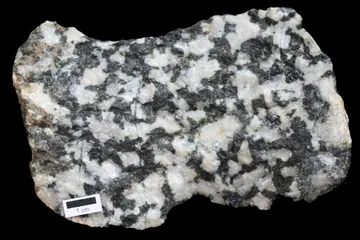
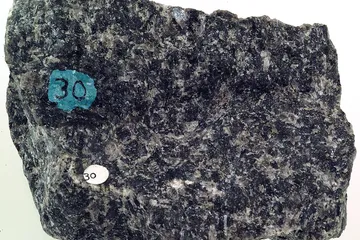
Diorite Diyorit

A black-and-white, “salt-and-pepper” plutonic rock whose make-up sits halfway between granite and gabbro.

Hardness (Mohs)
5.5–6.5
Specific gravity
2.7–3 g/cm³
Value ladder
3/9

How to recognise it: It has a clear “salt-and-pepper” look, made of roughly equal amounts of white (plagioclase) and black or dark green (hornblende) grains. Unlike granite, it shows almost no glassy grey quartz and no pink feldspar.

taslar.bumba.tr/en/stones/diorite/

Michael C. Rygel · CC BY-SA 3.0

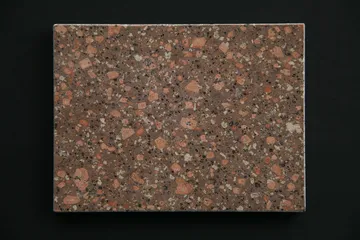
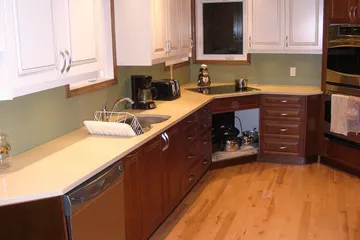
Everyday name

Engineered stone (quartz countertops) Kuvars tezgâh (yapay taş)

A quartz countertop is not a natural stone but a factory product, about 90 percent crushed quartz bound with resin. It causes severe silicosis in the workers who cut it.

Value ladder
3/9

How to recognise it: The pattern is too regular: colour and speckles repeat at the same density across the slab. In natural stone, veins and grains differ from place to place. At the edge and on a cut face, the inside is the same fine, even mix as the surface; in natural granite you can make out large grains of different minerals.

taslar.bumba.tr/en/stones/engineered-stone/

Wtshymanski · CC BY-SA 3.0

Mineral

Epidote Epidot

Known for its pistachio green, a common, lustrous, prismatic mineral of rocks altered by heat, pressure and hot water.

Chemical formula
Ca₂(Al₂Fe³⁺)(Si₂O₇)(SiO₄)O(OH)
Hardness (Mohs)
6–7
Specific gravity
3.38–3.49 g/cm³
Streak
Greyish white
Lustre
Vitreous (glassy), Pearly, Resinous
Value ladder
3/9

How to recognise it: Its colour is typically pistachio green or yellowish green; dark crystals can look almost black. Crystals are deeply striated along their length and show one perfect cleavage.

taslar.bumba.tr/en/stones/epidote/

Gleb Korovko · CC BY 4.0

Everyday name

Flagstone and slate tiles Kayrak taşı ve arduvaz

Flagstone is any stone that splits along its natural layers into thin slabs: it may be slate, schist, gneiss, sandstone or quartzite.

Value ladder
3/9

How to recognise it: Looking at the edge, you can see thin layers stacked on top of each other; the stone splits along these layers into flat slabs. True slate is very fine-grained with a dull or slightly silky sheen; a sound slab gives a clear ringing sound when tapped.

taslar.bumba.tr/en/stones/flagstone/

Øyvind Holmstad · CC0

Rock

Gabbro Gabro

The deep building block of the ocean crust: the slowly cooled, coarse-grained twin of basalt.

Hardness (Mohs)
5.5–6.5
Specific gravity
2.8–3.2 g/cm³
Value ladder
3/9

How to recognise it: It is dark grey, black or greenish black, and most of its grains can be seen with the naked eye. Grey-white plagioclase is mixed with black-green pyroxene; there is no pink feldspar or glassy quartz as in granite.

taslar.bumba.tr/en/stones/gabbro/

Darla Sondrol · CC0

Rock

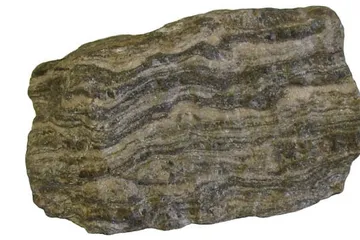
Gneiss Gnays

Striped in light and dark bands, the rock that underpins the continents: some gneisses are around 4 billion years old.

Hardness (Mohs)
6–7
Specific gravity
2.6–3 g/cm³
Value ladder
3/9

How to recognise it: It looks striped, with alternating light (white, pink, grey) and dark (black, dark green) bands that are often wavy or folded. Its grains are big enough to see; it resembles granite, but the minerals are arranged in bands instead of at random.

taslar.bumba.tr/en/stones/gneiss/

Siim · CC BY-SA 3.0

Mineral

Goethite (limonite) Götit (limonit)

The iron mineral behind the colour of rust, yellow ochre and brown soils, named after a poet.

Chemical formula
α-FeO(OH)
Hardness (Mohs)
5–5.5
Specific gravity
3.3–4.3 g/cm³
Streak
Brownish yellow to orange-yellow (ochre yellow)
Lustre
Adamantine, Metallic, Silky, Dull
Value ladder
3/9

How to recognise it: It leaves a brownish-yellow to orange-yellow streak on unglazed porcelain. Hematite’s streak is red. It often forms lumpy, grape-like masses; broken open, these can be radially fibrous inside with a velvety, lustrous surface.

taslar.bumba.tr/en/stones/goethite/

Robert M. Lavinsky · CC BY-SA 3.0

Rock

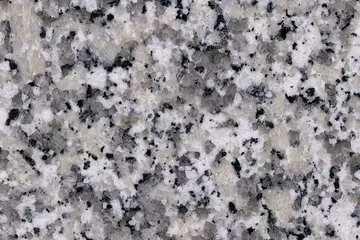
Granite Granit

From kitchen worktops to monuments: a tough, coarse-grained rock born from magma that cooled slowly deep underground.

Hardness (Mohs)
6–7
Specific gravity
2.5–2.8 g/cm³
Value ladder
3/9

How to recognise it: It is made of interlocking crystals you can see: glassy grey quartz, pink or white feldspar, and small black grains of mica or hornblende. Feldspar grains flash flat, shiny faces when you tilt them in the light; quartz grains look glassy and break irregularly.

taslar.bumba.tr/en/stones/granite/

The stone gate · CC BY-SA 4.0

Mineral

Graphite Grafit

The “lead” in your pencil: a soft, slippery mineral made of carbon, the same element as diamond, yet utterly different.

Chemical formula
C
Hardness (Mohs)
1–2
Specific gravity
2.09–2.23 g/cm³
Streak
Black to steel-grey; shining
Lustre
Metallic, Dull
Value ladder
3/9

How to recognise it: It is very soft (hardness 1–2): a fingernail scratches it, and it leaves a grey-black mark on paper and fingers. It feels greasy or slippery and splits into thin, flexible flakes.

taslar.bumba.tr/en/stones/graphite/

Robert M. Lavinsky · CC BY-SA 3.0

Rock

Ignimbrite İgnimbirit

The rock left by glowing avalanches of hot ash — the stone of the Seljuk gravestones of Ahlat.

Hardness (Mohs)
5–6
Specific gravity
1.2–2.6 g/cm³
Value ladder
3/9

How to recognise it: Pale pumice fragments and dark rock chips of many sizes sit in a fine ash matrix; the grains are not sorted by size. In welded varieties the pumice fragments are flattened into dark, flame-shaped lenses (fiamme).

taslar.bumba.tr/en/stones/ignimbrite/

Raflinoer32 · CC BY-SA 4.0

Mineral

Kaolinite Kaolinit

The white clay of porcelain: named after Gaoling hill in China, it is a raw material for everything from ceramics to paper.

Chemical formula
Al₂Si₂O₅(OH)₄
Hardness (Mohs)
2–2.5
Specific gravity
2.61–2.68 g/cm³
Streak
White
Lustre
Pearly, Dull
Value ladder
3/9

How to recognise it: It forms white, cream or light brown, fine-grained, earthy masses that crumble between the fingers and leave a white, chalky powder. Wetted, it turns into a dough that can be shaped; it hardens again when dry and becomes permanently hard when fired.

taslar.bumba.tr/en/stones/kaolinite/

James St. John https://www.flickr.com/people/jsjgeology?rb=1 · CC BY 2.0

Mineral

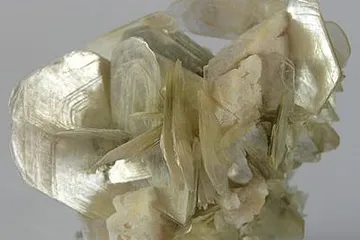
Muscovite Muskovit

The white mica that peels into paper-thin, clear, flexible sheets; in Russia it was once used instead of window glass.

Chemical formula
KAl₂(AlSi₃O₁₀)(OH)₂
Hardness (Mohs)
2.5–4
Specific gravity
2.77–2.88 g/cm³
Streak
White
Lustre
Vitreous (glassy), Pearly, Silky
Value ladder
3/9

How to recognise it: With a fingernail or knife tip it easily peels from the edge into thin, clear sheets; a bent sheet springs back when released (it is elastic). It is colourless, silvery or light brown. Its relative biotite, from the same family, is dark brown to black.

taslar.bumba.tr/en/stones/muscovite/

Robert M. Lavinsky · CC BY-SA 3.0

Mineral

Olivine Olivin

The olive-green mineral that makes up much of Earth’s upper mantle; its clear, gem-quality crystals are called peridot.

Chemical formula
(Mg,Fe)₂SiO₄
Hardness (Mohs)
6.5–7
Specific gravity
3.27–4.39 g/cm³
Streak
White
Lustre
Vitreous (glassy)
Value ladder
3/9

How to recognise it: In dark volcanic rocks such as basalt it appears as bottle-green, glassy grains or clusters of grains. It scratches glass (hardness 6.5–7), has no prominent cleavage and breaks along curved, shell-like surfaces.

taslar.bumba.tr/en/stones/olivine/

Robert M. Lavinsky · CC BY-SA 3.0

Mineral

Orthoclase Ortoklaz

The potassium feldspar that defines 6 on the Mohs scale: it gives many granites their pink colour and is a raw material for glass and ceramics.

Chemical formula
KAlSi₃O₈
Hardness (Mohs)
6–6.5
Specific gravity
2.55–2.63 g/cm³
Streak
White
Lustre
Vitreous (glassy), Pearly
Value ladder
3/9

How to recognise it: It scratches glass, while a steel knife scratches it only with difficulty or not at all (hardness 6). It breaks along smooth surfaces in two directions at right angles (cleavage); turn a specimen in the light and these flat faces flash like mirrors.

taslar.bumba.tr/en/stones/orthoclase/

Didier Descouens · CC BY-SA 4.0

Mineral

Plagioclase Plajiyoklaz

One of the most abundant minerals in Earth's crust: the albite–anorthite feldspar series, known by the fine parallel lines on its cleavage faces.

Chemical formula
NaAlSi₃O₈ – CaAl₂Si₂O₈
Hardness (Mohs)
6–6.5
Specific gravity
2.62–2.76 g/cm³
Streak
White
Lustre
Vitreous (glassy), Pearly
Value ladder
3/9

How to recognise it: Its cleavage faces show fine, parallel lines like the grooves of a vinyl record; they are easiest to see when you turn the specimen in the light. Orthoclase lacks these lines. It scratches glass, and a steel knife scratches it only with difficulty (hardness 6–6.5).

taslar.bumba.tr/en/stones/plagioclase/

Chmee2 · CC BY-SA 3.0

Mineral

Pyrite Pirit

“Fool’s gold”: the most common sulfide mineral on Earth, looking like gold but far harder, more brittle and lighter.

Chemical formula
FeS₂
Hardness (Mohs)
6–6.5
Specific gravity
5–5.02 g/cm³
Streak
Greenish black to brownish black
Lustre
Metallic
Value ladder
3/9

How to recognise it: Rubbed on unglazed white porcelain it leaves a greenish-black to brownish-black streak; gold leaves a yellow streak. Gold is soft and dents or bends when hit; pyrite is hard (6–6.5) and shatters when hit.

taslar.bumba.tr/en/stones/pyrite/

Ivar Leidus · CC BY-SA 4.0

Mineral

Quartz Kuvars

The common root of sand, glass and amethyst — one of the most abundant minerals in Earth’s crust.

Chemical formula
SiO₂
Hardness (Mohs)
7
Specific gravity
2.65–2.66 g/cm³
Streak
White
Lustre
Vitreous (glassy)
Value ladder
3/9

How to recognise it: It scratches glass, and a steel knife cannot scratch it (hardness 7). It breaks along curved, shell-like surfaces instead of flat planes.

taslar.bumba.tr/en/stones/quartz/

Didier Descouens · CC BY-SA 4.0

Rock

Quartzite Kuvarsit

Sandstone turned to steel: an almost pure quartz rock that stubbornly resists wear.

Hardness (Mohs)
7
Specific gravity
2.6–2.7 g/cm³
Value ladder
3/9

How to recognise it: It is very hard: it easily scratches glass and steel. Its broken surface is smooth and glassy, not sandy and rough like sandstone.

taslar.bumba.tr/en/stones/quartzite/

Gabriel Haute Maurienne · CC BY-SA 4.0

Rock

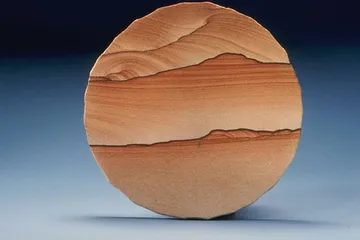
Sandstone Kumtaşı

Sand turned to stone: from the carved facades of Petra to the layers that hold groundwater and oil.

Hardness (Mohs)
6–7
Specific gravity
2.2–2.8 g/cm³
Value ladder
3/9

How to recognise it: Its surface feels rough like sandpaper; through a hand lens you can see sand grains stuck together. Scraping it with something hard can rub grains off one by one.

taslar.bumba.tr/en/stones/sandstone/

Unknown author · Public domain

Rock

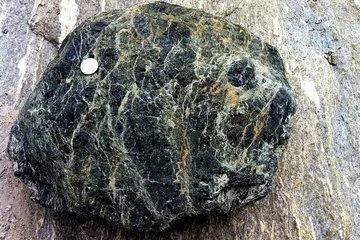
Serpentinite Serpantinit

A green rock patterned like snakeskin: mantle rock transformed by water — and sometimes hiding asbestos.

Hardness (Mohs)
2.5–4
Specific gravity
2.5–2.7 g/cm³
Value ladder
3/9

How to recognise it: Its colour ranges from dark green to yellowish green; it is often mottled or veined like a net, and some surfaces shine as if polished. It feels greasy or soapy; a steel knife scratches it easily, but a fingernail does not.

taslar.bumba.tr/en/stones/serpentinite/

Gabriel HM · CC BY-SA 4.0

Rock

Slate Arduvaz

The stone that splits into sheets: for centuries it has roofed houses and become blackboards and billiard-table beds.

Hardness (Mohs)
3–4
Specific gravity
2.7–2.8 g/cm³
Value ladder
3/9

How to recognise it: It splits into thin, flat, strong sheets with smooth surfaces. It is very fine-grained: no minerals are visible, though the surface may have a faint silky sheen.

taslar.bumba.tr/en/stones/slate/

James St. John · CC BY 2.0

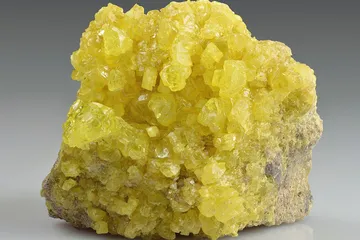
Mineral

Sulfur Kükürt

A light, soft element that gathers as bright yellow crystals around volcanic vents and burns with a blue flame.

Chemical formula
S
Hardness (Mohs)
1.5–2.5
Specific gravity
2.07–2.08 g/cm³
Streak
White
Lustre
Resinous, Greasy
Value ladder
3/9

How to recognise it: Its bright lemon-yellow colour and resinous to greasy lustre are very distinctive; the streak is white. It is very soft (hardness 1.5–2.5): even a fingernail can scratch it, and it crumbles easily.

taslar.bumba.tr/en/stones/sulfur/

Ivar Leidus · CC BY-SA 4.0

Rock

Tuff Tüf

Volcanic ash turned to stone: the soft rock that made Cappadocia’s fairy chimneys and rock-cut churches possible.

Hardness (Mohs)
3–6
Specific gravity
0.9–2.3 g/cm³
Value ladder
3/9

How to recognise it: It is usually pale (white, cream, pink or yellowish) and has a dull, earthy look. It is soft: a steel nail scratches it easily, and some kinds even crumble under a fingernail.

taslar.bumba.tr/en/stones/tuff/

Ivan Fernanadez 1011 · CC BY-SA 4.0

Mineral

Borax (tincal) Boraks (tinkal)

A sodium borate that dissolves in water and crumbles to white powder in dry air; one of the world’s key tincal deposits is at Kırka in Eskişehir.

Chemical formula
Na₂B₄O₅(OH)₄·8H₂O
Hardness (Mohs)
2–2.5
Specific gravity
1.71–1.72 g/cm³
Streak
White
Lustre
Vitreous (glassy), Resinous, Dull
Value ladder
4/9

How to recognise it: It dissolves in water: a small piece in a glass of water gradually disappears. Colemanite does not dissolve easily. It is very soft (hardness 2–2.5) and light (specific gravity about 1.7).

taslar.bumba.tr/en/stones/borax/

Aram Dulyan ( User:Aramgutang ) · Public domain

Mineral

Celestine Sölestin

A strontium mineral named after the sky, often forming pale blue crystals; the source of the red in fireworks.

Chemical formula
SrSO₄
Hardness (Mohs)
3–3.5
Specific gravity
3.95–3.98 g/cm³
Streak
White
Lustre
Vitreous (glassy), Pearly
Value ladder
4/9

How to recognise it: Pale blue, glassy crystals, usually flat tablets or long prisms. It is heavy for a pale mineral (specific gravity about 4.0) but lighter than baryte (about 4.5).

taslar.bumba.tr/en/stones/celestine/

Ivar Leidus · CC BY-SA 4.0

Variety

Chalcedony Kalsedon

A waxy-lustred stone made of quartz crystals far too small to see: the family name for agate, onyx and many other ornamental stones.

Chemical formula
SiO₂
Hardness (Mohs)
6.5–7
Specific gravity
2.59–2.61 g/cm³
Streak
White
Lustre
Waxy, Vitreous (glassy), Dull
Value ladder
4/9

How to recognise it: It is almost as hard as quartz (6.5–7): it scratches glass, and a steel knife cannot scratch it. Broken surfaces look waxy or dull; when polished it takes on a glassy shine. Light passes through its thin edges.

taslar.bumba.tr/en/stones/chalcedony/

Robert M. Lavinsky · CC BY-SA 3.0

Mineral

Chalcopyrite Kalkopirit

The world’s most important source of copper: a brass-yellow sulfide that resembles gold and often tarnishes to rainbow colours.

Chemical formula
CuFeS₂
Hardness (Mohs)
3.5–4
Specific gravity
4.1–4.3 g/cm³
Streak
Greenish black
Lustre
Metallic
Value ladder
4/9

How to recognise it: Its colour is a deeper, more “golden” yellow than pyrite; the surface often tarnishes with blue-purple iridescent colours. A steel knife scratches it (hardness 3.5–4), whereas pyrite is too hard for a knife to scratch (6–6.5).

taslar.bumba.tr/en/stones/chalcopyrite/

Robert M. Lavinsky · CC BY-SA 3.0

Mineral

Chromite Kromit

The only important ore of chromium, the metal that makes stainless steel resist rust; Türkiye is one of its leading producers.

Chemical formula
FeCr₂O₄
Hardness (Mohs)
5.5
Specific gravity
4.5–4.8 g/cm³
Streak
Brown
Lustre
Metallic, Submetallic
Value ladder
4/9

How to recognise it: It leaves a brown streak on unglazed porcelain; magnetite’s streak is black. It usually does not react to a magnet, or only very weakly; magnetite sticks strongly.

taslar.bumba.tr/en/stones/chromite/

Robert M. Lavinsky · CC BY-SA 3.0

Mineral

Cinnabar Zinober

The main ore of mercury: a blood-red mineral used as paint for thousands of years, but one that demands care because of its mercury.

Chemical formula
HgS
Hardness (Mohs)
2–2.5
Specific gravity
8.17–8.2 g/cm³
Streak
Scarlet
Lustre
Adamantine, Submetallic, Dull
Value ladder
4/9

How to recognise it: Its streak is bright scarlet. Similar-coloured hematite has a reddish-brown streak, and realgar an orange-yellow one. It is very heavy for a non-metallic mineral (specific gravity about 8.1).

taslar.bumba.tr/en/stones/cinnabar/

H. Zell · CC BY-SA 3.0

Mineral

Colemanite Kolemanit

The backbone of Türkiye’s boron wealth: a calcium borate used to make heat-resistant glass and glass fibre.

Chemical formula
CaB₃O₄(OH)₃·H₂O
Hardness (Mohs)
4.5
Specific gravity
2.42 g/cm³
Streak
White
Lustre
Vitreous (glassy), Adamantine
Value ladder
4/9

How to recognise it: It occurs as glassy, colourless to milky-white short prismatic crystals, or as nodules in clay. Its hardness is 4.5, quite hard for a borate: a fingernail cannot scratch it. Borax and ulexite are much softer.

taslar.bumba.tr/en/stones/colemanite/

Bureau of Mines · Public domain

Mineral

Copper Bakır

One of the first metals people ever worked: in nature it sometimes occurs pure, as reddish, easily hammered masses and branches.

Chemical formula
Cu
Hardness (Mohs)
2.5–3
Specific gravity
8.93–8.95 g/cm³
Streak
Shiny copper-red
Lustre
Metallic
Value ladder
4/9

How to recognise it: A fresh surface is copper-red; the outside is often covered by a brown tarnish or a green crust (of minerals such as malachite). It is malleable: a hammer blow flattens and bends it instead of breaking it. A knife scratch leaves a bright, red mark.

taslar.bumba.tr/en/stones/copper/

Digon3 · CC BY-SA 3.0

Mineral

Corundum Korindon

The aluminium oxide that defines 9 on the Mohs hardness scale: its red form is ruby, all its other colours are sapphire.

Chemical formula
Al₂O₃
Hardness (Mohs)
9
Specific gravity
3.98–4.1 g/cm³
Streak
White
Lustre
Adamantine, Vitreous (glassy)
Value ladder
4/9

How to recognise it: It is very hard (9): it scratches quartz and topaz. Do not try this on cut gems; they can be damaged. It feels heavy for its size (specific gravity about 4.0).

taslar.bumba.tr/en/stones/corundum/

Ra'ike · CC BY-SA 3.0

Mineral

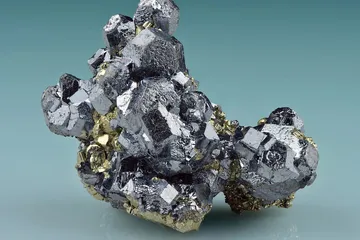
Galena Galen

The main ore of lead: a lead-grey, metallic mineral that breaks into little cubes and feels surprisingly heavy in the hand.

Chemical formula
PbS
Hardness (Mohs)
2.5–2.8
Specific gravity
7.57–7.58 g/cm³
Streak
Lead-grey
Lustre
Metallic
Value ladder
4/9

How to recognise it: It breaks in three directions at right angles; the pieces look like little cubes with stepped surfaces. It is very heavy (specific gravity about 7.6): almost three times as heavy as a piece of quartz of the same size.

taslar.bumba.tr/en/stones/galena/

Ivar Leidus · CC BY-SA 4.0

Mineral

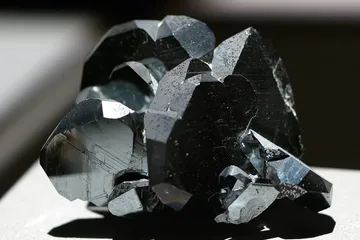
Hematite Hematit

Even when it looks black and metallic, its streak is blood red: one of the world’s most important iron ores.

Chemical formula
Fe₂O₃
Hardness (Mohs)
5–6
Specific gravity
5.26 g/cm³
Streak
Cherry red to reddish brown
Lustre
Metallic, Submetallic, Dull
Value ladder
4/9

How to recognise it: On unglazed white porcelain it leaves a cherry-red to reddish-brown streak, even when the piece looks black and metallic. It reacts to an ordinary magnet weakly or not at all. A black mineral that sticks strongly to a magnet is most likely magnetite.

taslar.bumba.tr/en/stones/hematite/

Wikipedia Loves Art participant " Assignment_Houston_One " · CC BY-SA 2.5

Mineral

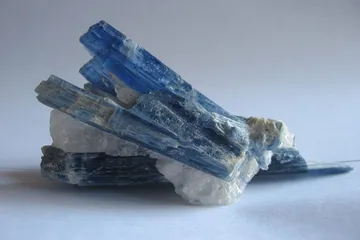
Kyanite Kiyanit (disten)

Blue, blade-shaped crystals whose hardness depends on direction: steel scratches them lengthwise but not across.

Chemical formula
Al₂SiO₅
Hardness (Mohs)
4.5–7
Specific gravity
3.53–3.65 g/cm³
Streak
White
Lustre
Vitreous (glassy), Pearly
Value ladder
4/9

How to recognise it: It forms long, flat, blade-shaped crystals, which often look bent. Its hardness depends on direction: a steel needle easily scratches a crystal lengthwise (about 4.5–5) but not across it (about 6.5–7).

taslar.bumba.tr/en/stones/kyanite/

User:Aelwyn · CC BY-SA 3.0

Mineral

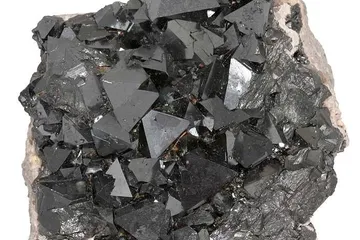
Magnetite Manyetit

The black iron mineral that sticks to a magnet: its naturally magnetised pieces were the first magnets people knew.

Chemical formula
Fe²⁺Fe³⁺₂O₄
Hardness (Mohs)
5.5–6.5
Specific gravity
5.17–5.18 g/cm³
Streak
Black
Lustre
Metallic, Submetallic
Value ladder
4/9

How to recognise it: It is strongly attracted to a magnet, the easiest way to tell it from other black minerals that look similar. It leaves a black streak on unglazed porcelain. Hematite’s streak is red and chromite’s is brown.

taslar.bumba.tr/en/stones/magnetite/

Robert M. Lavinsky · CC BY-SA 3.0

Rock

Marble Mermer

Limestone reborn by heat and pressure — the favourite stone of sculptors and architects for thousands of years.

Hardness (Mohs)
3–4
Specific gravity
2.6–2.9 g/cm³
Value ladder
4/9

How to recognise it: A broken surface shows interlocking crystals that sparkle like grains of sugar. It fizzes when a drop of dilute acid is added; dolomitic marble fizzes clearly only when powdered.

taslar.bumba.tr/en/stones/marble/

Jordiferrer · CC BY-SA 4.0

Everyday name

Natural stone and trade names Doğal taş ve “mermer, granit” adları

A stonemason’s “marble” and “granite” are far broader than a geologist’s: polishable limy stones are sold as marble, hard silicate stones as granite.

Value ladder
4/9

How to recognise it: Steel knife or nail test: the calcite stones of the “marble” family are scratched by steel; the silicate stones of the “granite” family are not. Vinegar or lemon test (on a hidden corner): calcium carbonate stones fizz and lose their polish; granite, gabbro and gneiss are unaffected.

taslar.bumba.tr/en/stones/natural-stone-trade-names/

User:Vmenkov · CC BY-SA 3.0

Mineral

Sphalerite Sfalerit

The main ore of zinc: with colours from honey-yellow to coal-black, one of the hardest common minerals to recognise.

Chemical formula
(Zn,Fe)S
Hardness (Mohs)
3.5–4
Specific gravity
3.9–4.1 g/cm³
Streak
Pale brown, pale yellow or white
Lustre
Resinous, Adamantine
Value ladder
4/9

How to recognise it: It shines like resin or honey; even dark specimens look more resinous than metallic. It has perfect cleavage in six directions, so a broken surface shows many small flat faces glinting at different angles.

taslar.bumba.tr/en/stones/sphalerite/

Ivar Leidus · CC BY-SA 4.0

Mineral

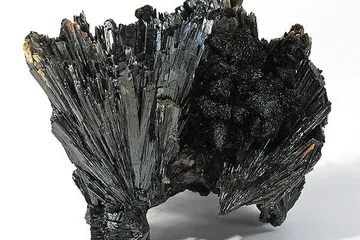
Stibnite Antimonit (stibnit)

The main ore of antimony: a soft, lead-grey mineral that grows long, striated, sword-like crystals with a metallic shine.

Chemical formula
Sb₂S₃
Hardness (Mohs)
2
Specific gravity
4.62–4.63 g/cm³
Streak
Lead-grey
Lustre
Metallic
Value ladder
4/9

How to recognise it: It forms long, thin prisms striated along their length; the crystals often grow in radiating sprays or fans. It is very soft (hardness 2): a fingernail can scratch it. Thin crystals can bend without breaking, but do not spring back.

taslar.bumba.tr/en/stones/stibnite/

H. Zell · CC BY-SA 3.0

Rock

Travertine Traverten

Hot springs turned to stone: the rock of Pamukkale's snow-white terraces and the walls of the Colosseum.

Hardness (Mohs)
3–4
Specific gravity
2.4–2.6 g/cm³
Value ladder
4/9

How to recognise it: Its surfaces and cut faces show holes (pores) of many sizes lined up along the layers. It is banded in cream, beige and brown; depending on how it is cut, it shows a striped or a cloudy pattern.

taslar.bumba.tr/en/stones/travertine/

Slyronit · CC BY-SA 4.0

Mineral

Ulexite Üleksit

Nature’s fibre optics: a boron mineral, known as “TV stone”, that lifts writing up to its own surface.

Chemical formula
NaCaB₅O₆(OH)₆·5H₂O
Hardness (Mohs)
2.5
Specific gravity
1.95–1.96 g/cm³
Streak
White
Lustre
Vitreous (glassy), Silky
Value ladder
4/9

How to recognise it: Cut across the fibres, polished and placed on writing, it shows the writing on its top surface (the “TV stone” effect). It has a silky lustre and a white, fibrous look; it sometimes forms soft nodules that look like cotton balls.

taslar.bumba.tr/en/stones/ulexite/

Robert M. Lavinsky · CC BY-SA 3.0

Mineral

Uraninite Uraninit

The main ore of uranium: black, very heavy and radioactive; the pitchblende in which the Curies discovered radium and polonium.

Chemical formula
UO₂
Hardness (Mohs)
5–6
Specific gravity
6.5–10.95 g/cm³
Streak
Brownish black, grey or olive green
Lustre
Submetallic, Greasy, Dull
Value ladder
4/9

How to recognise it: It is surprisingly heavy for its size: unoxidised specimens have a specific gravity above 10, about four times that of a piece of quartz of the same size. It is black or brownish black with a submetallic or pitch-like shine; its streak is brownish black, grey or olive green.

taslar.bumba.tr/en/stones/uraninite/

Geomartin · CC BY-SA 3.0

Mineral

Zoisite Zoisit

The mineral behind tanzanite, pink thulite and ruby-spotted green carvings: usually plain grey-green, sometimes spectacularly coloured.

Chemical formula
Ca₂Al₃(Si₂O₇)(SiO₄)O(OH)
Hardness (Mohs)
6–7
Specific gravity
3.15–3.36 g/cm³
Streak
White
Lustre
Vitreous (glassy), Pearly
Value ladder
4/9

How to recognise it: Crystals are deeply striated prisms along their length, and their ends are often poorly formed. It has one perfect cleavage, and cleavage surfaces have a pearly lustre.

taslar.bumba.tr/en/stones/zoisite/

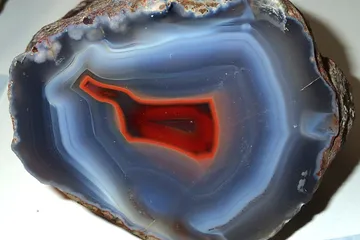
Robert M. Lavinsky · CC BY-SA 3.0

Variety

Agate Akik

The banded variety of chalcedony: it grows layer by layer in hollows in volcanic rock and shows a new pattern every time it is cut.

Chemical formula
SiO₂
Hardness (Mohs)
6.5–7
Specific gravity
2.59–2.61 g/cm³
Streak
White
Lustre
Waxy, Vitreous (glassy), Dull
Value ladder
5/9

How to recognise it: It belongs to the quartz family and is hard (6.5–7): it scratches glass, and a steel knife cannot scratch it. A cut surface shows bands that follow one another, one inside the next; light passes through the edges of thin slices.

taslar.bumba.tr/en/stones/agate/

James St. John · CC BY 2.0

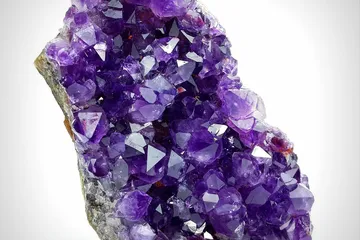
Variety

Amethyst Ametist

The purple variety of quartz, coloured by traces of iron working together with natural radiation.

Chemical formula
SiO₂
Hardness (Mohs)
7
Specific gravity
2.65–2.66 g/cm³
Streak
White
Lustre
Vitreous (glassy)
Value ladder
5/9

How to recognise it: It is as hard as quartz (7): it scratches glass, and a steel knife cannot scratch it. Its colour is often uneven, with darker and lighter purple zones or bands inside the stone.

taslar.bumba.tr/en/stones/amethyst/

Gonzalo Devia · CC BY-SA 4.0

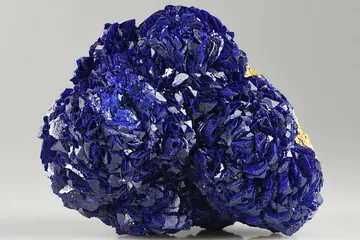
Mineral

Azurite Azurit

A deep blue copper mineral that was the most important blue pigment of medieval and Renaissance painters.

Chemical formula
Cu₃(CO₃)₂(OH)₂
Hardness (Mohs)
3.5–4
Specific gravity
3.77–3.78 g/cm³
Streak
Pale blue
Lustre
Vitreous (glassy), Adamantine
Value ladder
5/9

How to recognise it: Its deep azure to dark navy-blue colour is almost unmistakable. It leaves a pale blue streak on unglazed porcelain.

taslar.bumba.tr/en/stones/azurite/

Ivar Leidus · CC BY-SA 4.0

Mineral

Beryl Beril

The mineral behind emerald and aquamarine: a gem family running from colourless to green, blue and pink, and an ore of beryllium.

Chemical formula
Be₃Al₂Si₆O₁₈
Hardness (Mohs)
7.5–8
Specific gravity
2.63–2.97 g/cm³
Streak
White
Lustre
Vitreous (glassy), Resinous
Value ladder
5/9

How to recognise it: Crystals are usually six-sided prisms whose ends look as if they had been sliced off flat. It scratches glass easily (hardness 7.5–8) and has no prominent cleavage.

taslar.bumba.tr/en/stones/beryl/

Reno Chris · Public domain

Variety

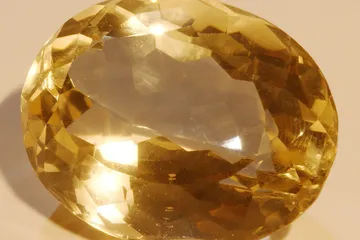
Citrine Sitrin

The yellow to orange variety of quartz: rare in nature, so most of what is sold is heated amethyst.

Chemical formula
SiO₂
Hardness (Mohs)
7
Specific gravity
2.65–2.66 g/cm³
Streak
White
Lustre
Vitreous (glassy)
Value ladder
5/9

How to recognise it: It is as hard as quartz (7): it scratches glass, and a steel knife cannot scratch it. Yellow topaz, which looks similar, is harder (8). Natural citrine is usually pale yellow; deep orange and reddish-brown shades often come from heated amethyst.

taslar.bumba.tr/en/stones/citrine/

Didier Descouens · CC BY-SA 4.0

Mineral

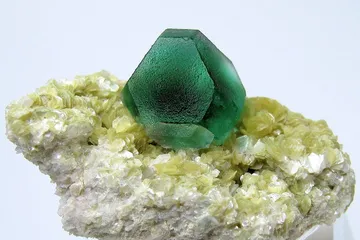
Fluorite Fluorit

Number 4 on the Mohs hardness scale and the mineral that gave “fluorescence” its name, found in almost every colour from purple to green.

Chemical formula
CaF₂
Hardness (Mohs)
4
Specific gravity
3.18–3.18 g/cm³
Streak
White
Lustre
Vitreous (glassy)
Value ladder
5/9

How to recognise it: Crystals are usually cubes, sometimes octahedra; thanks to perfect cleavage in four directions it can be split into eight-sided pieces. It has a hardness of 4 on the Mohs scale: a steel knife scratches it, and it scratches calcite (3) but not glass.

taslar.bumba.tr/en/stones/fluorite/

CarlesMillan · CC BY-SA 3.0

Mineral

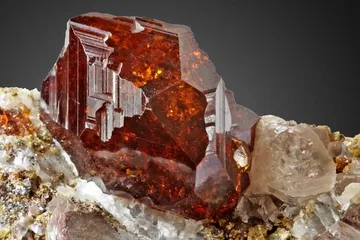
Garnet Granat

Not one mineral but a large family: best known for its reds, garnet turns up everywhere from sandpaper to fine jewellery.

Chemical formula
X₃Y₂(SiO₄)₃
Hardness (Mohs)
6.5–7.5
Specific gravity
3.5–4.3 g/cm³
Streak
White
Lustre
Vitreous (glassy), Resinous, Adamantine
Value ladder
5/9

How to recognise it: Crystals usually have twelve or twenty-four faces and look like small balls from a distance. It has no cleavage, scratches glass (hardness 6.5–7.5) and feels heavy for its size.

taslar.bumba.tr/en/stones/garnet/

Moha112100 · CC BY-SA 3.0

Variety

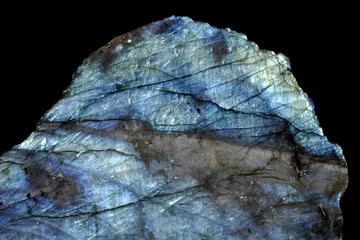
Labradorite Labradorit

A dark grey feldspar that, seen from the right angle, flashes blue, green and gold all at once.

Chemical formula
NaAlSi₃O₈ – CaAl₂Si₂O₈
Hardness (Mohs)
6–6.5
Specific gravity
2.68–2.72 g/cm³
Streak
White
Lustre
Vitreous (glassy), Pearly
Value ladder
5/9

How to recognise it: The play of colour appears only from a certain angle, usually as broad, bright patches facing one direction; tilt the stone slightly and the colours go out. Fine, parallel lines (twinning striations) may be visible on broken or cleavage surfaces.

taslar.bumba.tr/en/stones/labradorite/

Parent Géry · Public domain

Mineral

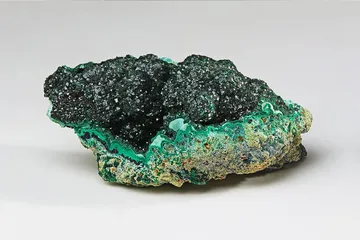
Malachite Malakit

A copper mineral known for its light and dark green rings, used for thousands of years as a pigment, ornamental and jewellery stone.

Chemical formula
Cu₂(CO₃)(OH)₂
Hardness (Mohs)
3.5–4
Specific gravity
3.6–4.05 g/cm³
Streak
Pale green
Lustre
Adamantine, Vitreous (glassy), Silky, Dull
Value ladder
5/9

How to recognise it: It is always green; cut surfaces show light and dark green concentric bands. It leaves a pale green streak on unglazed porcelain.

taslar.bumba.tr/en/stones/malachite/

JJ Harrison · CC BY-SA 3.0

Variety

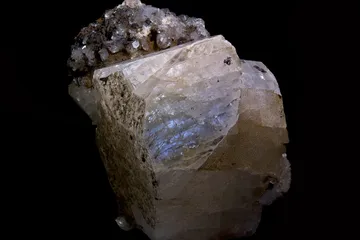
Moonstone Aytaşı

A feldspar with a bluish glow that drifts across its surface like moonlight, scattered from thin layers inside the stone.

Chemical formula
KAlSi₃O₈
Hardness (Mohs)
6–6.5
Specific gravity
2.55–2.63 g/cm³
Streak
White
Lustre
Vitreous (glassy), Pearly
Value ladder
5/9

How to recognise it: When you turn the stone slowly under a light, the glow seems to glide across the surface and is strongest only at certain angles. It is usually cut as a dome (cabochon); its body colour ranges from colourless to milky white, grey and peach.

taslar.bumba.tr/en/stones/moonstone/

Didier Descouens · CC BY-SA 3.0

Mineraloid

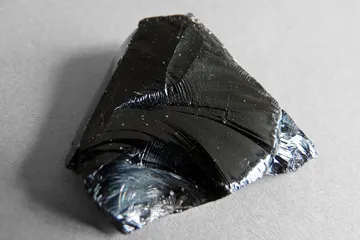
Obsidian Obsidiyen

Nature’s volcanic glass — the shiny black stone that gave the Stone Age its sharpest blades.

Hardness (Mohs)
5–5.5
Specific gravity
2.35–2.6 g/cm³
Streak
White
Lustre
Vitreous (glassy)
Value ladder
5/9

How to recognise it: It is glassy and shiny, usually black; thin edges held up to the light look brownish or greyish and translucent. It breaks with curved, shell-like surfaces and razor-sharp edges.

taslar.bumba.tr/en/stones/obsidian/

Ji-Elle · CC BY-SA 3.0

Variety

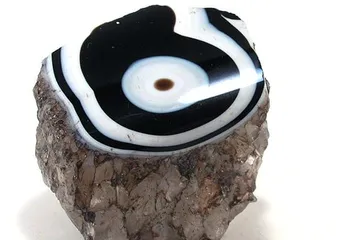
Onyx Oniks

Chalcedony with straight black and white bands. Most souvenirs sold as “onyx” in Türkiye, however, are really banded calcite.

Chemical formula
SiO₂
Hardness (Mohs)
6.5–7
Specific gravity
2.59–2.61 g/cm³
Streak
White
Lustre
Waxy, Vitreous (glassy), Dull
Value ladder
5/9

How to recognise it: True onyx is hard (6.5–7): a steel knife cannot scratch it. “Onyx marble” made of calcite, by contrast, is easily scratched with a knife. A drop of vinegar or lemon juice on a hidden spot produces small bubbles on calcite; true onyx is unaffected. Acid can dull the polish, so test carefully.

taslar.bumba.tr/en/stones/onyx/

Robert M. Lavinsky · CC BY-SA 3.0

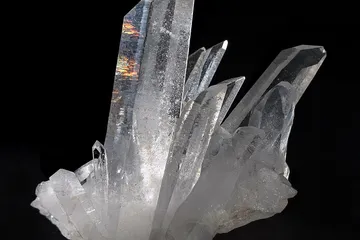
Everyday name

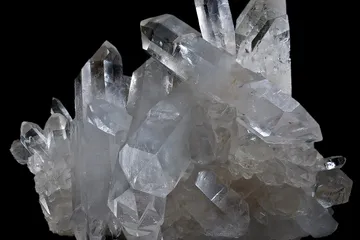
Rock crystal Kristal ve necef taşı (dağ kristali)

The clear stone people call “crystal” or, in Türkiye, “necef taşı” is colourless quartz; the “crystal” of chandeliers and glasses is lead glass.

Value ladder
5/9

How to recognise it: Natural rock crystal usually ends in a six-sided prism with a pointed tip; fine horizontal lines can be seen across the prism faces. It is hard (Mohs 7): a steel knife cannot scratch it, but it scratches glass. Lead crystal glass is much softer and can be scratched with a knife.

taslar.bumba.tr/en/stones/rock-crystal/

JJ Harrison · CC BY-SA 2.5

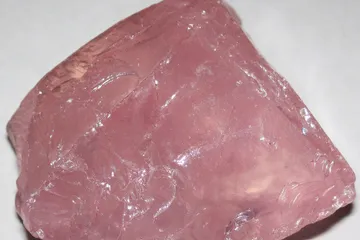
Variety

Rose quartz Pembe kuvars

The cloudy pink variety of quartz, coloured by fibres far too fine to see.

Chemical formula
SiO₂
Hardness (Mohs)
7
Specific gravity
2.65–2.66 g/cm³
Streak
White
Lustre
Vitreous (glassy)
Value ladder
5/9

How to recognise it: It is as hard as quartz (7): it scratches glass, and a steel knife cannot scratch it. It is almost always milky and translucent; clear, well-shaped pink quartz crystals are very rare.

taslar.bumba.tr/en/stones/rose-quartz/

James St. John · CC BY 2.0

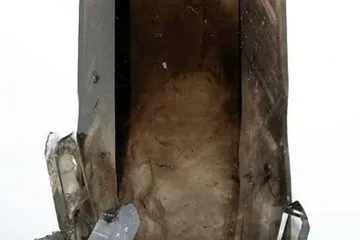
Variety

Smoky quartz Dumanlı kuvars

The brown-to-black variety of quartz, which owes its colour to natural radiation from the surrounding rocks.

Chemical formula
SiO₂
Hardness (Mohs)
7
Specific gravity
2.65–2.66 g/cm³
Streak
White
Lustre
Vitreous (glassy)
Value ladder
5/9

How to recognise it: It is as hard as quartz (7): it scratches glass, and a steel knife cannot scratch it. Its crystals end in a six-sided prism with a pointed tip and are often found in cavities in granite or pegmatite together with feldspar crystals.

taslar.bumba.tr/en/stones/smoky-quartz/

Rob Lavinsky · CC BY 3.0

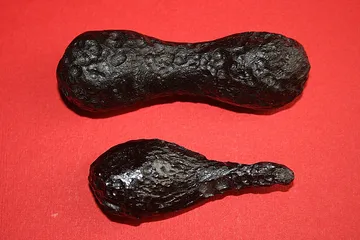
Mineraloid

Tektite Tektit

Not meteorites: natural glass made from Earth rocks that were melted and flung into the air by giant impacts.

Hardness (Mohs)
5–6
Specific gravity
2.3–2.5 g/cm³
Streak
White
Lustre
Vitreous (glassy)
Value ladder
5/9

How to recognise it: It is glassy; most tektites are black or dark brown, while moldavites are green. Thin edges held up to the light look greenish or brownish. Surfaces are often pitted, grooved or sculpted, and shapes may be aerodynamic: teardrops, buttons, discs and dumbbells.

taslar.bumba.tr/en/stones/tektite/

Brocken Inaglory · CC BY-SA 3.0

Variety

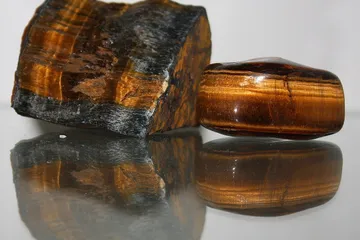
Tiger's eye Kaplan gözü

A golden-brown stone with a silky band of light gliding across it, born from quartz and fine asbestos fibres growing together.

Chemical formula
SiO₂
Hardness (Mohs)
7
Specific gravity
2.65–2.66 g/cm³
Streak
White
Lustre
Silky
Value ladder
5/9

How to recognise it: Turn it under a light and a bright band glides across the surface with a silky shimmer. It is almost as hard as quartz: a steel knife struggles to scratch it.

taslar.bumba.tr/en/stones/tigers-eye/

Marek Novotnak · CC BY-SA 4.0
Mineral

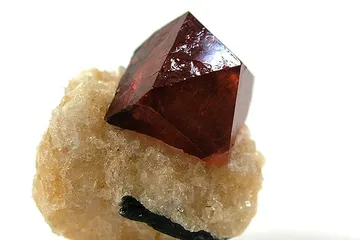
Zircon Zirkon

One of Earth’s oldest witnesses: a natural mineral with 4.4-billion-year-old grains and a diamond-like sparkle. Not to be confused with cubic zirconia!

Chemical formula
ZrSiO₄
Hardness (Mohs)
6–7.5
Specific gravity
3.9–4.73 g/cm³
Streak
White
Lustre
Adamantine, Vitreous (glassy), Greasy
Value ladder
5/9

How to recognise it: Crystals are usually square prisms ending in a pyramid at each end. It shows very strong double refraction: looking into a cut stone with a loupe, the back facet edges appear doubled. Diamond and cubic zirconia do not show this doubling.

taslar.bumba.tr/en/stones/zircon/

Robert M. Lavinsky · CC BY-SA 3.0

Organic gem

Amber Kehribar

Tree resin fossilised over millions of years: a light, warm organic gem that sometimes holds prehistoric insects.

Hardness (Mohs)
2–2.5
Specific gravity
1.05–1.1 g/cm³
Streak
White
Lustre
Resinous
Value ladder
6/9

How to recognise it: It is very light: it floats in saturated salt water (stir salt into a glass of water until no more dissolves), while glass and stone imitations sink. Copal and some plastics float too, so this test is not enough on its own. Remove any metal fittings first. It is soft (Mohs 2–2.5) and feels warm rather than cold. Rubbed on a woollen cloth, it becomes charged and picks up small bits of paper, although many plastics do the same.

taslar.bumba.tr/en/stones/amber/

Baltic-amber-beetle · CC BY-SA 4.0
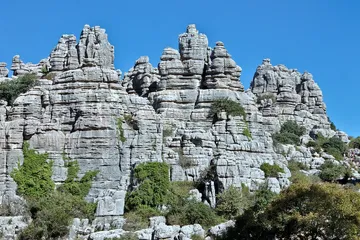
Variety

Aquamarine Akuamarin

The blue member of the beryl family, named after seawater: often found as large, clear, nearly flawless crystals.

Chemical formula
Be₃Al₂Si₆O₁₈
Hardness (Mohs)
7.5–8
Specific gravity
2.63–2.97 g/cm³
Streak
White
Lustre
Vitreous (glassy), Resinous
Value ladder
6/9

How to recognise it: Its colour is usually a light, pastel blue or greenish blue; deep, saturated blue stones are rare. Its crystals form long, six-sided prisms that are often clear and clean.

taslar.bumba.tr/en/stones/aquamarine/

Amphibol · CC BY-SA 2.5

Meteorite

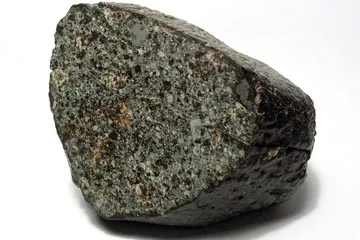
Chondrite Kondrit

A leftover from the birth of the Solar System, full of tiny once-molten droplets, and the commonest kind of meteorite to fall to Earth.

Hardness (Mohs)
5–7
Specific gravity
1.6–3.7 g/cm³
Streak
Usually none; pale grey if pressed hard
Value ladder
6/9

How to recognise it: A freshly fallen chondrite is covered by a black fusion crust less than 1 millimetre thick, and the interior below it is usually light grey. Its surface has no gas bubble holes. Most ordinary chondrites contain grains of iron–nickel metal, so they attract a magnet and feel noticeably heavier than an ordinary rock of the same size.

taslar.bumba.tr/en/stones/chondrite/

User:Vesta · CC BY-SA 3.0

Organic gem

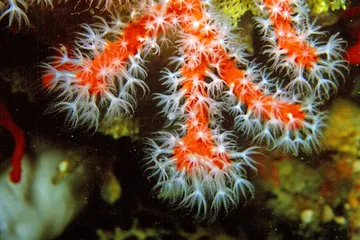
Coral Mercan

The red limestone skeleton of tiny deep-sea animals: an organic gem that grows so slowly it needs protecting.

Hardness (Mohs)
3–4
Specific gravity
2.6–2.8 g/cm³
Streak
White
Lustre
Vitreous (glassy), Waxy
Value ladder
6/9

How to recognise it: It is opaque, with a glassy to waxy polish. Fine parallel lines may run along the branch, and cross-sections may show concentric rings like those of a tree. In natural coral the colour may vary slightly along a branch. In dyed coral the colour gathers in cracks, pores and drill holes, and a cotton bud with acetone wiped on a hidden spot may pick up dye.

taslar.bumba.tr/en/stones/coral/

Géry PARENT · CC BY-SA 3.0

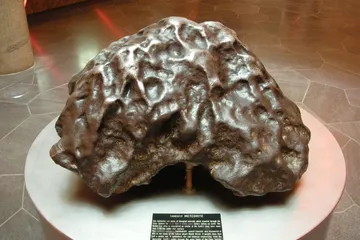
Meteorite

Iron meteorite Demir meteorit

Masses of iron–nickel from the cores of shattered asteroids that reveal a unique crystal pattern when etched with acid.

Hardness (Mohs)
4–5.5
Specific gravity
7.5–8 g/cm³
Lustre
Metallic
Value ladder
6/9

How to recognise it: It is very heavy, about three times as heavy as an ordinary rock of the same size, and strongly attracts a magnet. The outside is usually black, dark brown or rusty and may show shallow thumbprint-like hollows (regmaglypts). There are no gas bubble holes.

taslar.bumba.tr/en/stones/iron-meteorite/

Ji-Elle · Public domain

Rock

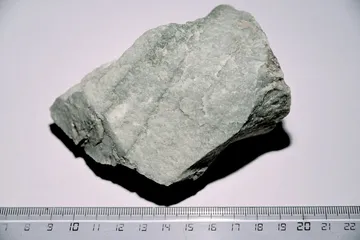
Jade Yeşim

Really a shared name for two stones: nephrite and jadeite, extremely tough materials used for tools, jewellery and art for thousands of years.

Hardness (Mohs)
6–7
Specific gravity
2.9–3.43 g/cm³
Lustre
Vitreous (glassy), Greasy, Waxy
Value ladder
6/9

How to recognise it: It feels cool and smooth in the hand; polished nephrite has an oily lustre, jadeite a more glassy one. Its hardness is 6–7, so a steel knife does not scratch it easily. Its real strength is toughness: thanks to its interlocking fibres and grains it is very hard to break with a blow.

taslar.bumba.tr/en/stones/jade/

Unknown author · CC BY-SA 3.0

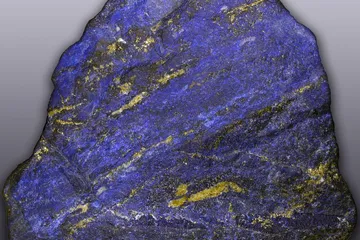
Rock

Lapis lazuli Lapis lazuli

A midnight-blue rock flecked with gold, used for thousands of years in seals, jewellery and painters' ultramarine.

Hardness (Mohs)
5–5.5
Specific gravity
2.5–3 g/cm³
Lustre
Dull, Vitreous (glassy)
Value ladder
6/9

How to recognise it: It is opaque, with white calcite patches and small, metallic yellow pyrite flecks on a deep, saturated blue background. Its hardness is about 5–5.5: softer than quartz, so a steel knife can scratch it. The calcite patches are softer still.

taslar.bumba.tr/en/stones/lapis-lazuli/

Hannes Grobe · CC BY-SA 2.5

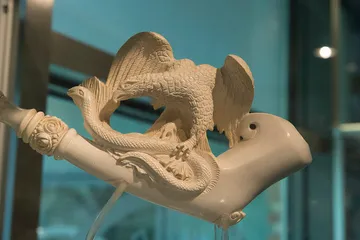
Mineral

Meerschaum Lületaşı

A white stone light enough to float when dry and soft enough to carve: meerschaum, the raw material of Eskişehir's famous pipes.

Chemical formula
Mg₄Si₆O₁₅(OH)₂·6H₂O
Hardness (Mohs)
2–2.5
Specific gravity
2–2.26 g/cm³
Streak
White
Lustre
Dull
Value ladder
6/9

How to recognise it: It is very light; dry, porous pieces can float on water. It is white or cream, dull and opaque. It is very soft (hardness 2–2.5), and a steel knife scrapes it easily.

taslar.bumba.tr/en/stones/meerschaum/

Dosseman · CC BY-SA 4.0
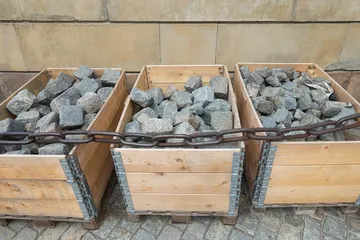
Organic gem

Oltu stone Oltu taşı

Erzurum’s black treasure: a kind of jet made from coalified wood, famous for its prayer beads.

Hardness (Mohs)
2.5–4
Specific gravity
1.2–1.4 g/cm³
Streak
Brown
Value ladder
6/9

How to recognise it: It feels surprisingly light in the hand, much lighter than a stone or a piece of glass of the same size. Rubbed on unglazed porcelain (such as the back of a porcelain tile) or on sandpaper, it leaves a brown streak. Do this test on a hidden spot.

taslar.bumba.tr/en/stones/oltu-stone/

Eğitmen Mahmut · CC BY-SA 3.0

Mineraloid

Opal Opal

Water-bearing silica with no crystal structure: in precious opal, tiny stacked spheres split light into flashes of rainbow colour.

Chemical formula
SiO₂·nH₂O
Hardness (Mohs)
5.5–6.5
Specific gravity
1.9–2.3 g/cm³
Streak
White
Lustre
Vitreous (glassy), Resinous, Waxy
Value ladder
6/9

How to recognise it: In precious opal the colour patches change and shift with the viewing angle; this “play-of-colour” is opal's most distinctive feature. It is softer than quartz (5.5–6.5) and feels noticeably lighter in the hand.

taslar.bumba.tr/en/stones/opal/

Robert M. Lavinsky · CC BY-SA 3.0

Variety

Peridot Peridot

A green gem from deep inside the Earth, and very rarely from space: the gem-quality variety of the mineral olivine.

Chemical formula
(Mg,Fe)₂SiO₄
Hardness (Mohs)
6.5–7
Specific gravity
3.27–4.39 g/cm³
Streak
White
Lustre
Vitreous (glassy)
Value ladder
6/9

How to recognise it: It is always a shade of green, from yellowish green to olive green. The most sought-after colour is a vivid green without brown. It is strongly doubly refractive: looking through the top of the stone with a loupe, the edges of the back facets appear doubled.

taslar.bumba.tr/en/stones/peridot/

Robert M. Lavinsky · CC BY-SA 3.0

Mineral

Silver Gümüş

The best conductor of electricity and heat of all metals; in nature it sometimes grows pure, as curling wires.

Chemical formula
Ag
Hardness (Mohs)
2.5–3
Specific gravity
10.1–11.1 g/cm³
Streak
Silver-white
Lustre
Metallic
Value ladder
6/9

How to recognise it: A fresh surface is bright silver-white; over time it becomes coated with a grey, brown or black tarnish. It is soft and malleable (hardness 2.5–3): a knife scratches it easily, and it bends rather than breaks.

taslar.bumba.tr/en/stones/silver/

Darla Sondrol · CC0

Mineral

Topaz Topaz

The reference mineral for 8 on the Mohs scale: a hard, brilliant gem whose blue colour is almost always added by people.

Chemical formula
Al₂SiO₄(F,OH)₂
Hardness (Mohs)
8
Specific gravity
3.49–3.57 g/cm³
Streak
White
Lustre
Vitreous (glassy)
Value ladder
6/9

How to recognise it: It scratches quartz (hardness 8), but it has a perfect cleavage: a sharp knock can split it along a smooth plane. Crystals are usually prisms with lengthwise striations.

taslar.bumba.tr/en/stones/topaz/

Parent Géry · CC BY-SA 3.0

Mineral

Tourmaline Turmalin

A gem family that comes in almost every colour of the rainbow, sometimes several in one crystal, and becomes electrically charged when heated.

Chemical formula
XY₃Z₆(T₆O₁₈)(BO₃)₃V₃W
Hardness (Mohs)
7–7.5
Specific gravity
2.82–3.32 g/cm³
Streak
White
Lustre
Vitreous (glassy), Resinous
Value ladder
6/9

How to recognise it: Crystals are long prisms with a cross-section like a triangle with rounded corners, and they are marked by distinct lengthwise striations. It has no prominent cleavage and scratches glass (hardness 7–7.5).

taslar.bumba.tr/en/stones/tourmaline/

Robert M. Lavinsky · CC BY-SA 3.0

Mineral

Turquoise Turkuaz

A blue-green copper aluminium phosphate whose name means “Turkish stone”, prized as an ornamental stone for thousands of years.

Chemical formula
CuAl₆(PO₄)₄(OH)₈·4H₂O
Hardness (Mohs)
5–6
Specific gravity
2.6–2.9 g/cm³
Streak
White to pale greenish blue
Lustre
Waxy, Dull, Vitreous (glassy)
Value ladder
6/9

How to recognise it: It is opaque, lets no light through and has a waxy lustre. Its hardness is 5–6: softer than quartz and easily scratched.

taslar.bumba.tr/en/stones/turquoise/

Robert M. Lavinsky · CC BY-SA 3.0

Mineral

Diaspore Diaspor

A rare mineral that looks greenish in daylight and pinkish under incandescent light; gem-quality material comes almost only from Muğla.

Chemical formula
AlO(OH)
Hardness (Mohs)
6.5–7
Specific gravity
3.2–3.5 g/cm³
Streak
White
Lustre
Vitreous (glassy), Adamantine, Pearly
Value ladder
7/9

How to recognise it: Colour change: greenish-yellow (khaki) in daylight, turning pinkish to champagne in candlelight or incandescent light. It has a perfect cleavage in one direction, so it is sensitive to knocks and crystals can split into thin plates.

taslar.bumba.tr/en/stones/diaspore/

DonGuennie (G-Empire The World Of Gems) · CC BY-SA 4.0
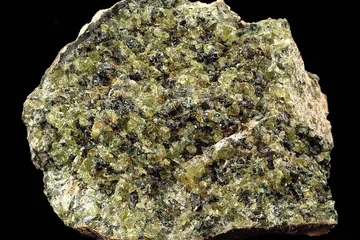
Mineral

Gold Altın

A heavy, bright yellow metal that occurs pure in nature, never tarnishes and can be hammered into sheets or drawn into wire.

Chemical formula
Au
Hardness (Mohs)
2.5–3
Specific gravity
19.3 g/cm³
Streak
Golden yellow
Lustre
Metallic
Value ladder
7/9

How to recognise it: Rubbed on unglazed white porcelain it leaves a golden-yellow streak; pyrite and chalcopyrite leave a greenish-black streak. It is very soft (hardness 2.5–3): a needle point marks it, and a hammer blow flattens it instead of breaking it. Pyrite shatters and chalcopyrite crumbles.

taslar.bumba.tr/en/stones/gold/

James St. John · CC BY 2.0
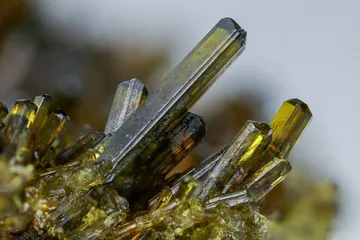
Meteorite

Pallasite Pallasit

A rare stony-iron meteorite with golden-green olivine crystals set in shining iron–nickel metal, counted among the most beautiful meteorites.

Hardness (Mohs)
4–7
Specific gravity
4.66–4.86 g/cm³
Lustre
Metallic, Vitreous (glassy)
Value ladder
7/9

How to recognise it: A cut surface shows glassy, yellowish-green or amber-coloured olivine crystals in a silvery metal network; thin slices let light through. Because of its metal, it is very heavy and strongly attracts a magnet; the outside may be covered with brown rust or a black fusion crust.

taslar.bumba.tr/en/stones/pallasite/

Doug Bowman · CC BY 2.0
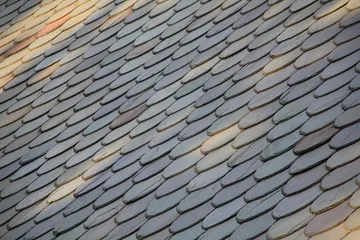
Organic gem

Pearl İnci

An organic gem that grows layer by layer inside oysters and mussels and glows without any cutting or polishing.

Hardness (Mohs)
2.5–3
Specific gravity
2.6–2.85 g/cm³
Streak
White
Lustre
Pearly
Value ladder
7/9

How to recognise it: The “tooth test”: rubbed gently along the edge of the front teeth, natural and cultured pearls usually feel slightly gritty, while glass and plastic imitations feel smooth. The test is not reliable: some real pearls are polished and feel smooth, and some imitations are given a gritty coating on purpose. It also cannot tell natural from cultured pearls. Look at the drill hole with a loupe: on imitations the coating often peels or flakes around the hole, revealing glass or plastic underneath. Real pearls have crisp hole edges, and in cultured pearls the boundary between the nacre and the bead nucleus may be visible.

taslar.bumba.tr/en/stones/pearl/

MASAYUKI KATO · CC BY-SA 3.0
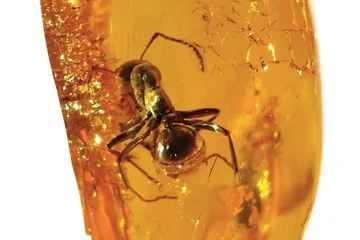
Mineral

Spinel Spinel

The gem mistaken for ruby for centuries: even the famous “Black Prince's Ruby” in the British crown is actually a spinel.

Chemical formula
MgAl₂O₄
Hardness (Mohs)
7.5–8
Specific gravity
3.58–3.61 g/cm³
Streak
White
Lustre
Vitreous (glassy)
Value ladder
7/9

How to recognise it: Its crystals are often sharp eight-sided octahedra; flat, triangular “spinel twins”, formed when two crystals grow together, are also typical. It is singly refractive: unlike ruby, its colour does not change when viewed from different directions (no pleochroism).

taslar.bumba.tr/en/stones/spinel/

Robert M. Lavinsky · CC BY-SA 3.0
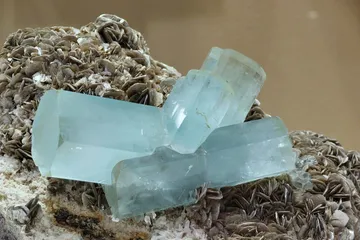
Variety

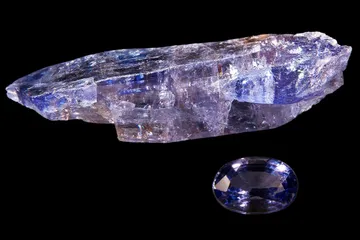
Tanzanite Tanzanit

Zoisite that looks blue or violet depending on the viewing direction, mined commercially in just one small area of Tanzania.

Chemical formula
Ca₂Al₃(Si₂O₇)(SiO₄)O(OH)
Hardness (Mohs)
6–7
Specific gravity
3.15–3.36 g/cm³
Streak
White
Lustre
Vitreous (glassy), Pearly
Value ladder
7/9

How to recognise it: It shows strong pleochroism: as you turn it you see blue, violet and, in unheated stones, brownish or yellowish-green tones. Its hardness is 6–7, softer than sapphire and topaz. It has one perfect cleavage, so a knock can crack it; take care in rings.

taslar.bumba.tr/en/stones/tanzanite/

Didier Descouens · CC BY 3.0

Mineral

Diamond Elmas

Pure carbon and the hardest known natural mineral: it forms about 150–200 km deep and reaches the surface in volcanic eruptions.

Chemical formula
C
Hardness (Mohs)
10
Specific gravity
3.51–3.53 g/cm³
Streak
None (it scratches the streak plate)
Lustre
Adamantine, Greasy
Value ladder
8/9

How to recognise it: It is very brilliant (adamantine lustre) and splits light into colours, showing strong “fire”; but many imitations do this too. It is 10 on the Mohs scale and scratches everything. Still, it has perfect cleavage in four directions and can split from a hard knock, so never try scratch or hammer tests.

taslar.bumba.tr/en/stones/diamond/

DGPC/ADF Luísa Oliveira · CC0

Variety

Emerald Zümrüt

Beryl turned green by chromium and vanadium: the world's most famous green gem, almost always full of inclusions.

Chemical formula
Be₃Al₂Si₆O₁₈
Hardness (Mohs)
7.5–8
Specific gravity
2.63–2.97 g/cm³
Streak
White
Lustre
Vitreous (glassy), Resinous
Value ladder
8/9

How to recognise it: Its colour ranges from green to bluish green. Experts and laboratories do not always agree on whether a light green beryl may be called emerald. It almost always shows cracks and inclusions, which the trade calls “jardin”, French for “garden”. Colombian emeralds typically contain three-phase inclusions holding liquid, a gas bubble and a tiny salt crystal.

taslar.bumba.tr/en/stones/emerald/

Géry PARENT · CC0

Variety

Ruby Yakut

Corundum coloured red by chromium: one of the world's most famous gems, able to glow red under ultraviolet light.

Chemical formula
Al₂O₃
Hardness (Mohs)
9
Specific gravity
3.98–4.1 g/cm³
Streak
White
Lustre
Adamantine, Vitreous (glassy)
Value ladder
8/9

How to recognise it: It comes in many shades of red. Where red ends and pink begins (ruby or pink sapphire?) can differ between laboratories and countries. Thanks to chromium, many rubies glow red under a long-wave ultraviolet (UV) lamp (fluorescence). Iron-rich rubies glow weakly, and red spinel and synthetic ruby can glow too, so fluorescence alone proves nothing.

taslar.bumba.tr/en/stones/ruby/

Robert M. Lavinsky · CC BY-SA 3.0

Variety

Sapphire Safir

Corundum in almost any colour except red; the most famous is the blue sapphire, coloured by iron and titanium.

Chemical formula
Al₂O₃
Hardness (Mohs)
9
Specific gravity
3.98–4.1 g/cm³
Streak
White
Lustre
Adamantine, Vitreous (glassy)
Value ladder
8/9

How to recognise it: It is very hard (9) and feels heavy for its size (specific gravity about 4.0). Do not test a valuable stone by scratching it; that is a job for laboratory instruments. In natural sapphires the colour is often uneven: under magnification you may see straight, angular colour bands. Flame-fusion synthetics show curved growth lines instead.

taslar.bumba.tr/en/stones/sapphire/

Chip Clark, Smithsonian staff · Public domain